Monthly Archives: April 2013

Naturalist

American robins are ginormous.

Or, for the other half of my audience, Irish robins are teensy.

The problem with moving away from where you grew up is that you become a total ignoramus – not just when strangers try to ask you directions, but also when your children innocently ask you what sort of bird that is. And you have no idea. Not only that, but you’re not sure what sort of tree this is or – what the heck is that creature at the bottom of the garden? (Hint: It’s a groundhog. They’re big.)

I’m actually not too bad at nature, so long as I don’t have to spend extended periods of time in it. I mean, my mother knows the names of trees and flowers and birds, and every now and then I look at something growing and a word pops into my head. Sometimes it’s “purple” or “spiky” but other times it’s more useful, like when I noticed a flower in our yard recently that made the word “hellebore” trip lightly across my mind. Followed closely by “belladonna,” “Socrates,” and “poisonous.” And “Oh, that’s nice, the kids are making pretend dinner in the frying pan I gave Dash because he watched Tangled again recently and wants to have his very own frying pan to fight bad guys with.”

I digress.

But wherefore the red-berried Cotoneaster of my youth? The fluffy Leylandii and shiny Griselinia hedges, the pink-belled Fuchsia of the Irish garden? (See, I know all the fancy names. But I had to look up the spellings.) The shy robin red-breast, blue tit (no jokes, please), and ubiquitous blackbird? The birch and beech, sycamore and horse-chestnut? I recognize all those. This country – this part of this country – has other stuff.

So the most common bird around here seems to be a sturdy mid-sized brown bird with an orangey front. I knew it wasn’t a cardinal – the bright red, very exotic-looking and smaller bird that makes me wonder just what sort of colour-blind predator ensured its evolution – but it was only this year that my friend-who-knows-about-birds told me what I saw was an American robin.
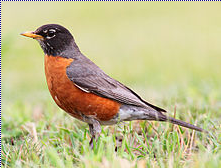
 
American Robin (image from Wikipedia )

Apart from the reddish breast, it’s nothing like an Irish (or British) robin, which is a tiny, delicate bird. I presume the poor pilgrims were so homesick that they decided this was the closest thing this land could manage when they named it. Or that everything in America was bigger.
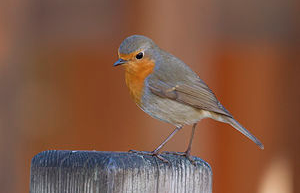
European Robin (image from Wikipedia )

The other day the children were playing at the front of the house. I saw Mabel climbing in the smallish rhodedendron bush and decided nothing bad would happen if I went indoors. Two minutes later she ran in after me -

“Mummy, look what I found!”

 - and handed me a beautiful, tiny, greeny-blue, warm, egg. Intact. Before I had time to formulate an answer, Dash was behind her showing me a second egg. Apparently none of our parent-child discussions had yet covered what to do if you find a nest in a tree you happen to be climbing.

I took the two eggs very gently and told the children as unfreakingoutly as I could that they had to go back in the nest straight away, so that the mother bird wouldn’t miss them. To be honest, I thought that she’d smell us on them and abandon the nest forever, but we had to try. Dash said there were other eggs in the nest too, so I thought at least there might be hope for them.

The poor stupid bird had built her nest at just about seven-year-old head-height, right in front of a big gap in our half-dead, surprises-me-with-blooms-every-year, crappy rhodedendron bush. I’m amazed Mabel managed to climb in there at all without immediately stepping on it. But we put the eggs back and hoped for the best. Mabel got very angry with me for saying that the baby birds might not hatch, so I knew she was feeling bad about it and I tried my best not to sound as if I was blaming her. She honestly didn’t know the right thing to do.

So we talked about leaving nests alone and never touching eggs in future, and some helpful friends on Facebook told me that probably the mother bird would not actually fly away and leave her eggs to their unsatupon fate, and lo the next day I looked out the window and saw her happily back there, sitting on her stupidly low and exposed nest. She’s still there, intermittently, and I have great hopes that in a few days? weeks? how long do eggs take? we might even see baby birds from the comfort of our own front room, where we have a great view and won’t disturb anyone.
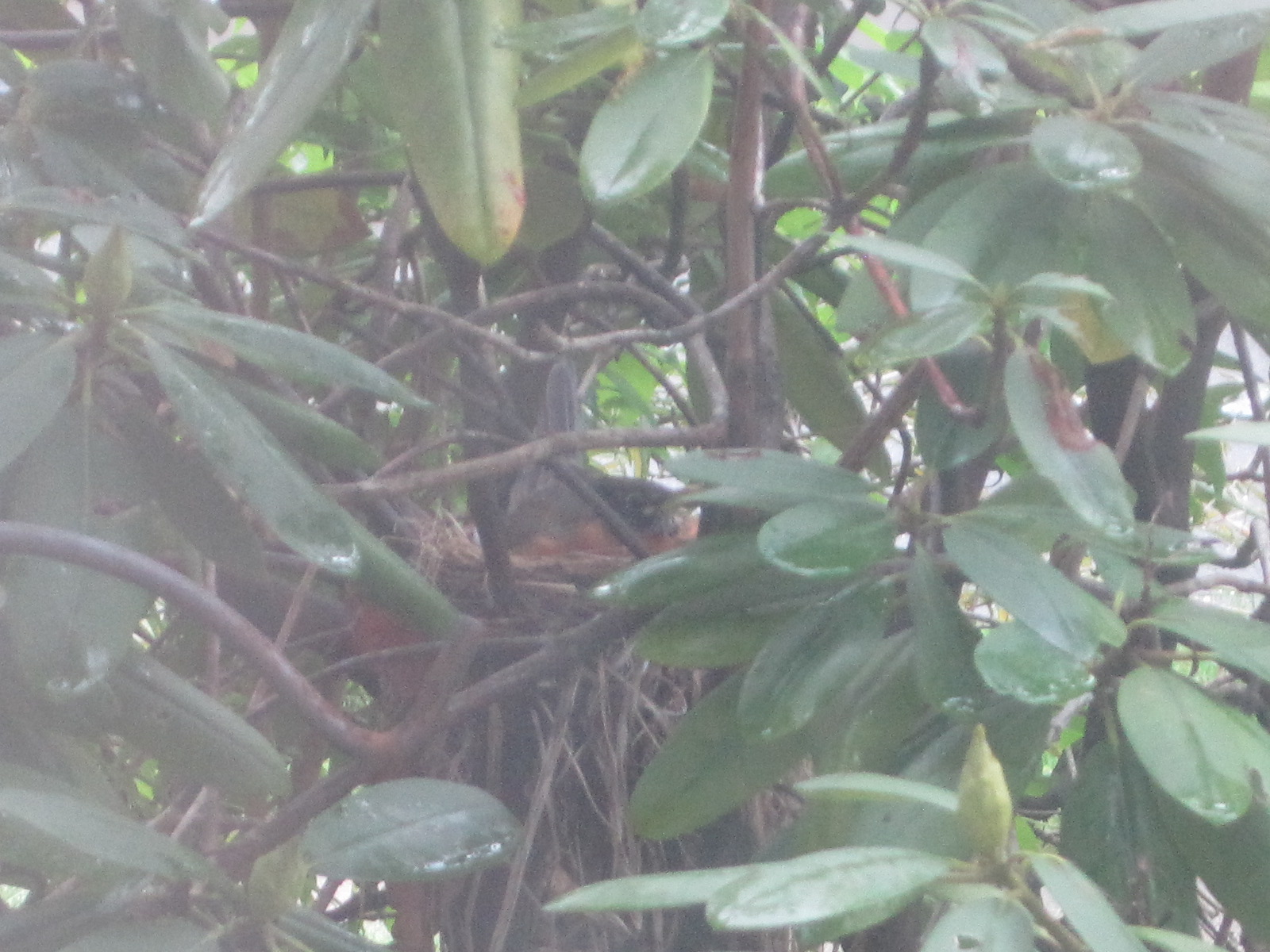
I don’t know if you can make it out, but that’s Mrs Robin in there

And I’ve given Mabel the task of making sure the neighbourhood cats stay away, any time she sees them outside. She’s taking it very seriously.
Getting to first base

At some point a long time ago, in my teenagehood, I suppose, I met the terms “first base,” “second base,” and so on – in a romantic sense, let’s say. In a book or a film or something. I had a vague idea of what they referred to, but I wasn’t so hot on the specifics. A lot of questions remained unanswered for many years: Which way did the sequence go – was “first” the very beginning or the final target? (First is the winning place, after all.) But then if first was the start, how many bases were there – was this an open-ended thing? Could you define your own bases, perhaps, to infinitely frustrate the boys?

The problem was that while I read American books and watched American films, I had no knowledge of American sports. Sure, I’ve seen Bull Durham and Field of Dreams , I can say something came out of left field or talk about home runs, but I’d never actually been to a baseball game. And those phrases, it turns out, about the bases – they’re talking about baseball. Well, except when they’re not, obviously.

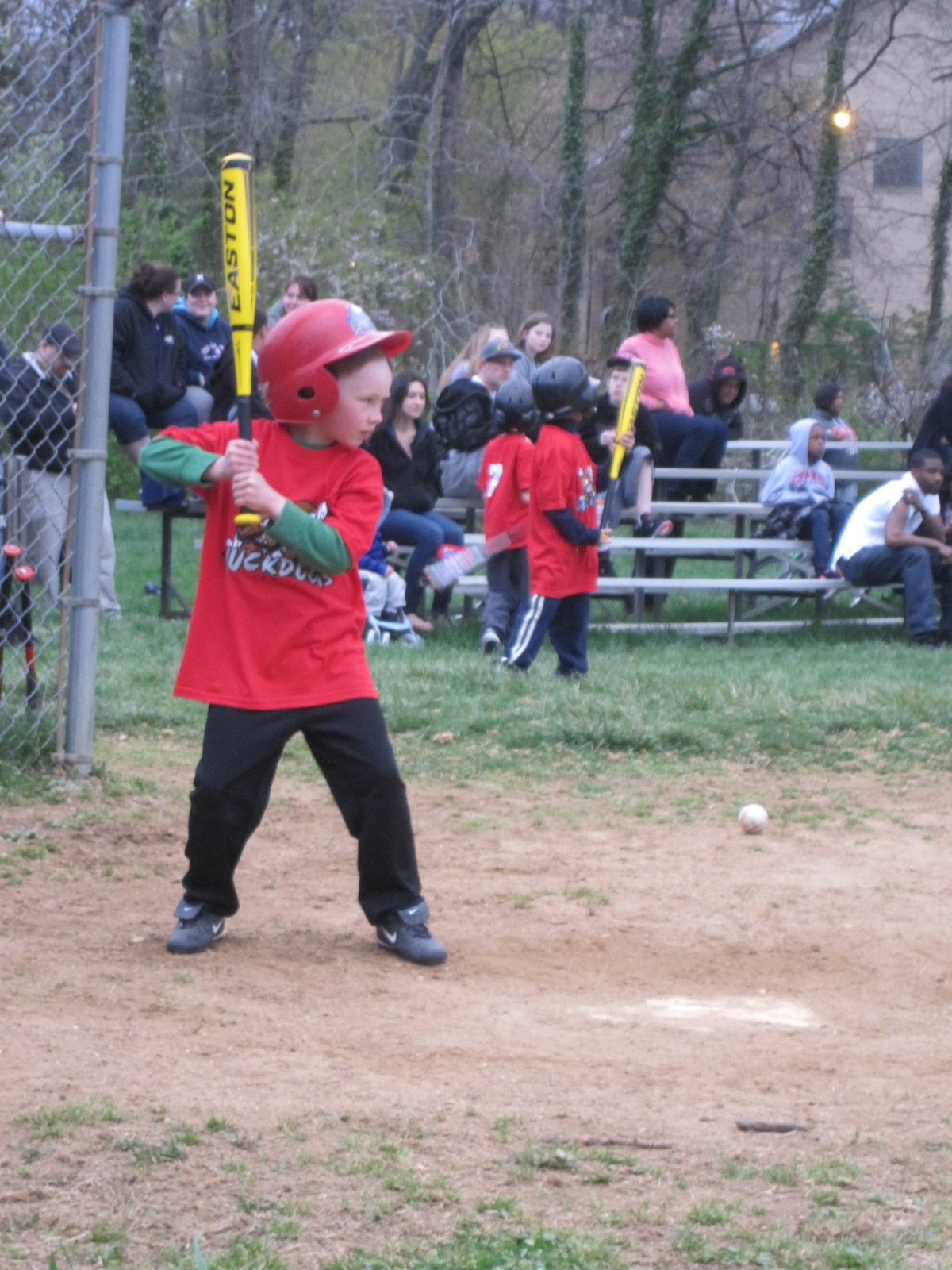
And then. Dash took up baseball this season. He’s playing “machine pitch,” which is what they do for the seven- and eight-year-olds. It’s slightly harder than T-ball (where the ball is propped up on a stand to be struck) but easier than expecting the kids to pitch a hittable ball as well as hit it – a machine sends the balls at them in what’s supposed to be a steady stream of nicely centered, not-too-fast pitches.

Looking good

But after a couple of practices, B. pointed out to me that the poor boy has no notion what he’s meant to be doing, beyond the hitting and the catching (which are not as easy as they look). He’s never even watched a game on the TV, never mind in real life. So we decided we should take in a game.

I’ve never been one for sports, really, and I’m lucky enough to be married to a man who is also not very interested in watching the game, whatever game it might be. I’m pretty sure that the only time I’ve ever been to a professional sporting event before, it was (ironically enough) an exhibition game of American football in Dublin that we got free tickets to, and it was incredibly boring and totally incomprehensible.

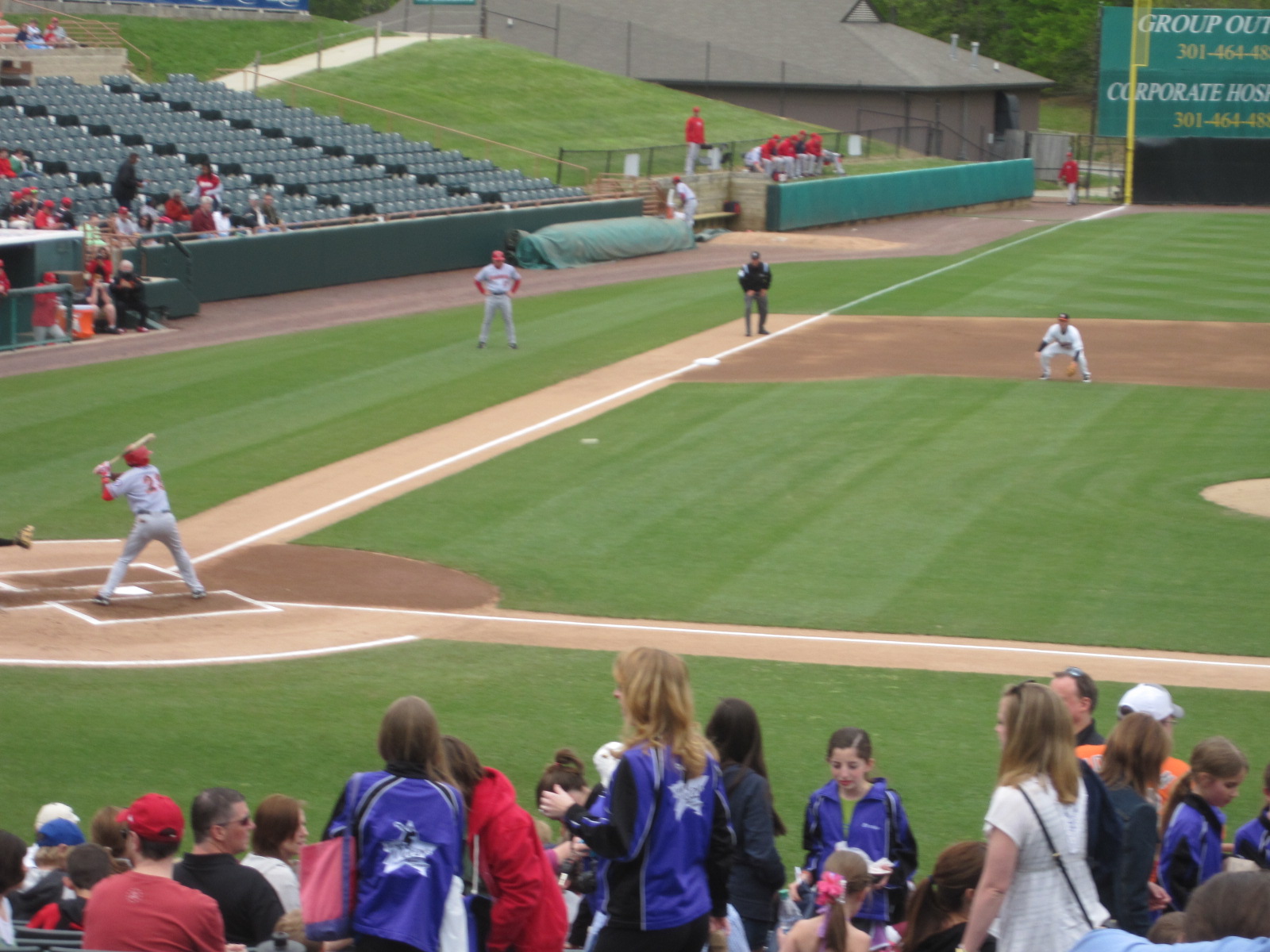
Maybe I had lumped baseball with football and decided that it too would be incredibly boring. Maybe I felt that not going to a game was the last bastion of not being American that I wished to hold out on. Maybe I just had no reason and no interest. But however it came about, after ten years in the country, yesterday I finally went to a real actual proper ballgame.

Looks authentic, no?

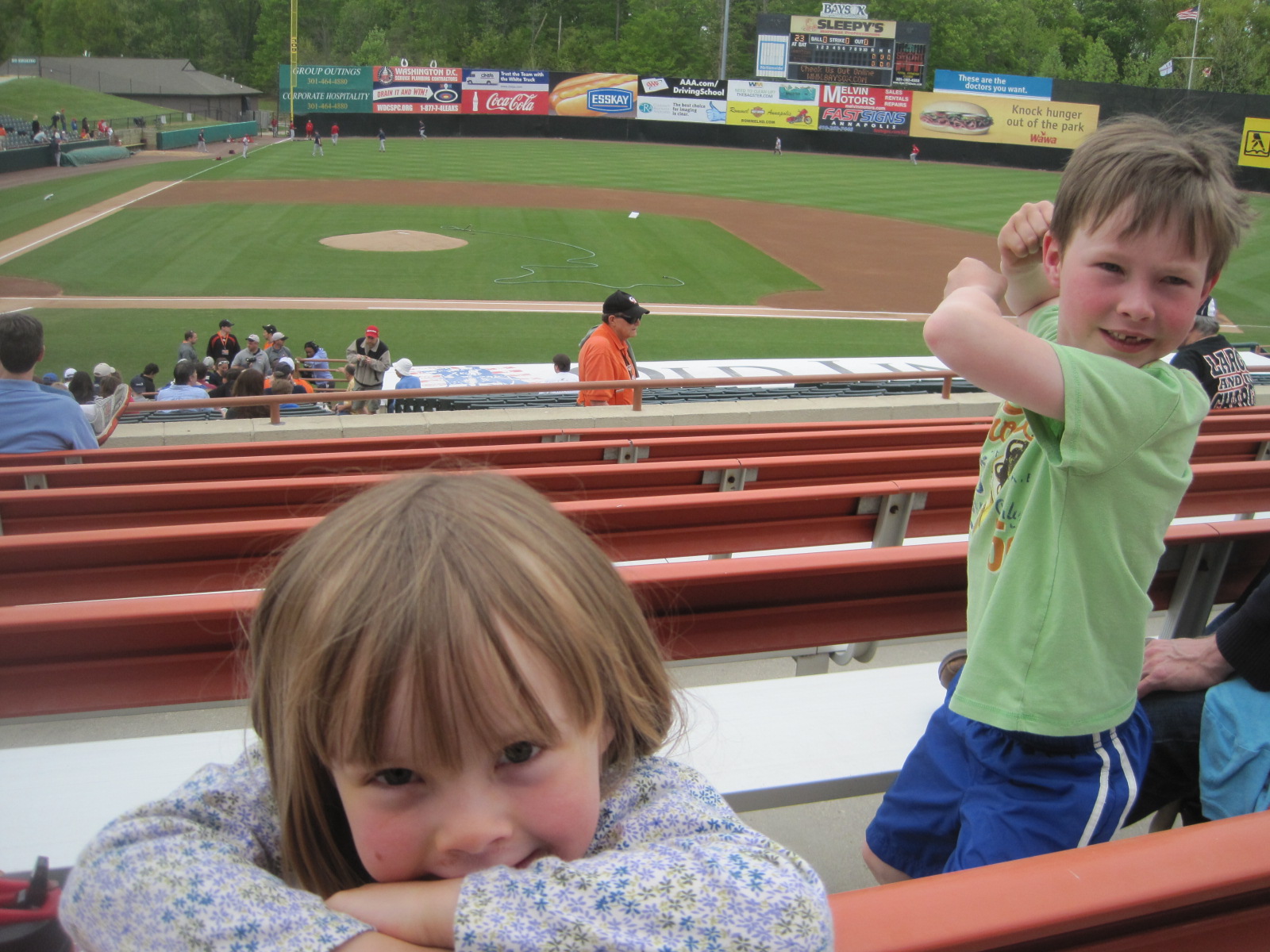
Not the big leagues, of course. We started small, with a minor league game close to home – but still professional baseball. The weather was just right – warm enough but not too hot or sunny. The game was well-attended but not too crowded. Dash wore his shorts in case they needed an extra player at the last minute.

Dash demonstrates his swing
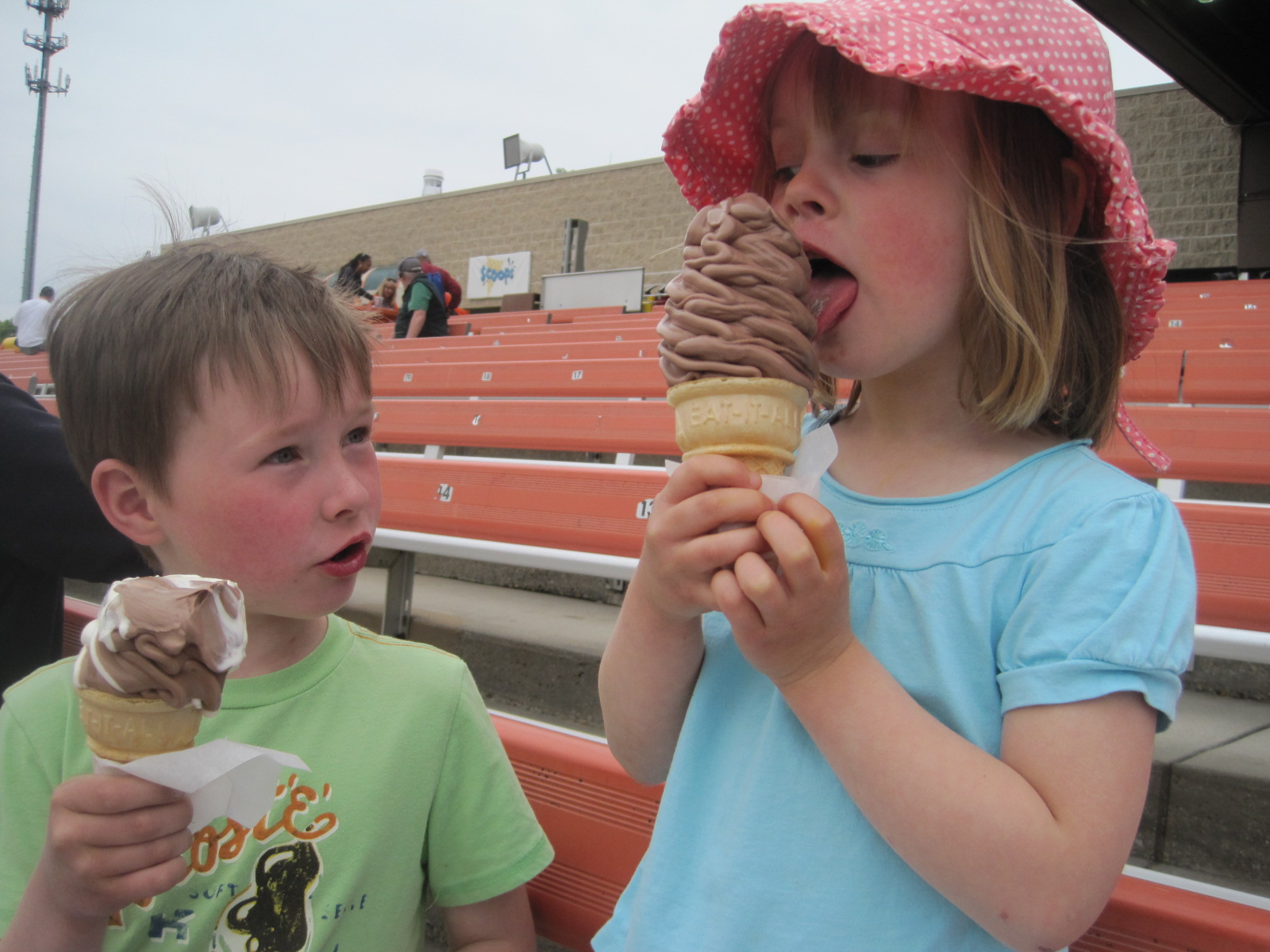
The genius of the people who plan these things, though, is that they understand that baseball is sometimes not the most thrilling of spectator sports. So it’s not like you’re watching Federer serve at Wimbledon, being shushed by the umpire if you sneeze. The place had lots of families, babies, dogs (is that a thing, or was it a special bring-your-pooch-to-the-game day yesterday?), and the players just did their thing regardless of whether my children were running up and down or clambering over the seats or wailing because their giant ice-cream cone was dripping all over their hands. 
“Need some help with that?”
And when they got too bored to keep watching, and we’d done the pizza and the ice-cream and refused the cotton candy, there was a carousel and a bouncy castle and pitching and hitting games right there to help parents donate even more dollars to the nice baseball people, and then hot dogs and popcorn. Not to mention the between-innings competitions and adorably bad pre-game show and requisite toe-curling rendition of the national anthem. And I think I’d even have quite enjoyed watching the baseball players if I’d had more than five minutes to pay attention to what they were doing.
We stayed for about an hour and a half before calling it quits just as a sprinkle of rain was beginning. I think we’ll probably do it again, it was that good.
What’s more, I would probably be able to reliably go back in time and let my teenage self know what was what with the bases. Just in case she ever needed to know.

Word Girl

I know I’m biased, but I think Mabel is pretty witty for a four-year-old. She has always enjoyed words and sought out the big ones, but nowadays she finds rhymes and double meanings and asks why things are called what they are and why they aren’t called something else.

If she doesn’t become a lawyer (given her love of argument and her pathological need to have the last word) or an actress (given her flair for the dramatic and love of storytelling) or an author (obviously), she’ll be a linguist or an etymologist. She might be all of those things.

She employs puns to their fullest:

  • Watching DangerMouse – DM and Penfold land on top of the Toad and announce, “You’re under arrest.”
    Mabel: He is, because he’s lying down so he’s resting, and he’s under them!
  • Me, starting the car again after a quick return home for something it turned out we hadn’t actually left behind: “To the pool, take two.”
    Mabel: “But you’re taking three.”

She toys with idioms:

  • The day after we saw our friend and her new(ish) baby: “I remember meeting Baby V like it was yesterday.”

She plays with homonyms:

  • “Can you compare a pear?”

She finds words within words:

  • Europe! That’s like syrup! Do they eat syrup in Europe? And watch the movie Up

She knowingly amuses me with hyperbole:

  • In a grump, casting around for things to hate: “I don’t like Miss P’s bike. I don’t like the colour of your glasses. I don’t like the shape of our car. … I don’t like the colour of seethrough.”

And now she’s working the similes:

  • “It’s as dark as a bedroom.”

or, to insult my cooking

  • “It’s as yummy as bum.” 
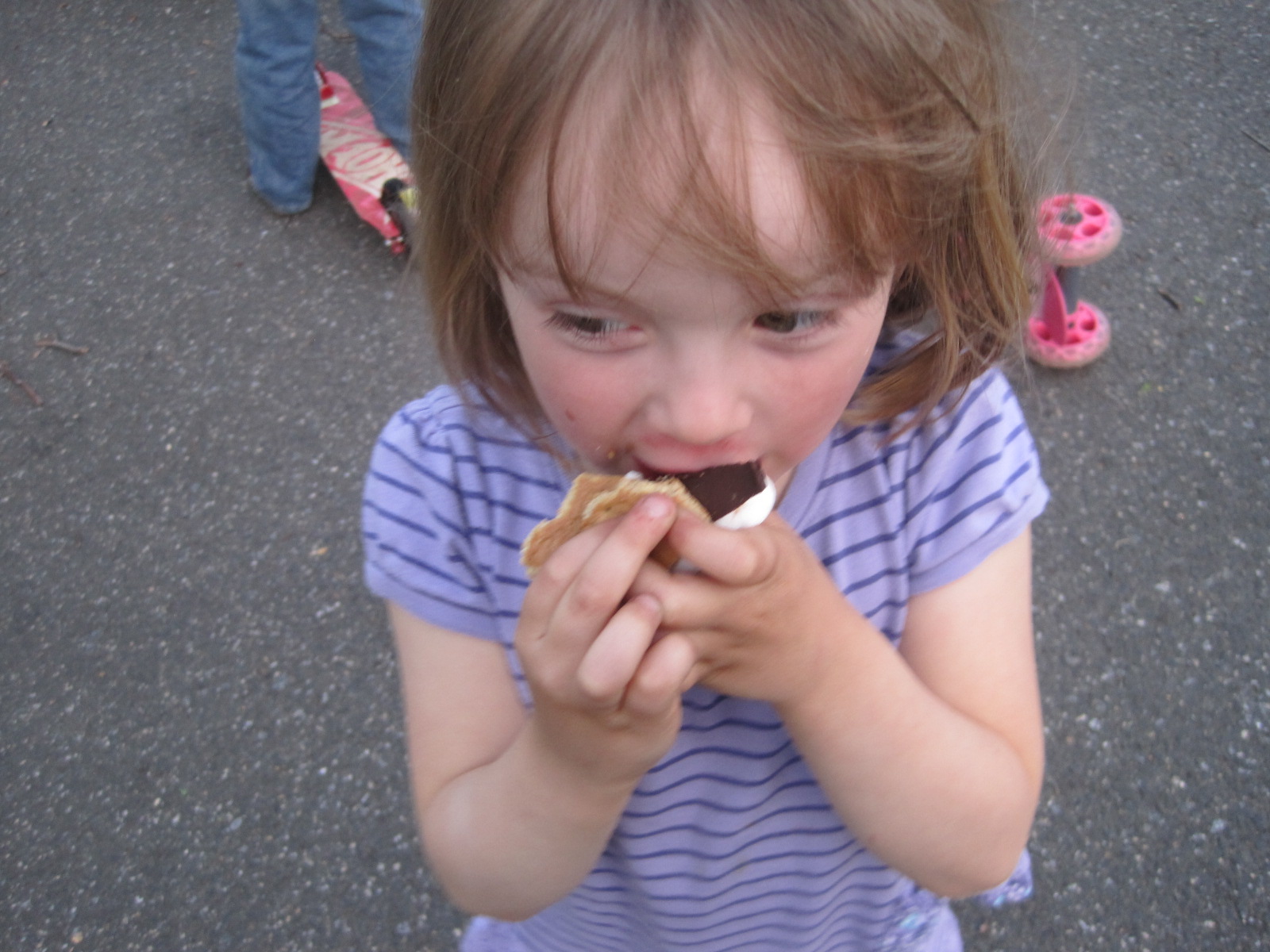
Mabel eating a s'more
Possibly a little yummier than bum

Happy families

Mabel is something of a girly girl, with her pink and her tutus and her babies, but she still likes to stick it to the patriarchy.

Ever since she was first talking – and she talked early and often – she has insisted that her toys are almost always “she”s. I’d take a small plastic kangaroo, or a plush puppy, or whatever the item of the moment was, out of her hands to help her out of her carseat and say “Here, give him to me,” and she’d always answer, exasperated, “It’s a her !”

Some children mix their pronouns until quite late on, but Mabel was always quite certain that most of her toys were of the female persuasion. It’s a convention of our language to use the masculine as a neutral, so I might ask her “What’s he doing?” about a clearly genderless rubber frog, perhaps. But Mabel didn’t get that particular lingustic memo, and as far as she’s concerned, everything defaults to female. More power to her, I say.

————–

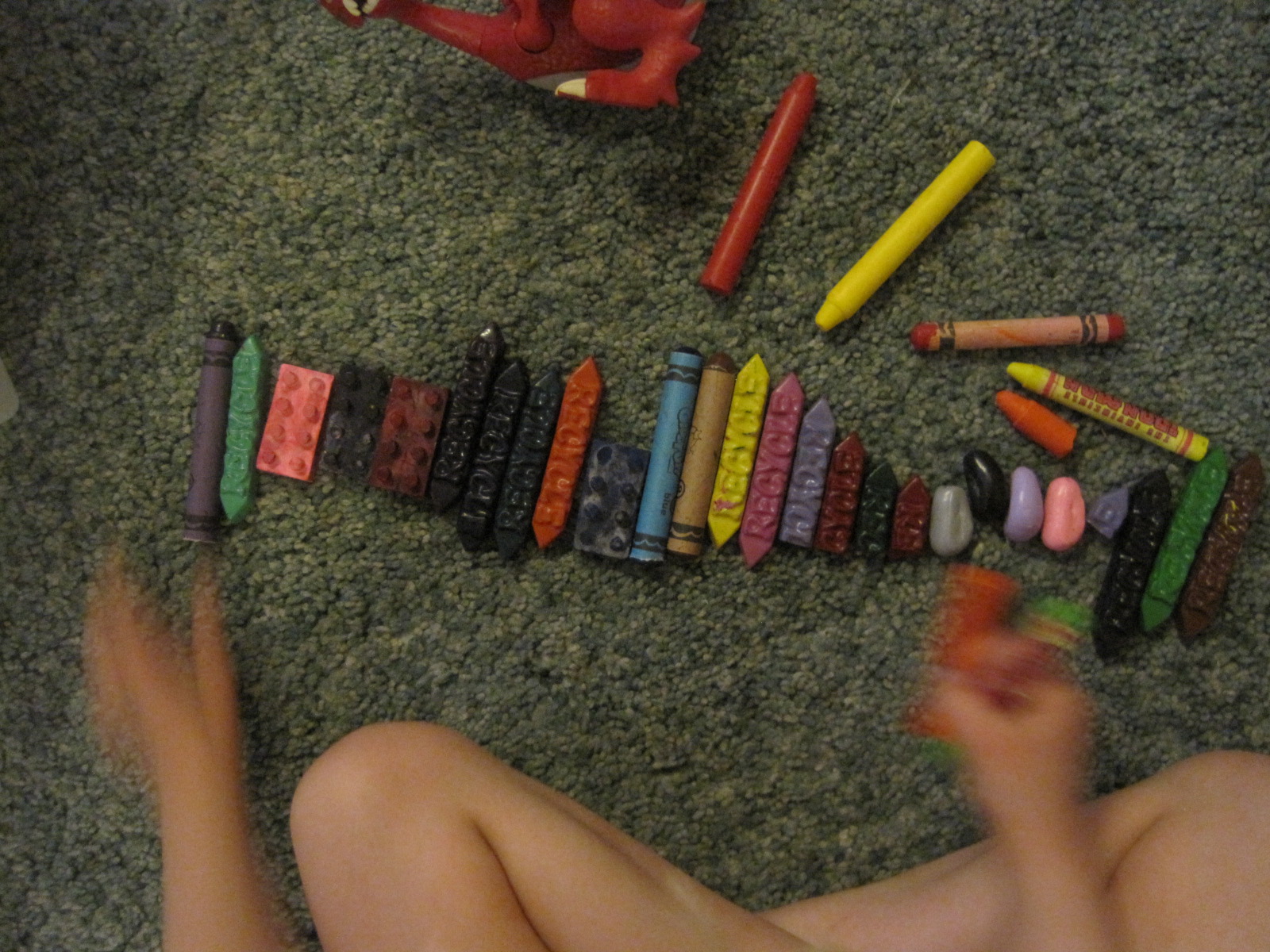
She always plays families with whatever is to hand: given one large and one small dinosaur, one is instantly the mommy and one the little girl. Given four, there will also be a daddy and a brother, or maybe two mommies and a little sister. (If one is actually a pony, that’s okay: it was adopted.) A box of crayons is just as likely to be sorted into a bunch of rainbow relatives as to be used for their given purpose. Wrenches, nails, pebbles, leaves, french fries: they’ve all been turned into family members by my daughter.

The extended crayon family

Dash has a half-size skateboard that we found at the thrift store a while ago. Last week I caught Mabel running across the road with it to reunite it with its mommy, the full-size skateboard at our neighbours’ house.

Right now she’s outside putting together a family of scooters belonging to all the kids on the street. 

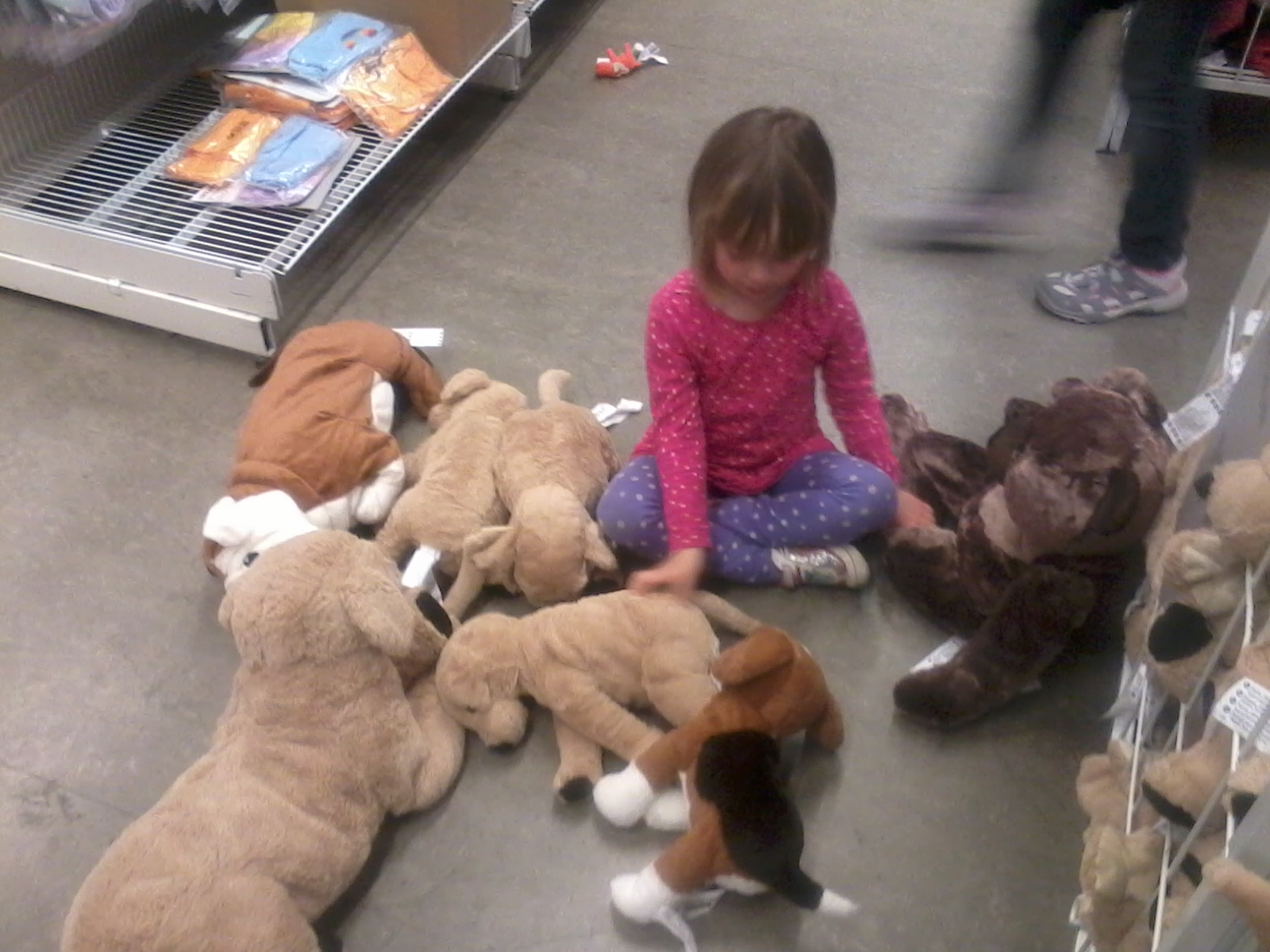
At IKEA, reuniting all the mommies and babies
I promise you she hasn’t experienced any deeply sublimated family-separation trauma in her young life – but you’d be forgiven for thinking that she had.

Seven

… And seven years later, I have a seven-year-old.

I have plenty of memories of seven. I was in second class, with our cool just-graduated-from-college teacher who played the guitar and taught us the words to songs from Jesus Christ Superstar. That summer was a standout one because we went on holidays to Corfu (a Greek island), which was my first plane trip, my first experience of a different language and a foreign culture and heat in the air and warmth in the seawater.

I learned to swim there, and had my first taste of scampi. I was a fussy eater and when my parents found that I loved the scampi, they said hang the expense and I ate it every dinnertime. It was idyllic (except for the mosquitoes, which freaked me out in the middle of the night) and it’s seared on my memory.

I would love to give Dash an experience like that, one that sticks fast and never leaves him, so that he can still conjure the smells and tastes when he’s forty; but maybe you never know what’s going to be the thing that remains, or maybe we’ve given him too much already for him to have one of those standout summer trips.

Or maybe whatever you do when you’re seven stays with you for always, because you were seven.

Happy birthday, Dash.

World Meningitis Day

April 24th is World Meningitis Day, and I promised to help out a little by putting a few words and links here.

One reason I’m glad my children are rarely very sick, and that I always get a little antsy any time one of them does spike a fever, is that the spectre of meningitis is always there. I don’t even have any close personal experience with it, thankfully, but for some reason I’ve never forgotten the advice about rolling a glass over a rash to see if the spots disappear, and whenever anyone looks like they might have a stiff neck, my hackles rise just a tiny bit.

Maybe I watched too many episodes of ER in my young adulthood, or too many episodes of House in my young parenthood, but these things stuck in my mind. On the other hand, maybe it was knowledge picked up from awareness campaigns like this one, aiming to make parents remember that this horrible, sudden-striking, disease has not gone away.

In Ireland and the UK, the most vulnerable group of people are babies and young children. In the US , the main at-risk group is teenagers, and a vaccine is recommended for all 11-18 year olds. (My pediatrician’s office gives it at 11, with a booster later on.) But even the vaccine does not protect against all forms of meningitis.

No matter where you are in the world, it does no harm to be aware of the symptoms for all age groups, because catching this early can literally mean the difference between life and death.

Symptoms of bact erial meningitis and septicaem ia  

  • Fever
  • Very sleepy
  • Confusion
  • Seizures  
  • Non-blanching rash (doesn’t disappear under pressure)  
  • Vomiting  
  • Severe headache  
  • Painfully stiff neck  
  • Sensitivity to light 
Not all the symptoms may be present, and yes, a lot of this might look like the flu, but if you’re worried, please do listen to your spidey-sen se and bring your baby or child (or teen) to the emergency room . Th is really is something that can escal ate very quickly .

Ireland has the highest incidence of meningococcal disease (the main cause of bacterial meningitis) in Europe, with over twice the average disease rate. Irish c hildren are currently not protected against all types of meningitis, so it’s important that parents keep watching for the signs and symptoms. 

You can find r esources here from the Meningitis Re search Founda tion (UK) 
Some m ore information for the United States is here .

  And this is a vid eo for the “Keep Watching I re land” campaign. 

You can find links to other Irish bloggers participating in this important one-day blog march at the MeetMums site.

Seven years

Seven years ago, I was a technical writer at a university in south Texas, trying to help department heads hash out some sort of more detailed hurricane plan in the wake of Katrina the year before.
Seven years ago, I had a salary of my very own.
Seven years ago, I saw a lot of movies in the cinema.
Seven years ago, I’d never watched an episode of Curious George.

Seven years ago, my husband was at a conference a plane ride away, and I was eight-and-a-half months pregnant.

Seven years ago, I’d never heard of Facebook.
Seven years ago, I’d already been blogging indolently for a couple of years.

Seven years ago, I knew my life was about to change utterly, and I was about as ready for it as you can be.

Seven years ago – plus a few hours – my waters broke .

Yoda cake, or overachieving for dummies

At some point yesterday I had an existential crisis. “I don’t even know who I am any more,” I found myself thinking. “Where has the old me gone?”

The old me, who swore she only made round birthday cakes with icing in the middle and on top, and possibly a shake of sprinkles. The me who didn’t do fancy themed parties. The me who scorned such things.

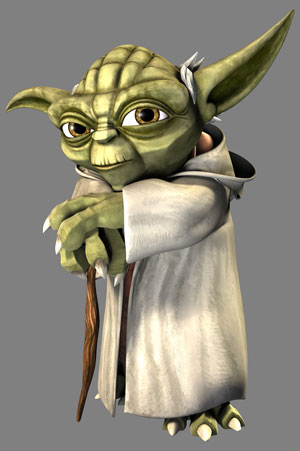
And yet, here I was carving out Yoda ears from a layer of sponge cake and writing names on Jedi training certificates and carefully placing sprinkles with a tweezers. I hang my head. Not only that, I was doing it all for the second year running . So I can’t call last year a fluke any more. Apparently this is the person I have become. I’m sorry, everyone.

—————

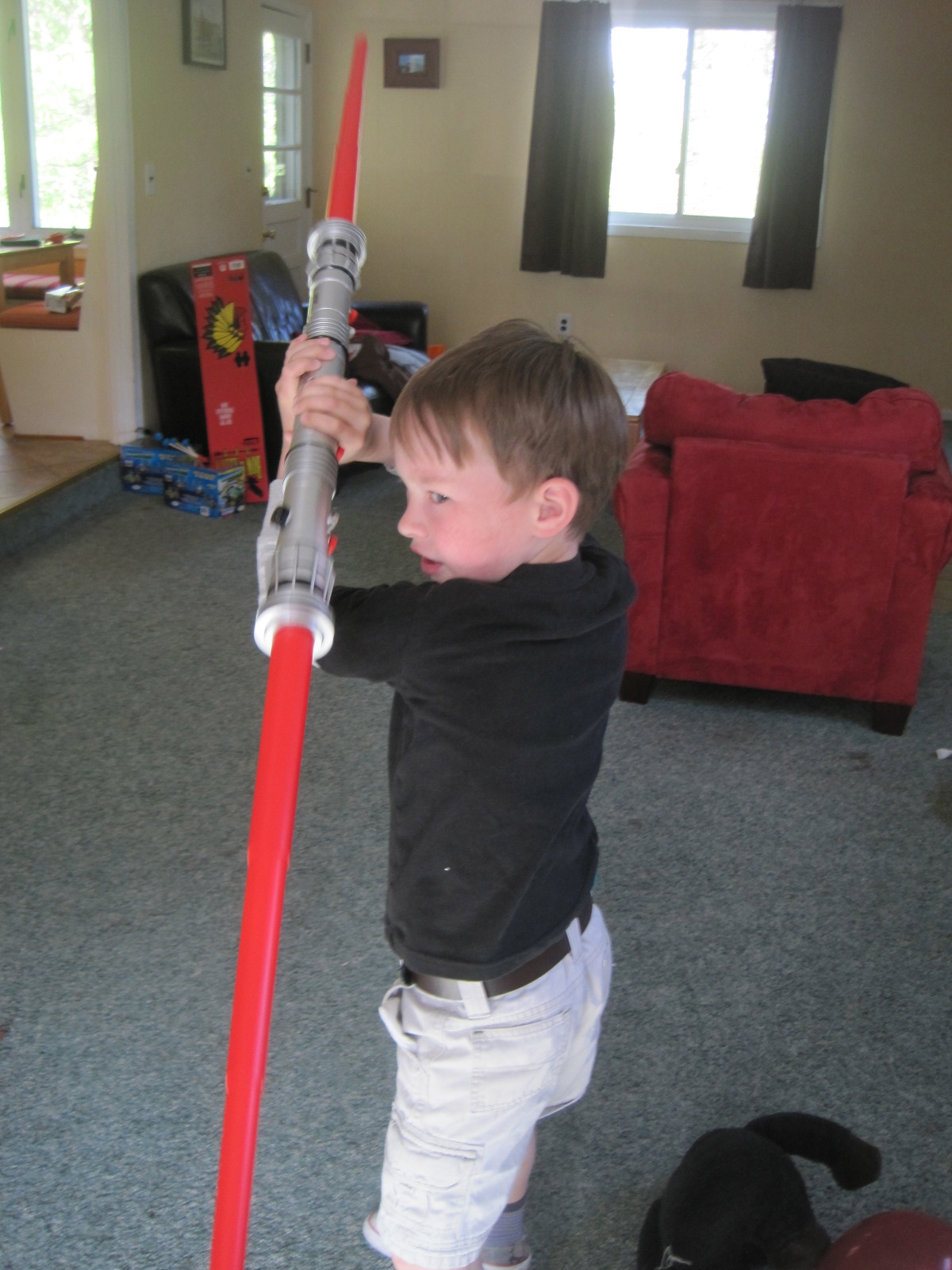
Dash will turn seven on Wednesday, and we had his party yesterday, because when you have a midweek birthday you get to choose which weekend you want, and any child worth his salt will obviously choose the prior one. He asked for another Star Wars party , just like last year, and in a fit of enthusiasm, I suppose because that meant I had everything else all figured out already, I said, “I can make a Yoda cake.”

Right then. One Yoda cake. It turned out to be much less stressful than last year’s light saber cake , mostly because I didn’t bother looking for the organic food colouring and because pale green is much easier to pull off in buttercream than bright red. And just in case you want to make a home-baked, non-professional- style Yoda cake for your own six- or seven- or thirty-seven-year-old, this is what I did.

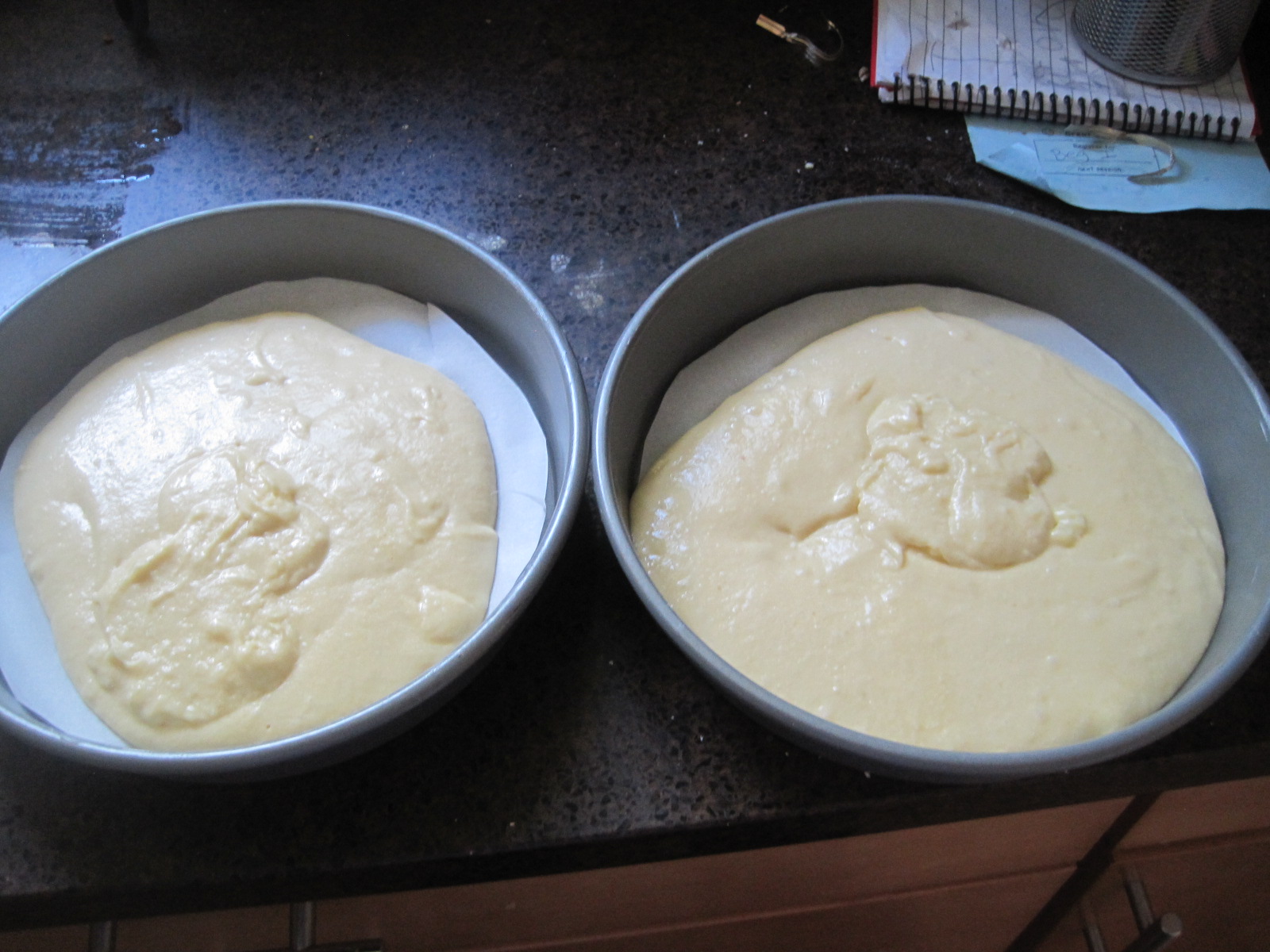
First I baked a regular birthday sponge in two 9-inch pans. The amount in my recipe would have been better in 8-inch ones, really, but 9-inch is what I have. I knew the kids would be more interested in the look than the taste, and with nine children at the table, there was plenty here. (I did this part the day before.)

Cake batter in bans
Not quite enough batter

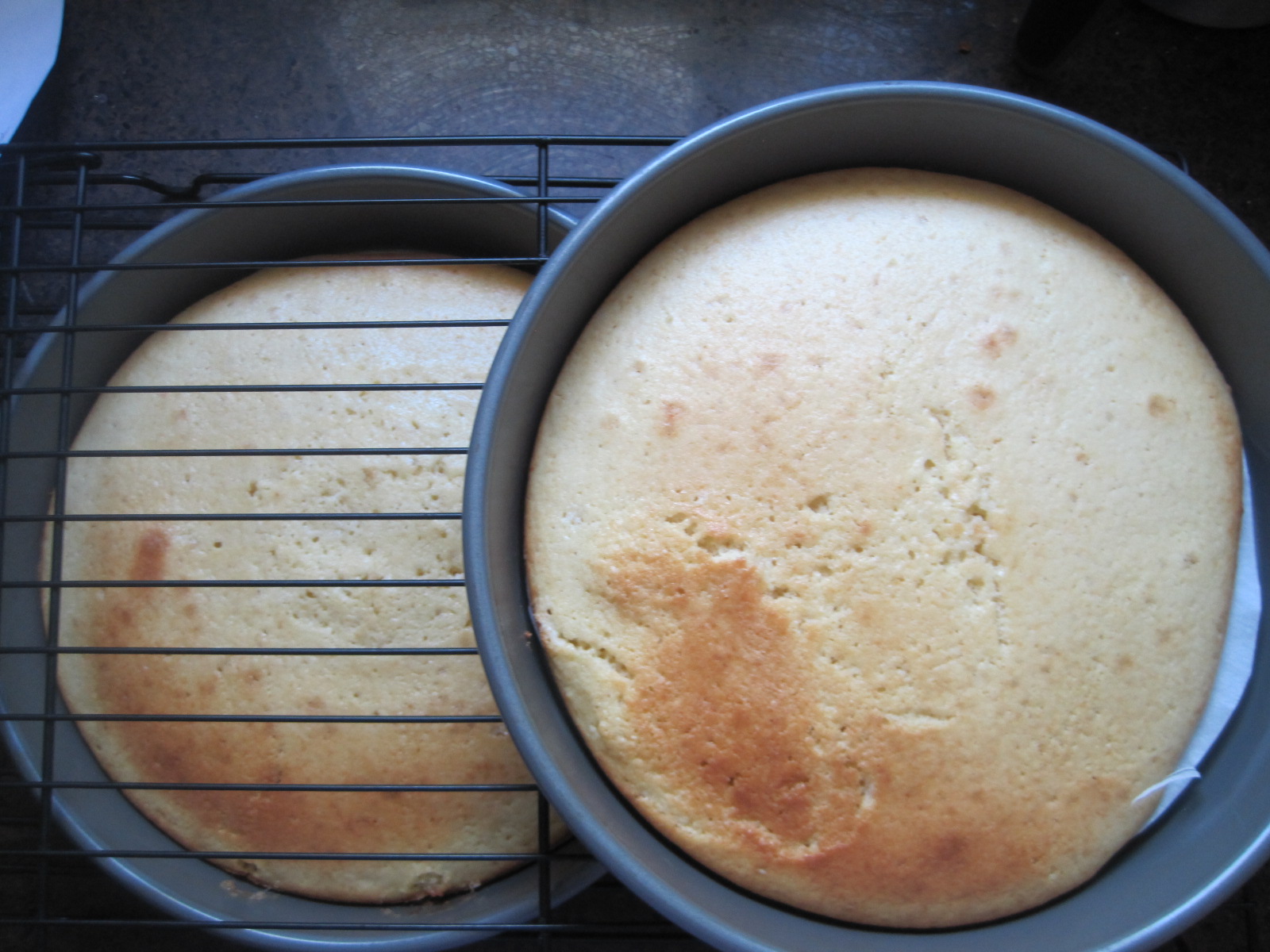
I used Nigella’s birthday buttermilk sponge recipe (not online, but from How to be a Domestic Goddess ), as I did last year, but you can use any one you like, or a box mix, or make it chocolate if you prefer.

  Cakes cooling on racks

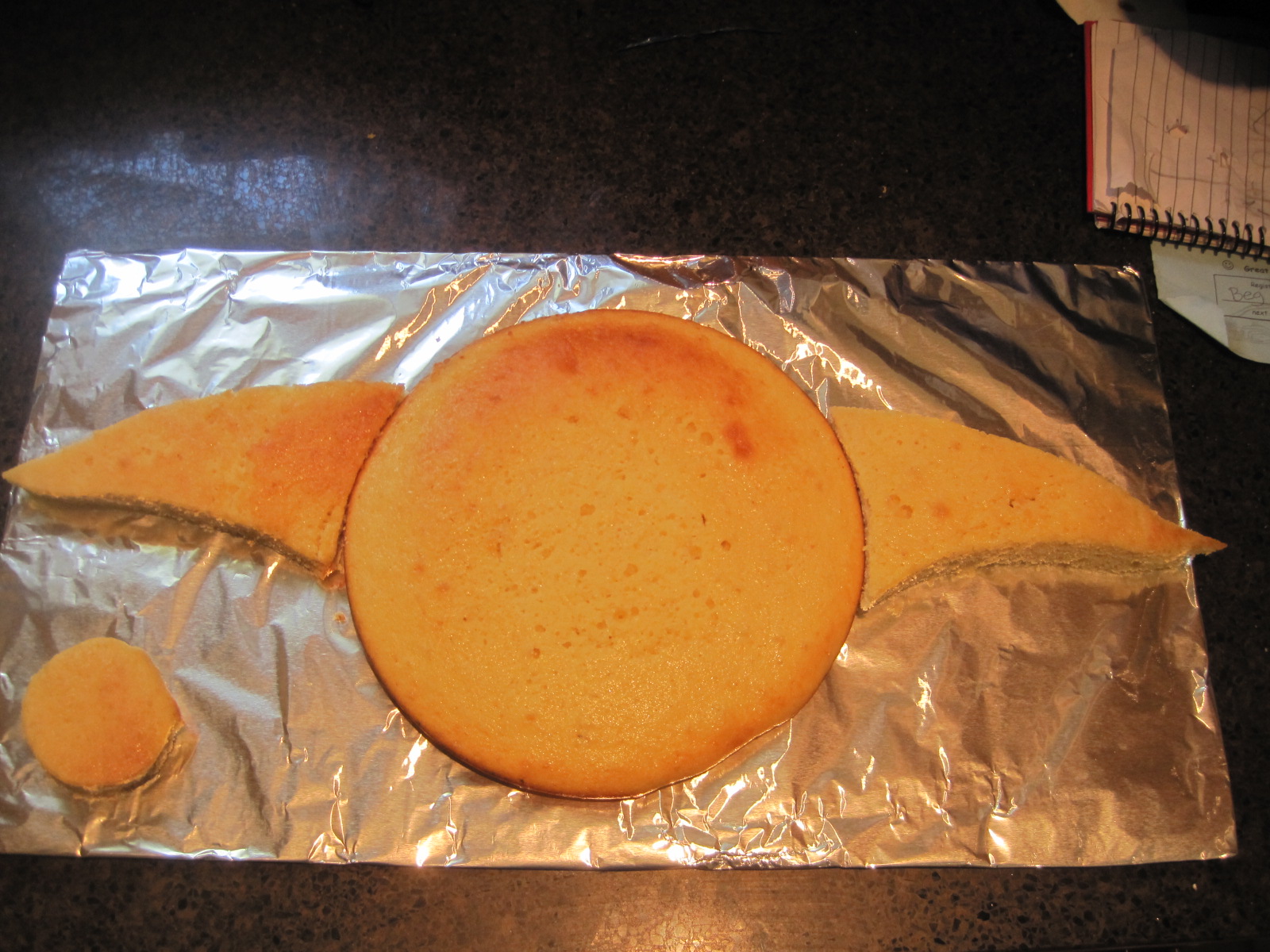
Then I looked at some cartoon-y Yoda images online (like this one ) and cut myself two circles of paper the size of my pans, to figure out how long I could make the ears out of one circle. (The first circle was going to be the head, obvs.) I used the paper ears as a template to cut the sponge, once it had cooled completely. I made a couple of moons/asteroids/distant DeathStars out of some of the rest.

Circular cake cut into Yoda ears and two moons
Making ears

Then I realised I had no plate the right shape for this creation, and just like last year, I Blue-Peter-ed a used cereal box and some tinfoil into a nice long shiny platter. Here are the head and the ears in place.

Yoda head and ears in place on "platter"
Naked cake

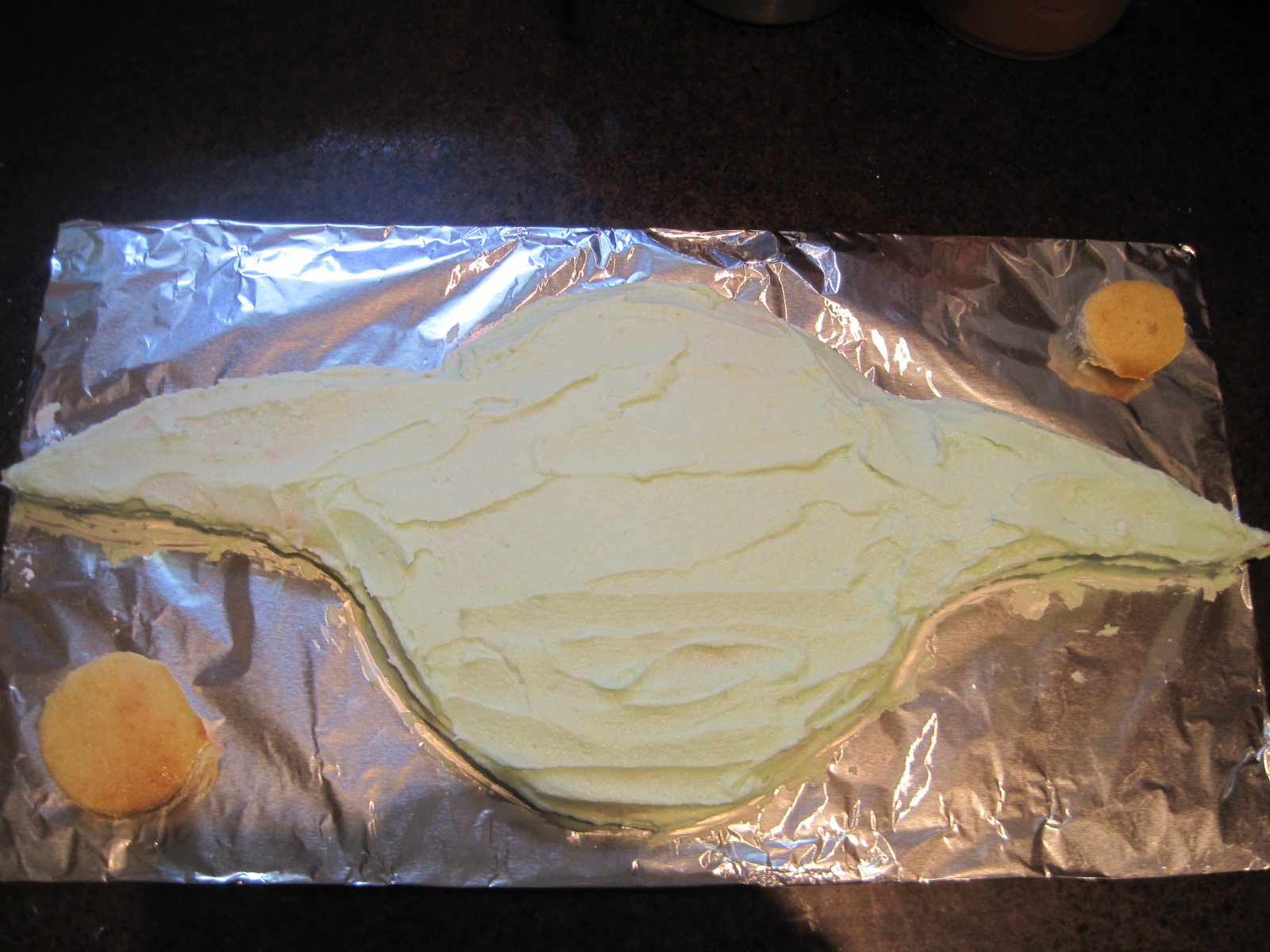
I mixed up some buttercream icing – not quite enough, because of course I had stocked up on butter but forgotten to make sure we had plenty of confectioners’ (icing) sugar – and used a tiny spoon to make sure I didn’t drip too much food colouring in at one time. I think two drops was enough, and I still have a green fingernail this morning.

Then I plastered the buttercream all over the head and ears, covering up the joins and evening out the slight height differences.

Yoda head with green icing
Green cake

(I ran to the supermarket for more sugar and made up another little batch for the moons. It turned out I had no other working food colouring so I just kept them white.)

At this point I was quite pleased, but of course I still had the “artistic” part to go.

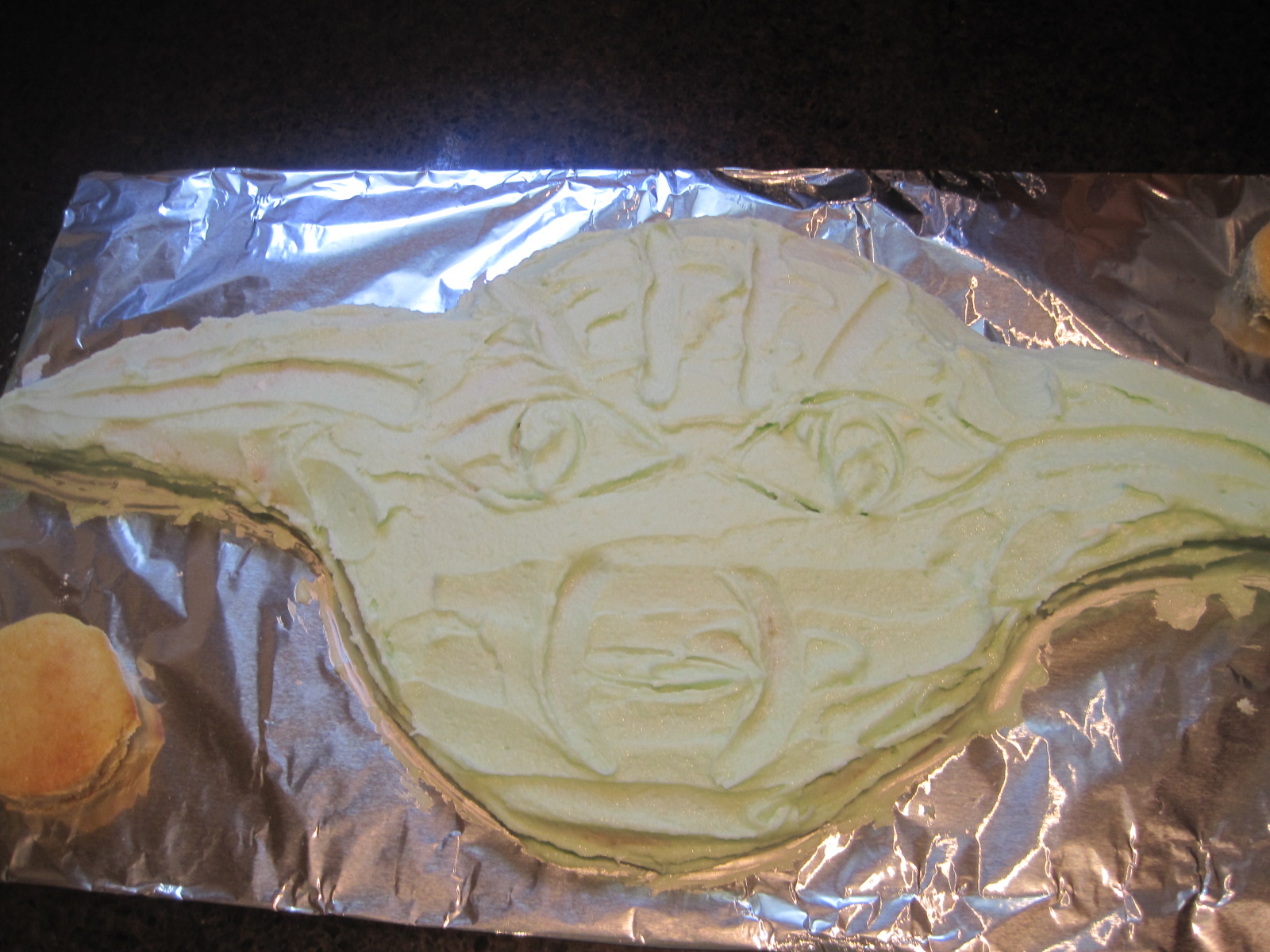
I used the tip of a butter knife to draw eyes, the indentations in Yoda’s ears and the lines around his mouth and on his forehead. Then I dipped the knife tip in hot water and found that made a much cleaner line, so I went over the eyes and wrinkles again that way.

  Yoda head with eyes and mouth marked

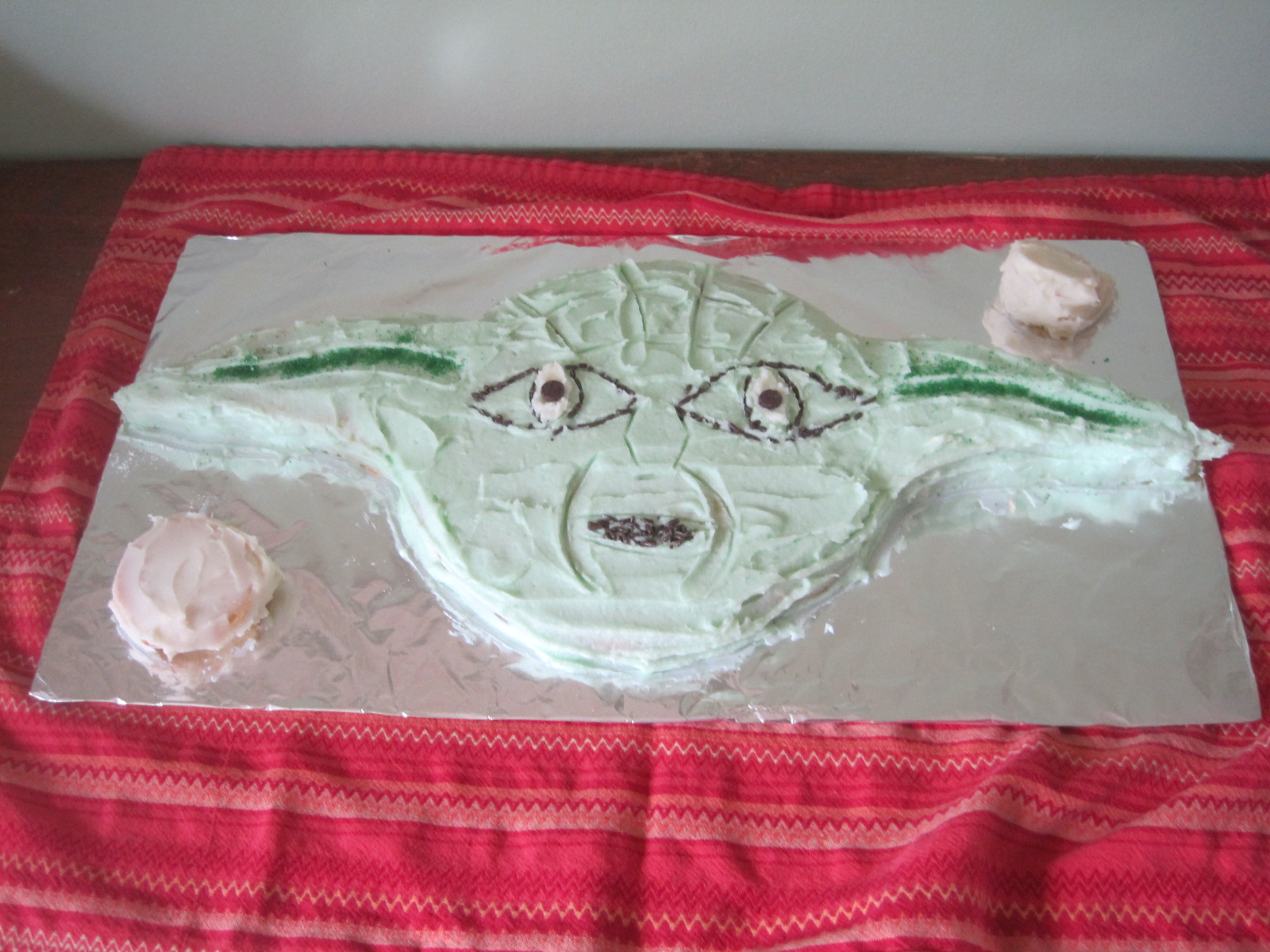
I used green sugar (find it in the cake decorating section of the baking aisle, with the sprinkles) for the ears and put chocolate sprinkles carefully – yes, with my tweezers – in the lines to make the eyes and mouth. (Laugh if you will, but I had an empty house and was blasting Pandora on the Duran Duran station. I know how to live it up.) I used a little bit of the uncoloured buttercream for the whites of his eyes and a chocolate chip for each pupil.

And I decided to leave it at that before I messed it up completely.

Candles lit
Mabel is eyeing up the moon she wants to eat

I put the candles in the moons, so they were good for something after all.

I heard the news today, oh boy

When I would come downstairs in the morning, the radio would be on in the kitchen, with my Dad listening to RTE 1. My mum would probably be listening to the same thing on her little “wireless” (yes, they still say that word in my house, and it has nothing to do with the Internet) in the bedroom. On the hour, Dad would approach the radio and stand right beside it, listening intently to the headlines, and anything I happened to say would be summarily shushed.

At nine o’clock every evening the news had to be watched, no matter what else happened to be on telly that might have pushed through that hour. In fact, we didn’t tune into programmes that started at odd times like 8.50 on Channel 4 or 8.15 on BBC 2, becuase we’d just miss the end when it came to 9.00 and it was time to turn over to RTE 1 for the nationwide news.

I’m not there any more, but nothing else has changed. I can guarantee you that my Dad was standing by the big radio in the kitchen listening to the news this morning, and will be tuning in again at 1pm (lunchtime news) and watching the TV at nine this evening.

As a child, I didn’t really understand this compulsion to find out what was going on. It was only ever boring news (a redundancy of terms, I thought) about another person killed in Northern Ireland – which might as well have been on the other side of the world as far as I was concerned, insulated in South County Dublin – or budget cuts or politicians talking about whatever it was they talked about. Now and then an earthquake or a hijacking to keep it interesting, but nothing that was relevant to me. Certainly nothing that worried me. The only times I remember being affected by headlines are when a family would die in a house fire. I would lie in bed plotting my fire escape route, planning to leap from my bedroom window to the flat roof of next-door’s extension.

In this house, where I am the parent, we don’t listen to the radio and we don’t watch news on TV, unless there’s a tornado watch and I have the weather channel on. We get our news from the Internet, at whatever time is convenient, and the children are none the wiser. They barely know what an actual newspaper looks like, so infrequently does one appear in our house.

It wasn’t a conscious decision, more a change inspired by lifestyle long before there were children. When I moved here from Ireland I was dazzled by the news channels that either seemed too parochial or bombarded me with constant non-news. I trusted The Irish Times online more than any American news source; though I learned to listen to NPR in the car, and became quite attached to Morning Edition on the way to work each day when we lived in Texas, the unpronouncable names of their announcers, the global reach of their reports, and the warm, comforting voice of Frank Deford, whose amusing takes on sports managed to interest even know-nothing me.

Once Dash was born, though, and went through that inevitable car-hating phase that seems to last for ever, the last thing I wanted was more noise in the car. I started tuning into the classical music station in the hopes that Mozart might calm him down, or at least increase his brain power while he was turning himself red in the face and waving his arms hysterically, breaking the heart of his baby-wearing, co-sleeping mama, trapped a million miles away and trying to keep her blood pressure under control in the driver’s seat.

Seven years, two babies, three moves, and one car later, the radio is still mostly stuck on classical NPR, though in the brief moments when I might be driving alone, I’ll switch over to the news channel and try to increase my IQ a tiny bit by listening to sensible adults discussing far-reaching things. The last time we heard the news in the car, probably looking for a weather update or something, two minutes of broadcast led to the six-year-old asking, “What’s gang rape?” So we won’t be doing that again any time soon. (We didn’t tell him. I’m all for answering children truthfully, but some things… Just no.)

So my children don’t know about the Newtown shootings or the Boston marathon explosions. When B and I want to discuss breaking events, we resort to our pathetic store of Irish vocabulary, or silently motion towards the laptop screen. To be honest, thinking about my own reactions to horrific news – the Enniskillen bombing , for instance, happened when I was 14; Lockerbie , when an aeroplane fell out of the sky onto Scottish people in their beds, a year later – it might all seem distant enough to shrug off. On the other hand, it might terrorize them (mostly Dash, given age and personality), or just gnaw away at them in the dark, like those house fires did to me. The facts that Dash is a first-grader, that we have been to the Boston marathon, might make it seem scarily close, just as they do to me. I don’t really know what their reactions would be, but I don’t feel the need to find out.

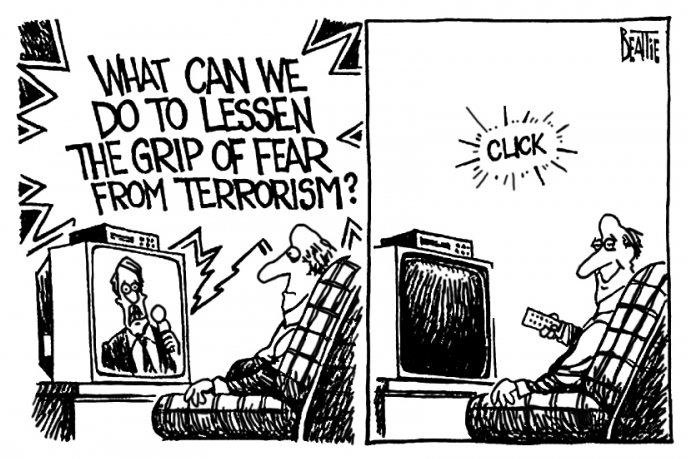
What can we do to lessen the grip of fear from terrorism? Switch off. (Cartoon)
This. So much this.

Will my children be less interested in current events because they don’t hear the news every day? I certainly had no interest, and no amount of hearing the news could inspire any, apparently. Should we be discussing the news at the dinner table? At what point will they start hearing the news – when they start reading news websites for themselves? When they have Twitter accounts? I suppose at some point they’ll have a Civics class that encourages them to find out more about what’s going on, and maybe then we’ll finally have to tune in the radio.

How does it work in your house? Do the kids see the news, or do you talk about it? Do you think an interest in current events and/or politics is inborn or cultivated? Did exposure to news events when you were a child go over your head or give you nightmares?

Would we all be better off with less information? Sometimes it certainly feels that way.

Dichotomy

Mabel got into a little bit of trouble at school yesterday. It was an unfortunate snowballing of incidents that led to her being brought inside from the classroom and culminated in her “writing” a note of apology to the (not very) injured party. (I think the teacher did the writing and Mabel signed her name, which she’s very good at doing.)

I was pleased when I heard about the note, actually, because I know that asking Mabel, or ordering Mabel, to say sorry when something has gone wrong, is hardly ever going to end well. Once she’s mad, she just gets madder and madder and more intransigent and more upset. Writing her Sorry sounds like it was a good way to redirect and refocus, give her a chance to cool down and save face, and enable her to say something that quite likely through heaving sobs she literally wasn’t able to do otherwise.

But that’s not my point.

The point of this long and winding story, the punchline, shall we say, is what she told me this morning when we were talking about it a little more and I was extolling the virtue that is forgiveness, because she was holding a grudge that was the main reason she wouldn’t apologize. She told me, slightly sheepishly,

- Well, also, I didn’t say sorry for a while because Miss B’s lap was nice and warm and I liked sitting there.
- Even though she was being angry with you?
She shrugs.
- Ya-hah.

Right. Well. I see.

I don’t know where to go from here. I was never that child. Any hint of disapproval from an adult and I’d be all over the saying sorry. I need people to think I’m good. I need them to think I’m nice. Maybe it’s a failing, but I’ve always been that way. My daughter, not so much.

She doesn’t care what people think of her. That’s an amazing quality to have, so long as we can harness it for good. She does what suits her, and bends us all to her will, and as I watched the other children ask her what they should do this morning in the game of dolls that she was playing at school, I thought that she’ll make one heck of a managing director.

Parenting, huh? We have to be their biggest cheerleaders and their harshest critics, and sometimes I’m just not sure which one I’m supposed to be doing when.