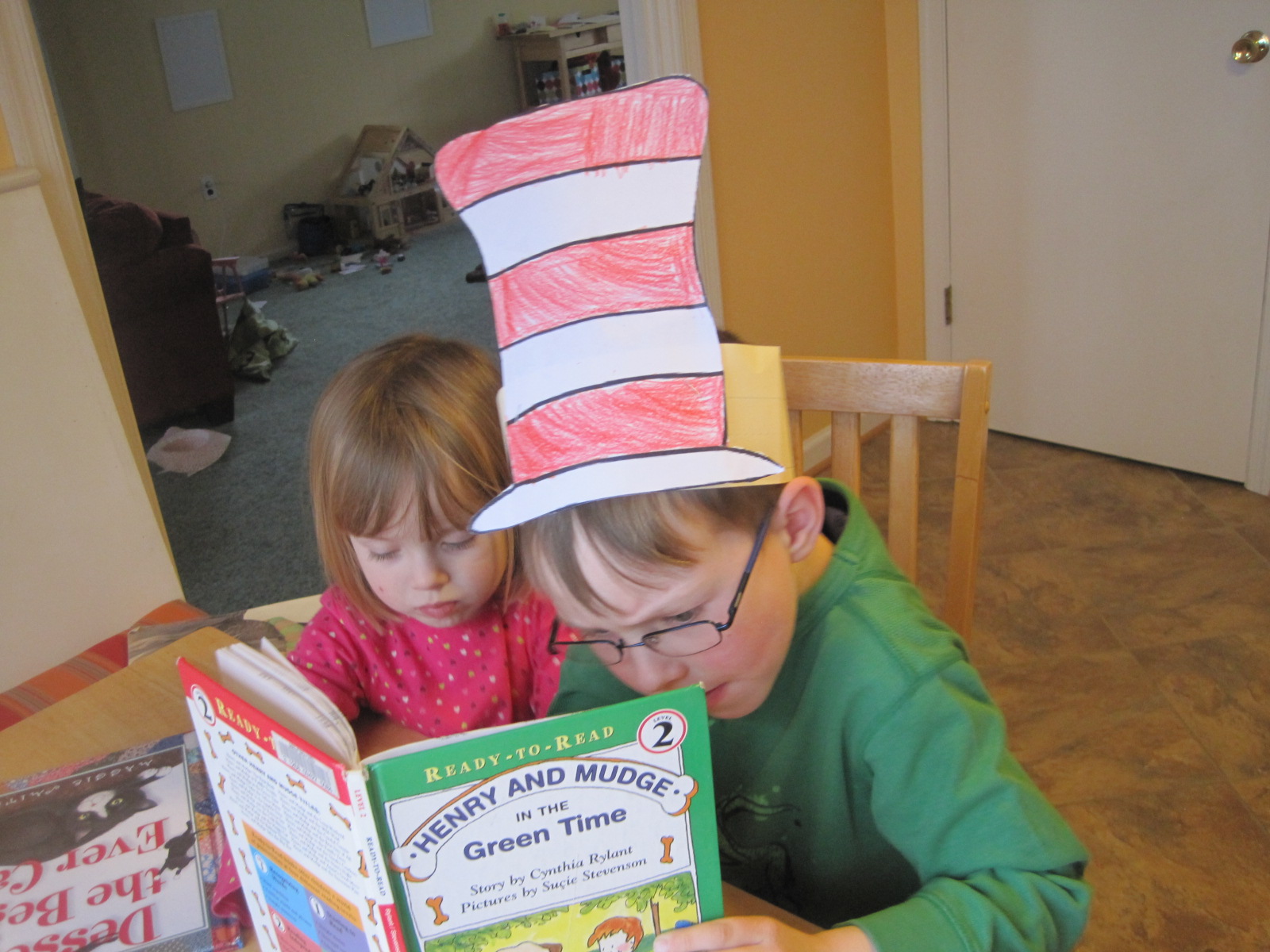
We had the meeting to discuss the results of Dash’s vision assessment , and this – in bald terms – is what we learned:
- He has an oculomotor dysfunction. That means his eyes don’t track smoothly or move easily from one line of text to the next.
- He has a binocular vision dysfunction. This means his eyes don’t work together quite the way they should. This is what makes the words blurry and makes it hard for him to read from the blackboard.
- He has difficulties with visual memory.
He’s going to start therapy in a few weeks, two sessions a week if possible, for 36 weeks. They say his “prognosis for improvement with timely intervention is very good. ”
The tests also showed things he was good at. He can tell left from right like a champ, which impresses me no end as I still have to stop and think every time. He’s very good at reading made-up words, which proves that he knows all the rules and applies them. I know he can read pretty much any word he wants to; it just seems that his eyes get in the way sometimes. His fine-motor skills and shape-copying skills are dandy, so his bad handwriting is within the bounds of normality and let’s just say he gets that from his father.
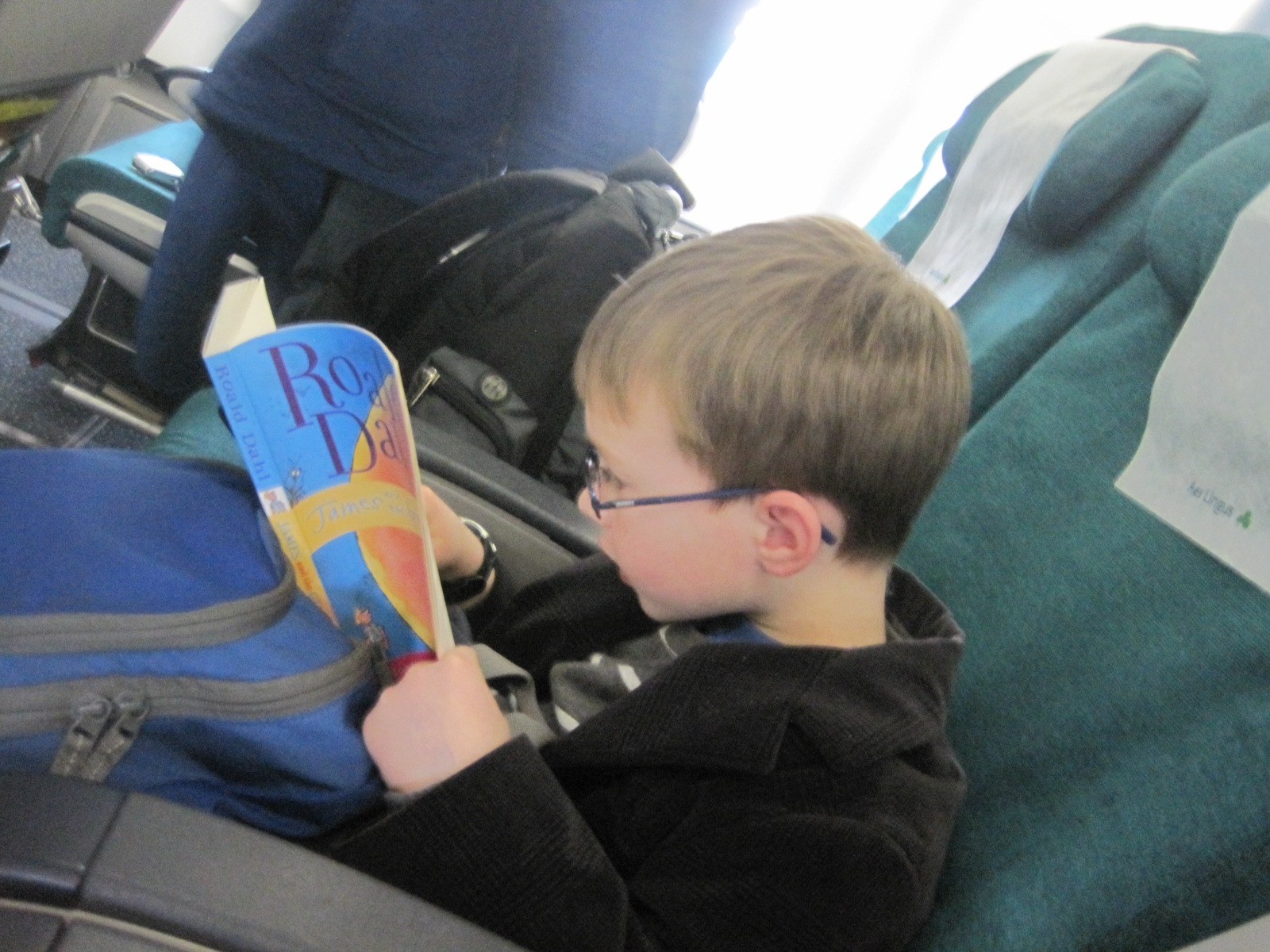
The doctor was particularly impressed, if that’s the word, with the way Dash tackled one of the tests. He was asked to read out loud along a line of unevenly spaced numbers, and then to the next line, and so on. She and I both observed that when he got to the end of the first line, he looked down to the end of the line directly below, followed it back to the start, and began reading aloud again from there. It worked – he didn’t lose his place – but it was tedious and slow and not the way the rest of us read lines of text. She said she’d never seen that tactic before, though.
I still have a lot of thoughts about all this. It seems like a very first-world problem. It seems like a very privileged solution. (Our insurance will probably pay for half of the therapy – the oculomotor part – but not the rest.) It seems like the sort of thing one could easily be duped about – what parent, when told they can give their child extra help, would say “Nah, we’ll just let him keep doing it the hard way, thanks.” Our bullshitometers were, if not exactly on high alert, at least engaged. Let’s just say that our healthy Irish cynicism had us vaguely wondering if they’re just trying to part us from our dollars.
Naturally, I also wondered what we’d be doing at this juncture if we were still in Ireland. I have no idea whether an assessment would be possibly or any therapy available if we were there. Would we be told he’s a slow reader and left at that? (I’m inclined to believe that many “slow readers” have these problems, but have been left to fend for themselves and catch up if they could. How long would it take? How much would they fall behind? Or does the pace of schooling now mean we have to catch up more quickly whereas back then (whenever “then” was) it wouldn’t have mattered so much?
But on the whole, though vision therapy is a fairly new field, it seems to
get good results
, and, obviously, deciding not to pursue it was not something we seriously considered. Dash’s teacher, to name one trustworthy source, has done this for two of her children. The office has excellent credentials and they have a waiting list for therapy and are extending their premises right now. (So if we
are
being duped, we’re not alone.) I asked the doctor, “Does it work?” and she told me it does. I’m willing to give it a whirl, because I can’t imagine a life where reading is not a source of joy and excitement and the best pastime I could ask for.
Lots of kids have speech therapy; this is vision therapy. We’ll see what happens.
**************
If you want to find out more, I found this Reading and Vision site very useful and used the checklist linked there to decide we should investigate further. I found the office we used from the directory at the College of Optometrists in Vision Development site, which lists those qualified in behavioral, or developmental, optometry.