Monthly Archives: November 2013

Vision therapy – not done yet

I’m feeling a little disillusioned about vision therapy lately. Since the Great Leap Forward that happened around September, I haven’t really seen much more advance with Dash’s reading.

We are approaching the end of his originally scheduled sessions , but when he had an assessment last week the doctor said that his eye teaming was still not great, and added a few more to work on that specifically. I told her that his reading still seemed slower than I would have expected, and she admitted that when he did the Readalyzer test, his eyes were still hopping around the line rather than following the letters sequentially as you would expect.

When we started this, early last summer, I felt that the worst outcome would be if they “passed” him at the end of his allotted sessions, said that everything looked fine on paper, and yet we couldn’t see any noticeable difference in his reading. I don’t think that’s going to happen – some of his numbers have definitely improved, and his reading level has definitely gone up a few notches; maybe I’m just asking for too much. Maybe I should be happy with where we are.

But then. A friend of his was in the house last week – a boy who I know is reading way above his grade level, so I shouldn’t compare them at all. But he read the warning on the side of Dash’s Beyblade arena (if you don’t know, don’t worry about it) just the way you or I would, fluently and conversationally, while Dash was still trying to get it together to focus on the first couple of words. It hit me, a little bit.

Reading isn’t rocket science. Everyone can read. It’s not hard. It shouldn’t be this hard. For Dash, I can tell that it’s a big effort. He’s not lacking desire, or curiosity, or interest, or practice, and he’s smart to boot. And yet, I heard him struggling over the word “house” last night as if he’d never seen it before. It’s as if he has to start over remembering the rules and concentrating hard every time he cracks open a book.

I just want to know if it will always be that way.

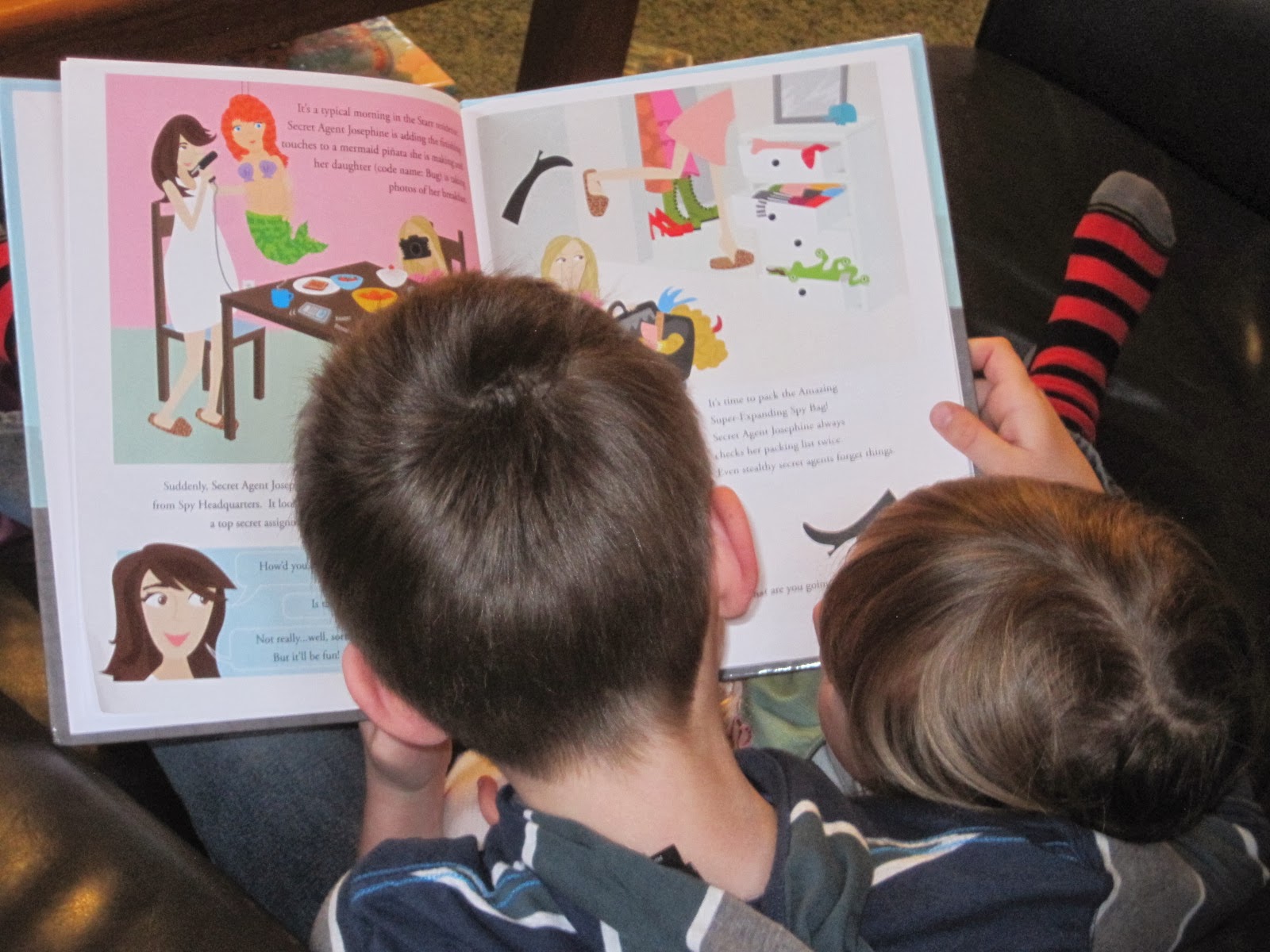
Two heads over a book
Reading to his sister, which is definitely a first, so I shouldn’t complain. 

This entry was posted in reading , vision , vision therapy and tagged angsty on by .

Notes on Thanksgiving

That is, notes about Thanksgiving that I wrote on the day of Thanksgiving.

The point of Thanksgiving, I’ve decided, is that it’s one holiday the whole country can get behind.(Except the Native Americans, maybe. I’m not sure how they feel about it.) Instead of trying to smush a bunch of different religious celebrations into one time of year, everyone can just eat turkey and be thankful and watch the Macy’s parade on TV and lapse into a tryptophan coma at the same time. It’s pretty much like SuperBowl Sunday except you don’t have to watch the game. And less finger food; you’ll probably need to use a fork, at least to eat your mashed potatoes.

The other point is to provide a second holiday in the winter season, so that you can spend one with your own family and one with your in-laws. In a country this big, where people often end up far from where their families live, this is a very important consideration. You can’t just do Christmas Day at your house and Stephen’s Day (that’s the day after) at his folks’, and vice versa next year, the way we do in Ireland.

Further, another point of the whole thing is so that everyone can bond on Twitter and Facebook about how much they’re panicking about it, how fabulous they menu they’ve planned is, how they’re simplifying their lives and ordering out this year, how gross Martha Stewart’s Twitter photos of food are, and how they’ve now eaten way too much and cannot possibly move off the sofa for another week.

And don’t forget the way it provides a handy entrance point to Christmas. You can complain about Christmas creep all you like before Thanksgiving, but once that’s done it’s jingle all the way, baby, and no two ways about it. Many people put up their Christmas decorations as part of their Thanksgiving ritual, just to hammer this fact home.

Mostly, the point of Thanksgiving is to give the poor overworked American populace a chance to take a day off, or even three, without depleting their teeny tiny vacation allowance. They will probably spend most of this time stuck in traffic, but dammit, they will have their turkey.

And pie. Pie is very important at Thanksgiving.

Happy Thanksgiving, and thanks for reading, wherever you are.

This entry was posted in America , ex-pat and tagged holidays , Thanksgiving on by .

A student

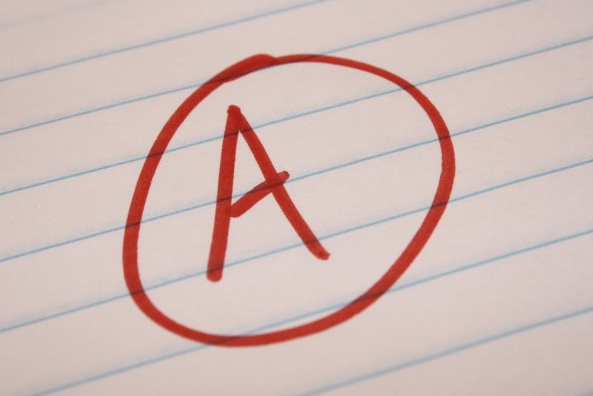
This is the first year that Dash has brought home letter grades on tests and reports instead of smiley faces and stars and mostly meaningless abbreviations like IP for in progress and PR for proficient. (The checkmarks and smiley faces and stars actually followed a progression that the kids were well aware of, so they may as well have been A’s and B’s and C’s, really. But it seemed friendlier and less pressured.)

Dash never really asked what was in his report, and I never particularly told him. I said it was fine, and that was that. It was usually a mixture of IPs and PRs and an OG for reading. (That means “on grade” level.)

Dash’s first report this autumn had a lovely line of straight A’s. I was happy, and feel this slight improvement can probably be credited to his vision therapy . In general, though, he’s a smart enough kid who’s well-behaved in class, listens to the teacher most of the time, and is liked by the staff. I’m pretty sure that these are the traits that lead to A’s from your teacher when you’re in elementary school just as much as your test results and your homework does. (Especially in fuzzy subjects like PE, for instance. Then it’s all down to how much the teacher likes you.)

I told him he had straight A’s, and he was pleased, because he knows that’s a thing that people aspire to.

I would like to leave it there, but in American schools there’s this little thing called Honor Roll.

Twice a year (three times? I don’t know yet) in our school, all the children who have all A’s and B’s or higher on their reports are deemed to be honorworthy, and they have an assembly to which their parents can come to watch them be presented with a certificate saying that they’re on the Honor Roll. There are bumper stickers, even, saying that this car is driven by the proud parent of an Honor Roll student at your particular school. It’s all made a bit of a big deal of.

For tedious reasons, Dash didn’t actually get a second report this term, and therefore was not eligible for Honor Roll this time, but his teacher assured me that he would have been on it, and apologized for the oversight. (Okay, tedious explanation: what happened was that we had to un-enroll him from school when we went to Ireland, so that his absences wouldn’t count against the school and bring down their average, and so his records were all inaccessible when the reports were generated. We’ve done this before and it’s a simple matter to re-enroll him when we get back and he slots straight back in as if he’d never left. It’s fine.)

Not only did I not care about the second report; I was actually a little relieved that he wouldn’t be in the Honor Roll thing. And that seemed weird, so I put some thought into figuring out why I felt that way.

As a child who enjoyed reading and tended to “lick up to” the teacher, (pretty much the same as brown-nosing), I usually got good marks at school. But somewhere along the way I took in the fact that it was bad manners to ask what someone else got in a test, because that was tantamount to bragging about my own grade. Test marks were like salaries – you don’t ask, but if someone else offers information you can reciprocate with yours.

So having a ceremony where you proclaim to the whole school that we’re the smart kids doesn’t seem fair.

Maybe I’m wrong. Maybe they’re showing the value of hard work and application. Maybe that’s the only way you get A’s and B’s; but somehow, when you’re seven years old, I don’t think that’s really it. Maybe they’re proclaiming that they’re the kids with the involved parents, the families where a parent is around to help with homework, where books are read as a matter of course, and, often, where English is a first language. I’m pretty sure all those factors also contribute to high grades, and those have very little to do with how hard the kids work at their studies.

Maybe I’m wrong, and all the other kids watch the Honor Roll-ees troop off for their assembly with nothing but goodwill and ambition in their hearts, happy for their friends and newly committed to learning all their spelling words this week so that maybe next time they’ll be one of the hallowed few. Maybe, in fact,  half of the kids at school are on Honor Roll, and the others couldn’t care less about it. Maybe some kids would actively hate to be on it. Maybe it would destroy their street cred, and is just one more reason not to bother doing their homework.

I’m not sure I see the value of grades for elementary school students at all, for one thing. In general, bragging about grades (albeit in a fully school-endorsed way) sits badly with me. If Dash ends up on Honor Roll next time, I’m sure I’ll go along to the ceremony and be delighted for him, but I’m not going to be the sort of parent who pays for grades, or rewards an excellent report card with an extravagant present. Not at this stage. Maybe never.

When I googled to find that news story I linked to above, it turned out that I’m not the only person who maybe thinks Honor Roll – or even grades in general – aren’t the greatest idea ever. But apparently lots of other people think that the people who complain about Honor Roll are like the ones who don’t want winners and losers in kids’ soccer games because they want to protect their little darlings from ever feeling “less than.” My point is exactly the opposite: I don’t want a group of kids to feel that they’re “more than,” when – in elementary school at least – I think that hard graft and dogged perseverance are not major contributors to good grades. There are way too many other factors at play in the early years.

Tell me what you think. Do you think Honor Roll helps kids do their best, or would you rather it didn’t exist?

Old dog, new trick

My dad is 84. I remember when his office got its first computer – I must have been around eight or ten. He would come home with tales of how the secretary – whom everyone loved and who, despite her glamorous blonde hair, was far from an airhead – had lost some file or other again, thanks to the silly machine. He had no time for this new technology. He kept his files, his records, his drawings, his specifications, his letters, safely and securely on paper, in filing cabinets, where they were swiftly to hand when the need arose.

About six years later the recession (the other recession, the one in the 80s) hit the building trade hard (history repeats itself) and with it, the architectural firms. His company was reduced to two men – himself and his partner, now the senior members – who retreated to their respective homes and worked from there, renting out the floor that used to be a workspace for thirty employees.

Luckily, we had a basement room that he could use as an office, and I remember the day all his huge hanging files of blueprints and plans were moved in, in giant cabinets that took up most of the space, leaving a thin passage for him to walk between, and of course a place for a tall stool at the angled drawing board. It may have been then that we acquired our first home computer – an Amstrad with a nice green screen and square type that functioned mostly as a word processor. It also had two games, which I played to death. It never occurred to us to get any more games for it, though I suppose they were available.

Luckily for us, my dad’s partner is a couple of decades younger and an early adopter of new technology, so every time he upgraded his computer we would be the happy recipients of the hand-me-down. Thus we progressed, eventually, from the Amstrad to an Apple, and a newer Apple, and finally even one with a colour screen. I learned to type from Mavis Beacon on one of those Apples, for which I will be eternally grateful. There was even a modem attached by this time – a phone-line modem, the sort that crackled and screeched and cost as much as a local phone call – which in Ireland is not free. But nobody ever used it, because it was too much of a hassle, and the Internet was not very interesting yet, and it took a long time to work.

My dad only ever used the computer as a word processor, and continued to print out, photocopy, and file all his paperwork just as he had always done. He never saved anything, except by accident, so that every now and then I’d go home and try to clean up the desktop, littered with things nobody wanted any more. My mum used it too, for her official correspondence, in the same way. I set them up with an e-mail account, but they never used it. “I’m too old for that,” my dad would say, self-deprecatingly, when I suggested that it might be nice to have. He couldn’t really see the point. He continued to do his drawing work by hand, faxing things through to people who couldn’t wait, sending letters by snail mail, talking on the phone. He was past retirement age, but he kept going as long as he had clients who would work with him in spite of his Ludditeism.

In only the last few years, things have changed. He really has retired now, the office downstairs is mostly disused, he and my mother face health problems of varying types. They have mobile phones, which stay nicely charged in their cradles, and are never used. I doubt either of them could figure them out at this point. Texting would be way beyond them.

But then. This is not a sad story of how technology that seems peripheral can become so central to life that people have difficulty interacting with you when you don’t use it. This is a story of hope and new beginnings. Of old dogs who do, after all, learn new tricks.

Because my dad’s partner, a good man without parallel, refused to give up on the idea of setting my father up with technology that could improve his life. He upgraded his iPad and gave Dad the old one. Dad got the house wired for broadband (though Eircom seemed to sit on that particular challenge for about six months). My dad mastered the art of the touchscreen, figured out that this one was pretty hard to mess up, kept at it, and now sends me an e-mail most days. I can send him little tidbits from our day, a photo embedded in an e-mail so he doesn’t even have to click away to see it, and he and my mother can see into our lives over here, so very far away, from a new angle.

My dad doesn’t like the phone. He’s the sort of father who says “I’ll get your mother,” at the first opportunity when I ring home. If trapped, because she’s not home, he’ll talk about the weather, or current affairs. (He gets his news from the radio at 9am and 1pm and the television at 9pm promptly. Missing the headlines is a bad, bad thing. I put a shortcut on the iPad to The Irish Times website when I was at home, but I’m not sure if he’s using that yet.) Anyway. I’ve inherited his dislike of phones, to some extent, so e-mail is the perfect medium for both of us. I don’t think he’ll be on Facebook any time soon, but baby steps are fine with me.

It’s a tiny thing, but it’s a great thing. If Steve Jobs is to thank for this, then I’m thanking Steve Jobs. I’m also thanking my Dad, who’s not been feeling so great lately but has powered through and made himself keep at this, picking up the iPad every day and trying to send me a message, even though sometimes it doesn’t seem to work, or the router has a red light and isn’t doing what it should, or he might think he has nothing to say. I’m proud of him for finally admitting that he’s not too old a dog after all.
The secret life of books

I started reading Charlotte’s Web to Mabel last night. She’s heard bits of it before, when B was reading it to Dash about a year (or more) ago, and she was concerned that she wouldn’t like it. She asked me to promise before we started that the pig doesn’t die. I said he didn’t.

I didn’t mention the spider.

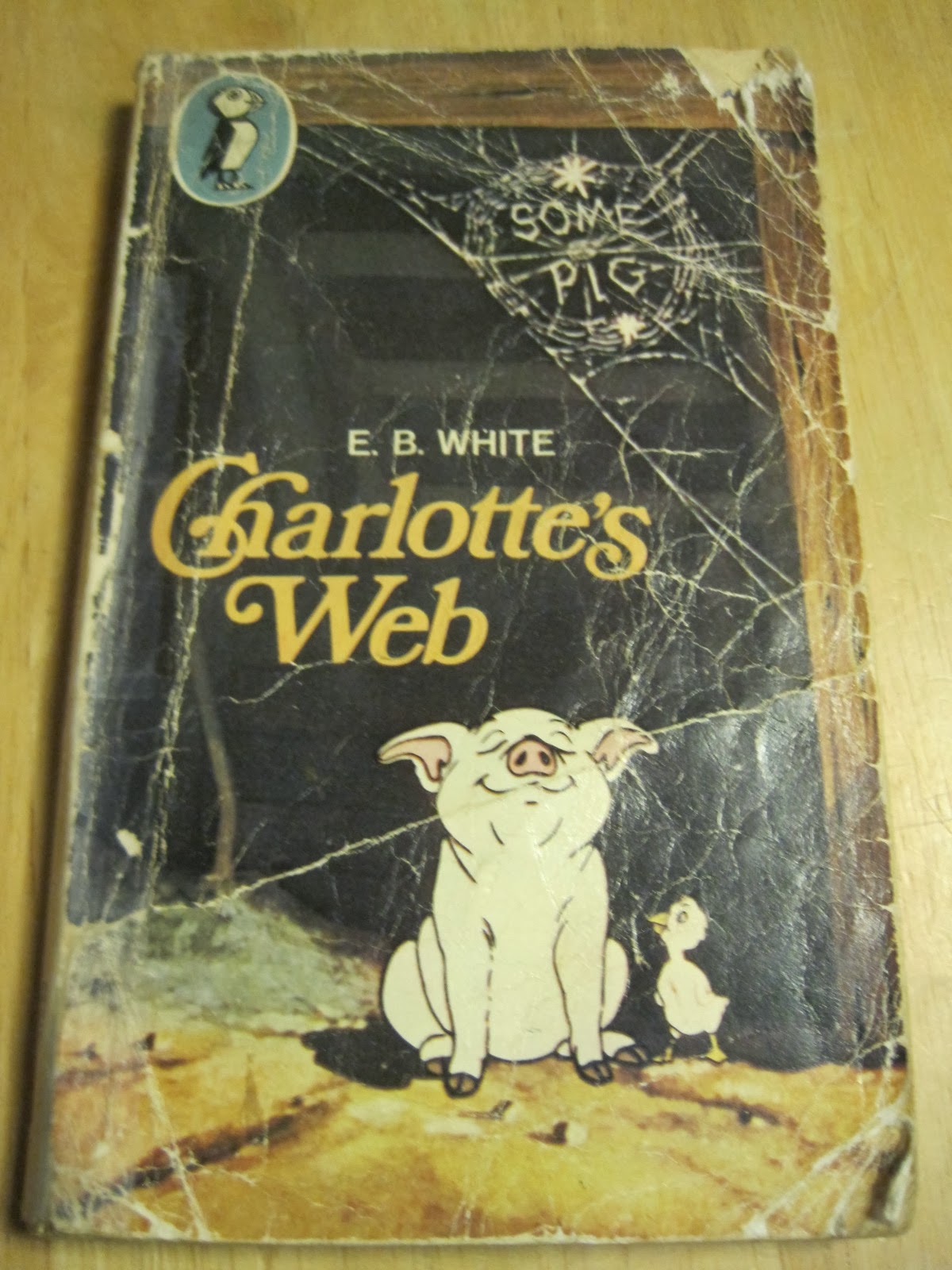
I love reading books I loved to my children; but more than that, I really love having the exact copies I read to pass on to them. There’s so much history there. Even if some of it isn’t even mine. Case in point, this edition.

                                                  battered copy of Charlotte's Web

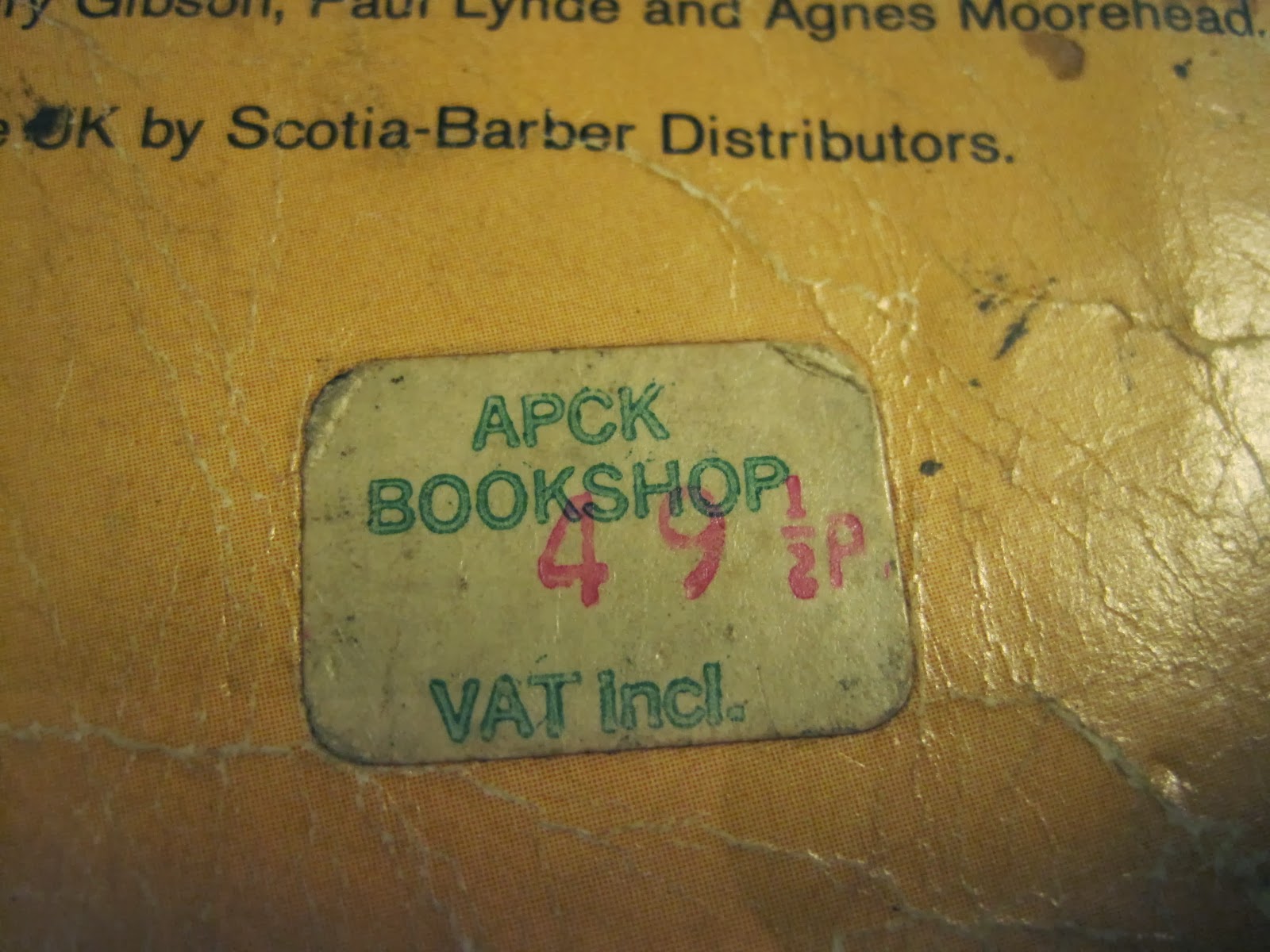
I’m pretty sure I bought it at my local second-hand bookshop (the wonderful and sadly now defunct Exchange , in Dalkey). I couldn’t tell you when, but I might have been around ten. It probably cost about 25p. It’s a 1976 edition, and still has its original pricetag on the back:

I don’t know where or what the APCK bookshop was, but I love that it was 49 and a half pence. The halves mattered.

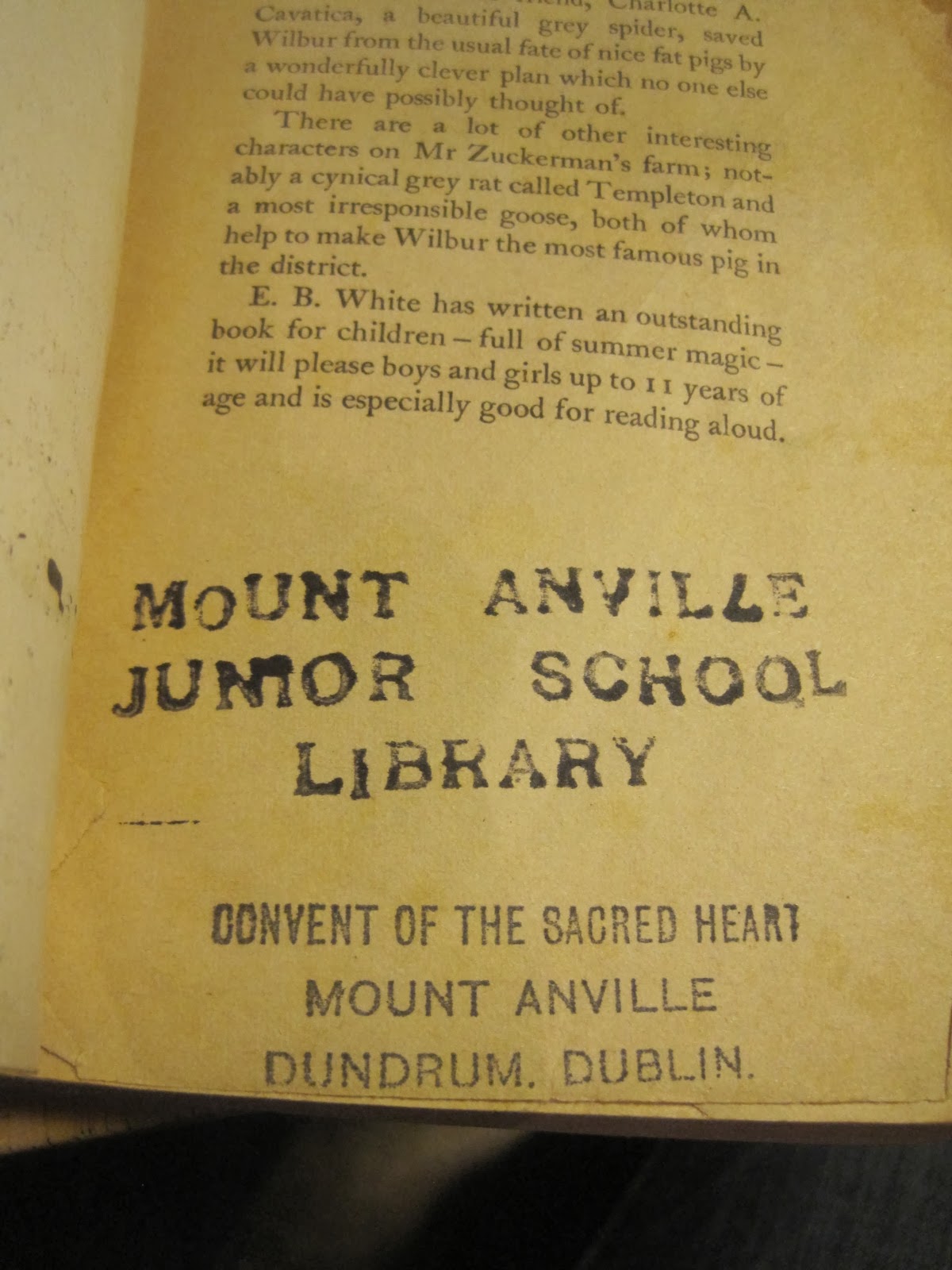
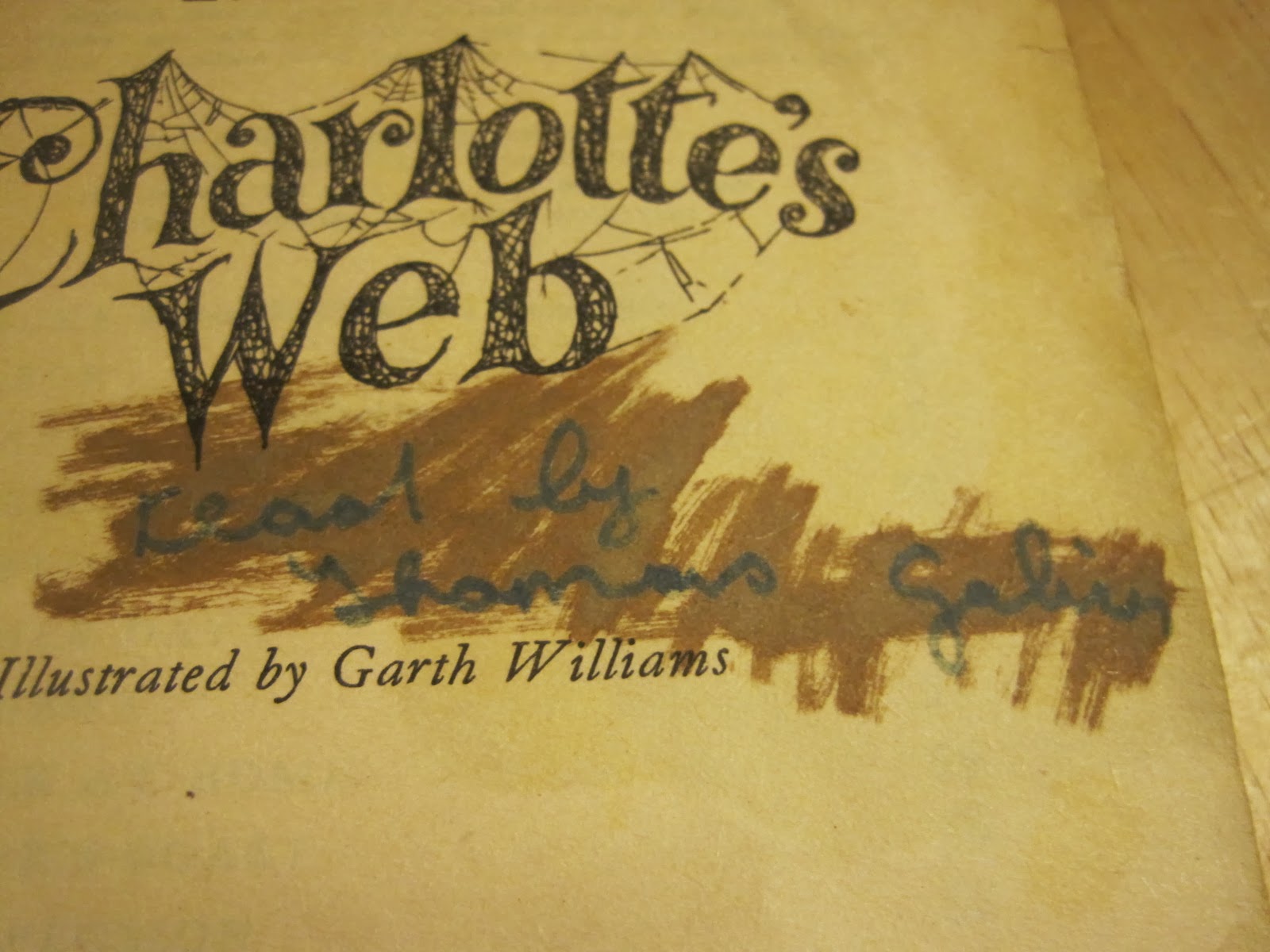
On the inside, the plot thickens, because there’s this:

This is a nuns’ book! 
And further, this, written with one of those invisible-ink pens that didn’t show up until you rubbed the other end over where you’d written. I had one of those pens, but Thomas Galin (sp?) is not me.

For some reason, I never wrote my own name in, but I can guarantee that it has been sitting on my bookshelf for longer than it sat in the library of the junior school at Mount Anville or on the shelves of one Thomas Galin. And now it can sit on one of my children’s shelves, at least for a while.
******
I hope she doesn’t get upset about the spider.

Creative excuses

I never really thought about nurturing my children’s creativity. If I want their imaginations to grow, I should encourage them to read books, right? But I don’t see why I have to get out the paints or bring glitter (devil’s scatterings! fie upon it!) into the house. They can be creative outside, in nature, where it won’t make a mess.

(You’d think I was immensely houseproud, wouldn’t you? I’m just immensely lazy, and don’t want to do any more cleaning up than is strictly necessary.)

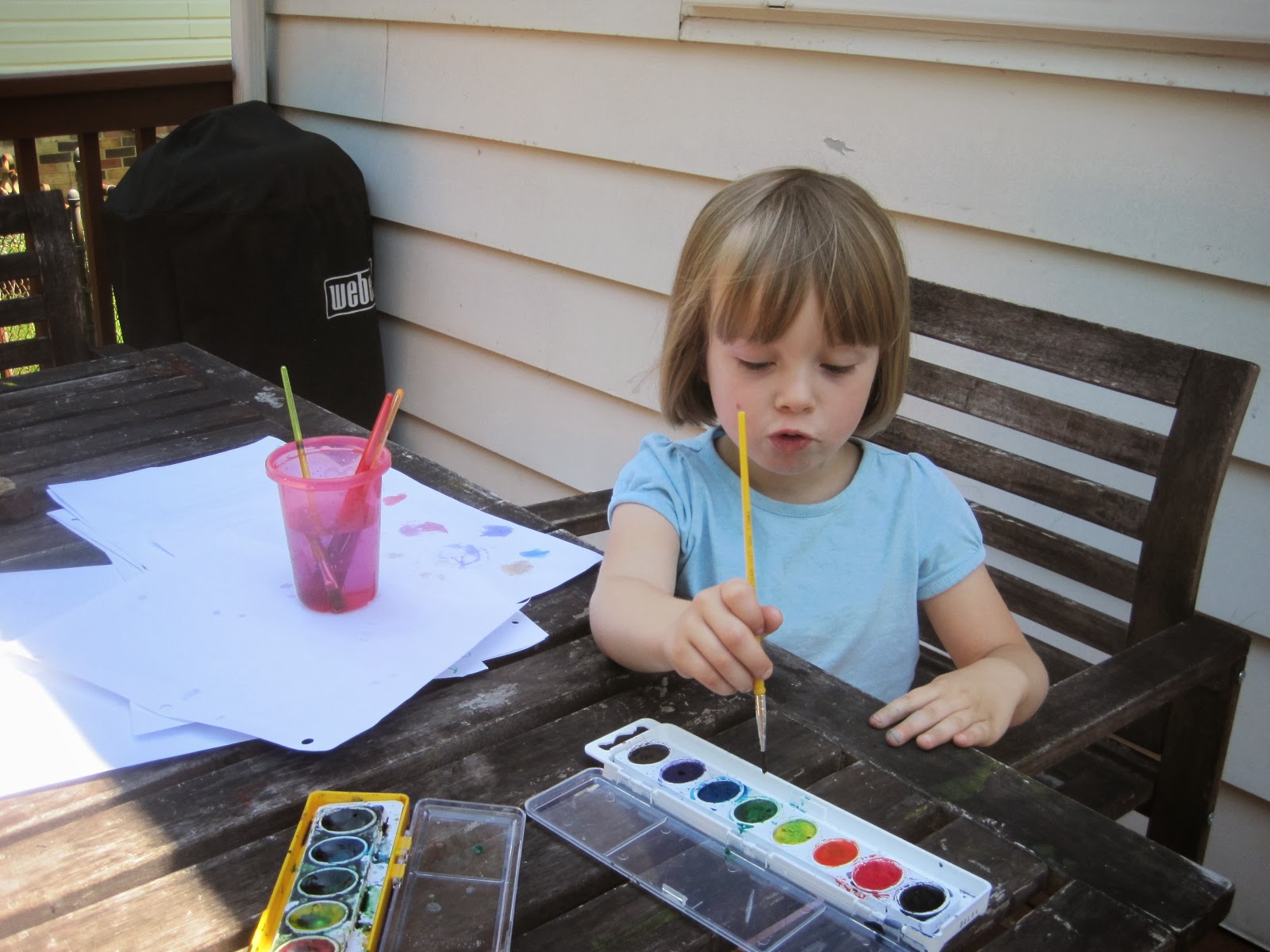
Every now and then I try. I let them do some painting outside.

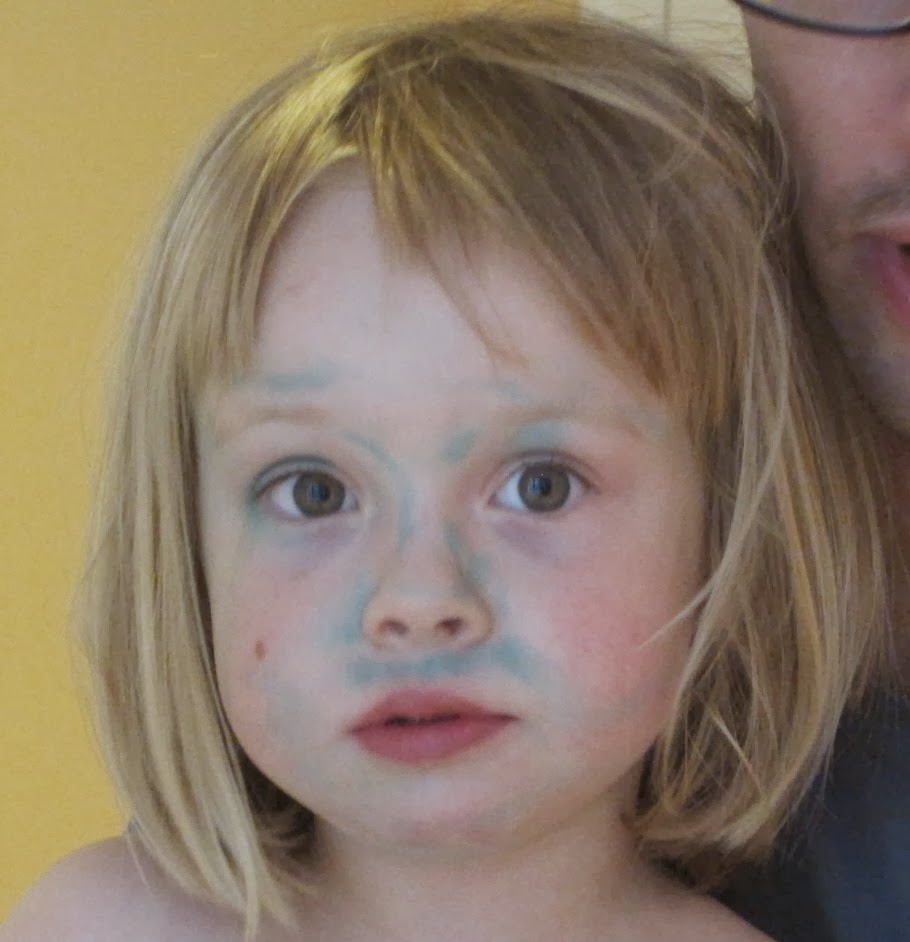
But then, even when I take away the paints because they’re making me twitch, things like this happen.

Even now, you’d be surprised how often I just have to dump her in the bath.

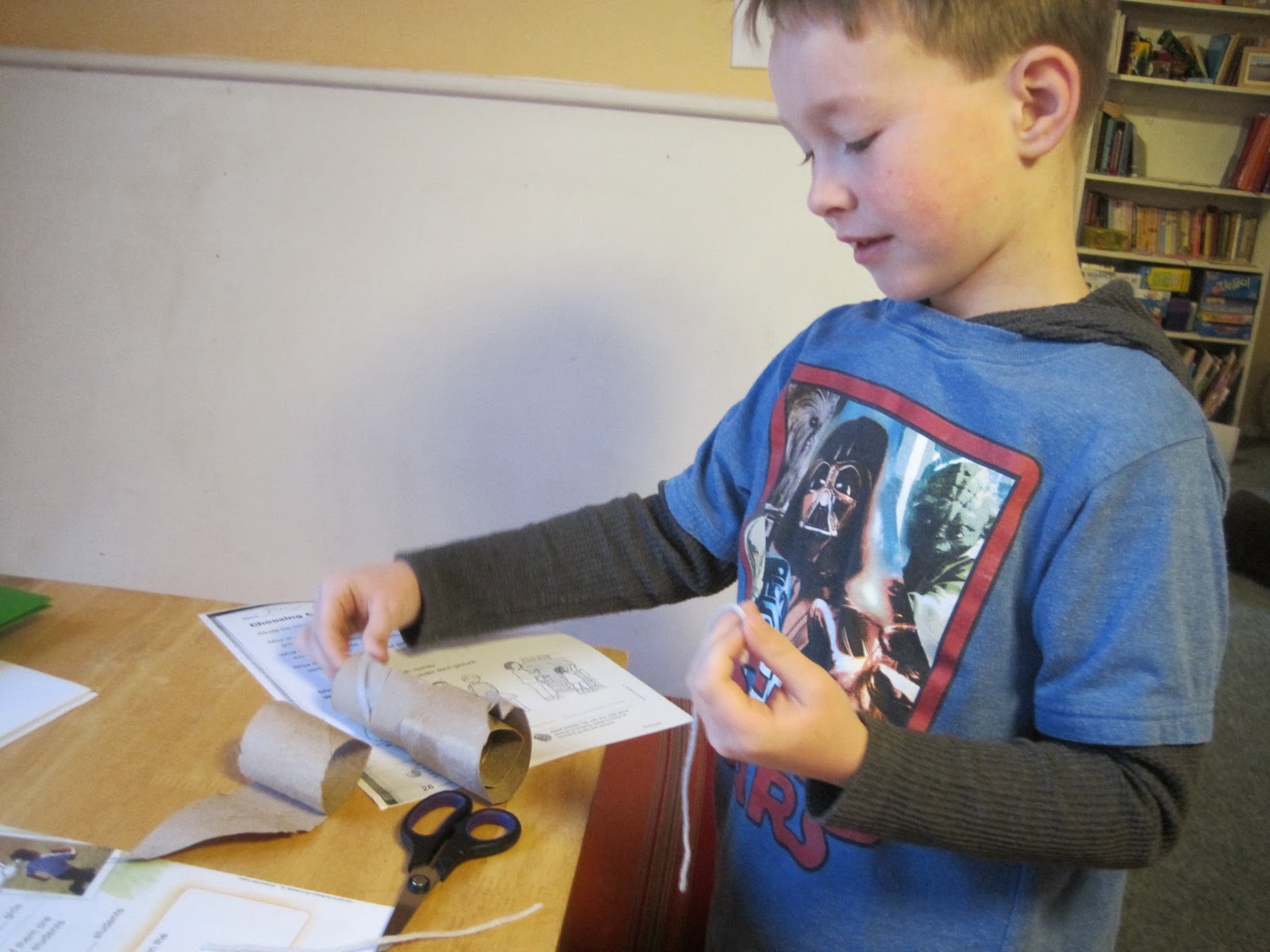
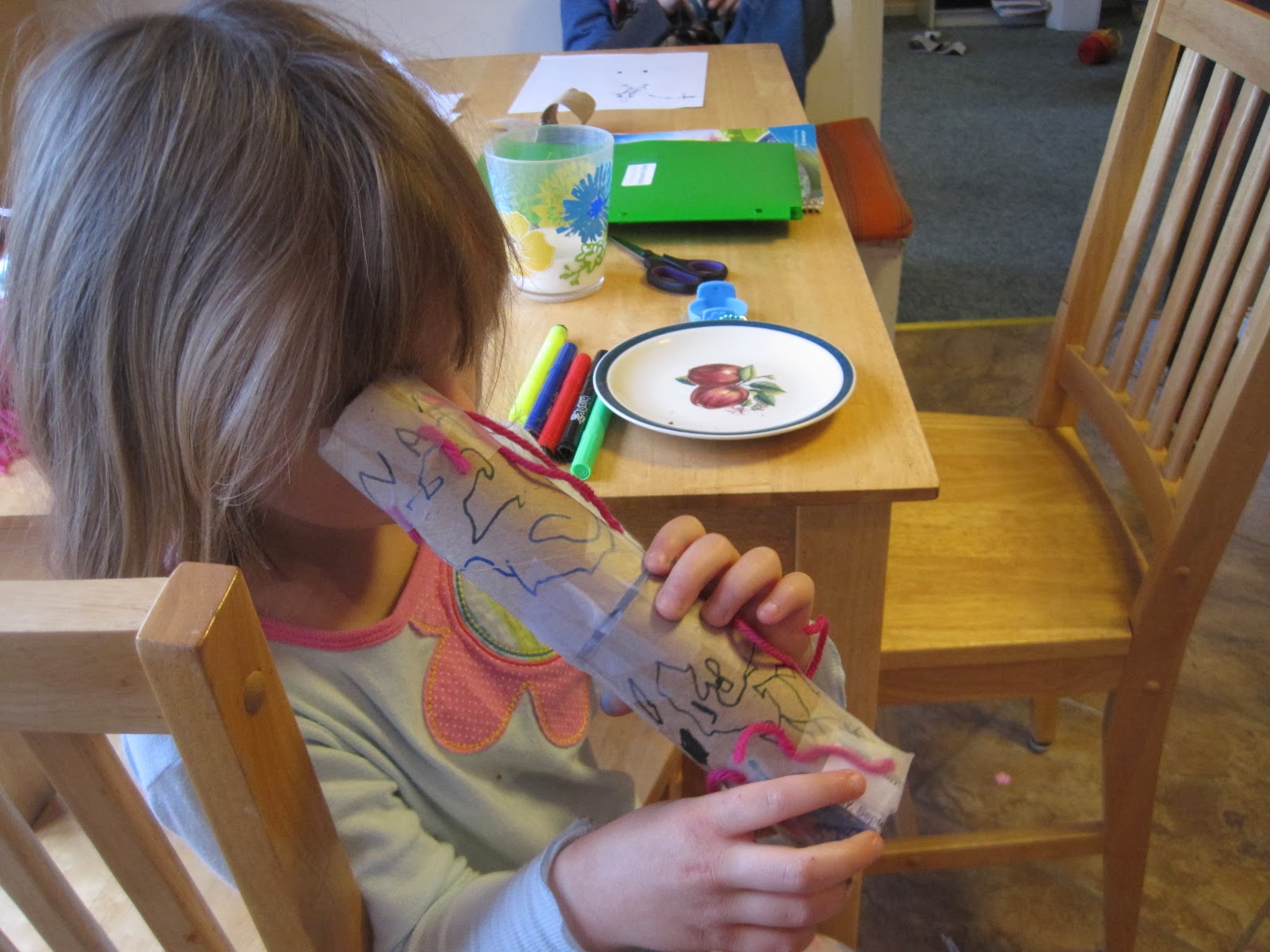
So creativity is not something I actively think about supporting. But maybe I’m just sneakily using reverse psychology, because then my kids find a stray toilet roll holder or two, and it’s breakfast time and Dash is meant to be finishing his homework, and before you know it, someone’s fashioning a telescope and someone else is making a kaleidoscope.

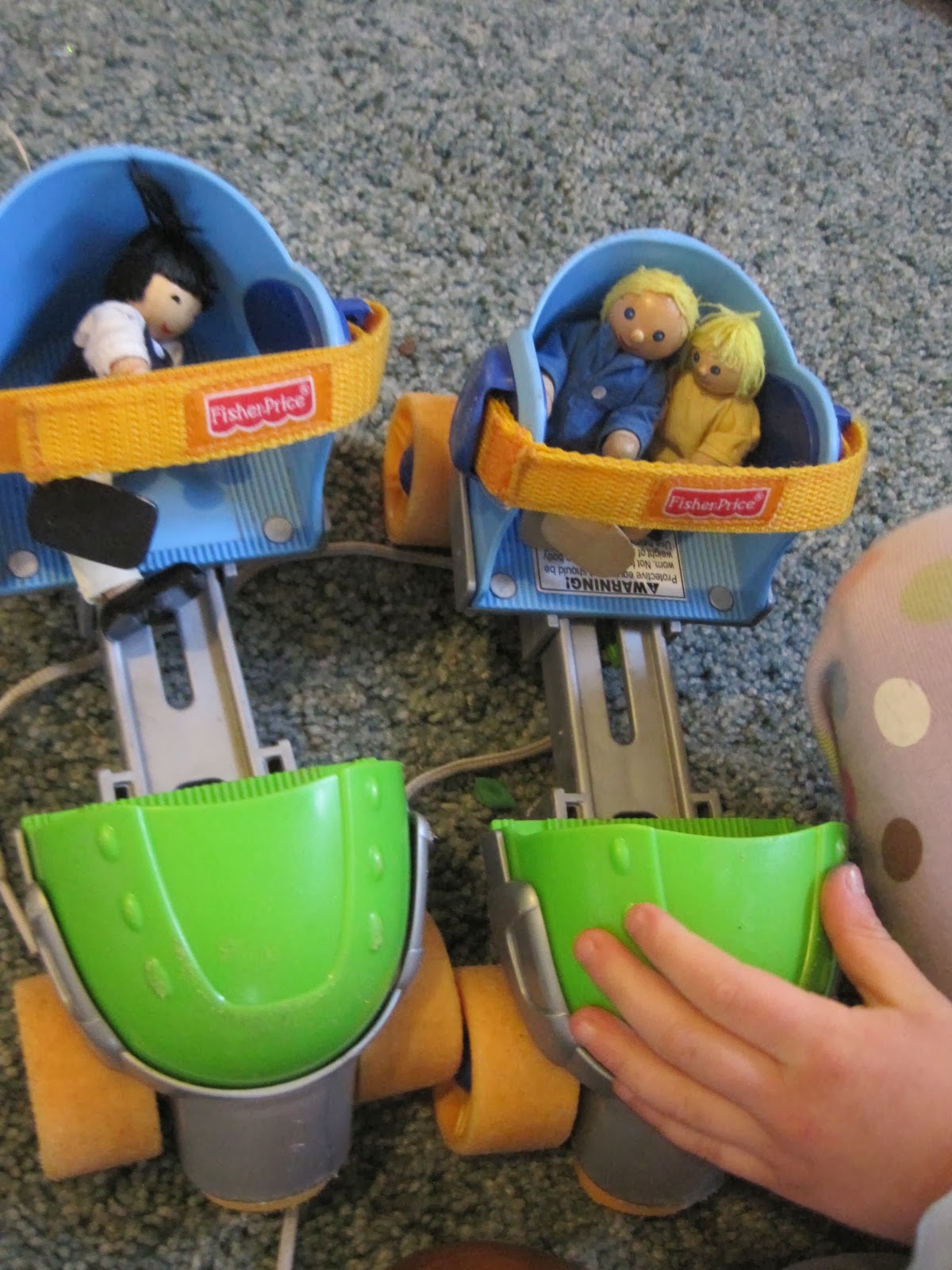
But then, there’s this sort of creativity, which I am much happier to get behind.

                                                Dollhouse people in a rollerskate car.

This post was inspired by Dreaming Aloud ‘s Carnival of Creative Mothers , which I’m not officially taking part in, because I thought I had nothing to say, being not what I would think of as a “creative type”. But if you are, or even if you just wish you were, you should check out all the other posts, and very strongly consider buying Lucy’s beautiful new book , which comes highly recommended by people in the know.

Things about me

But first I have to steal one of my husband’s points about himself, because it’s so wonderful that it deserves a wider audience:

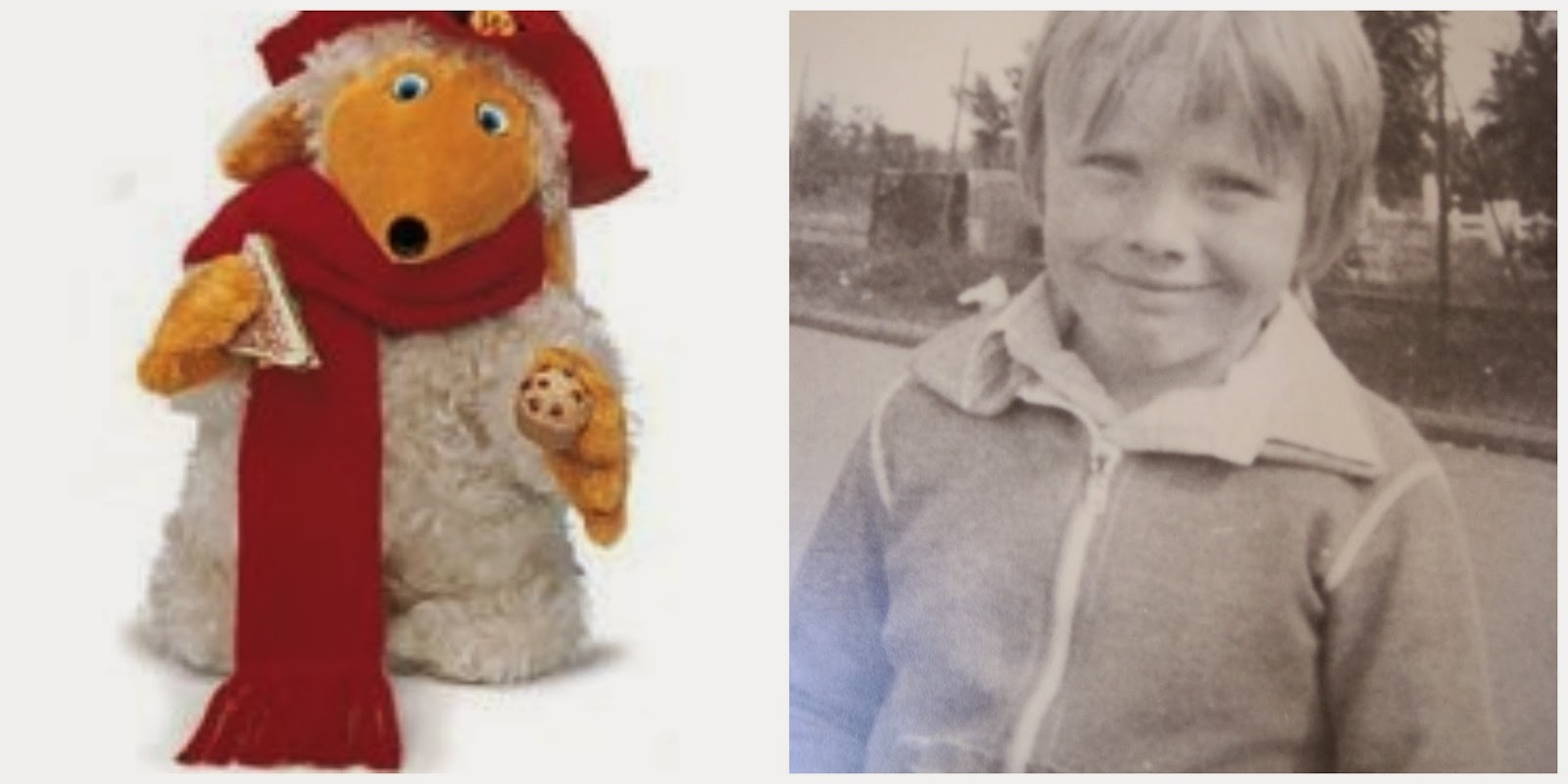
For some period around the age of 7, I became convinced I was actually Orinoco Womble. The Wombles merchandising at the time included chocolate bars, and I would look at my miniature pointy-nosed face in confusion when visiting the newsagents.

For full enjoyment of this fact, you have to know what both parties looked like: 


Stunning resemblance, no? (Also, clearly there’s no argument about whose son Dash is.)

Now that there’s no topping that, here are some much less interesting random facts about me.

1. I played Miss Prism in selected scenes from The Importance of Being Ernest in high school. I knew everyone’s lines.

2. Around the same time that my future husband was posing as a womble, I used to hide behind the sofa when the Daleks appeared.

3. As soon as the weather gets cold, I lose all blood from my fingers and toes, which is very useful when I want to dress up as a corpse for Halloween but otherwise annoying.

4. I had three boyfriends in first grade, but not one more until after I turned 18.

5. I can still recite, phonetically and probably unrecognizably, the “We are now approaching a station; please mind the gap” phrase from the Prague city train system. I can also ask for two beers in Czech.

6. I have not, and never did have, any wisdom teeth. This does not mean that I am less wise than you, but rather that I am more highly evolved, so there.

Tell me a random fact about yourself.


Peas and carrots

Mabel: Me and A__  just … fit together.

Aw, I think. What an adorable sentiment about her bestie.

Mabel: Like, he likes fire engines and ambulances, and I like it when people get hurt.

******

I keep trying to twist this around to getting her to say that she wants to be a doctor to help all these hurt people, but we haven’t got there yet. At least she’s not actively saying that she likes to be the one doing the hurting. No, she’ll just be over there observing your horrible accident.

A little ghoulish, perhaps, but not downright psychotic. I think.

Don’t call her cute

Don’t call my daughter cute.

I don’t mind. I think she’s cute too, sometimes. But she’ll have your guts for garters if she hears you.

A particularly chatty (and somewhat clueless) fellow customer in the supermarket made that mistake a week or so ago.

“You’re just so cute,” she said, in a cutesy-wutesy voice.

The five-year-old was unimpressed. “I’m not cute,” she countered, with a steely gaze.

I asked her later why she doesn’t like it – not because I disagreed with her stance, but just because I was interested in her reasoning.

“Cute means small. I’m not small. Babies are cute. I’m not a baby.”

Fair enough. Much like Thumbelina, in her heart she’s six feet tall. It’s not her fault that grownups are all still bigger than her.

On Friday, the dentist’s assistant tried to call her cute. Mabel was nervous about the visit, but I could tell this was galling her, so I came gallantly to her defense:

“She doesn’t like to be called cute, actually.”

“Oh? Well, what would she prefer?”

I took the opportunity to put some words in her mouth, since she wasn’t feeling quite as perky as she had been in the supermarket, and I suggested, “How about, I don’t know, smart?”

The dental assistant took that on board, though it’s not as easy to believably tell a child you just met and who won’t meet your eye, never mind talk to you, that she’s very smart.

But you know what, you wouldn’t tell a stranger you’d never met that she was very pretty. (Unless you were in a bar and trying to score, and bolstered by alcohol, and even then she might not appreciate it.) So how about you stop making superficial remarks about children in front of them, and instead, wait for them to talk to you first? That way, if they want to tell you about their new shoes or the fact that you’re buying their favourite snack because it’s their birthday next week, or that their favourite animal is the proboscis monkey, then you can legitimately have a conversation, at the end of which you might just be able to remark with sincerity that they are, indeed, a smart kid.

And then I will try to help them learn to take a compliment graciously, with a smile and a Thank you.

By contract II

I suppose I should mention this: I’m no longer a nursing mother.

If you’re new around here you might not be surprised by that – after all, for most mothers whose youngest is five years old, breastfeeding is something that happened way back in the mists of babyhood; toddlerhood at least. But here’s the thing: my babies were reluctant to stop. And I mean that most understatedly. They reacted to the idea of giving up the boob with screaming and terror and horror and gnashing and wailing of teeth, and frankly it was much easier for me to go along with that than to face their wrath.

I didn’t go into breastfeeding with the intent of carrying on until my babies could write their own thank-you notes. I certainly have no opinions about how long anyone else should keep it up, any more than I have opinions about what you should have for dinner or how often, if ever, you should shave your legs. Eat food you like; shave when you feel like it. Nurse your baby for as long as it suits you and your child.*

I had been telling Mabel that we would stop when she was five ever since she turned four and a half and we didn’t quite stop. We cut down from morning and evening to just morning at that point, and when I went on my Big Trip Away to BlogHer in July (for three days) she was just fine without. But our trip to Ireland was nicely timed to happen just before her birthday, and as I had hoped, the distraction of the different, of sharing a room with her brother and being in a new place was enough to break the habit quite easily. She only thought to nurse three mornings out of fourteen while we were there, and on the morning of her birthday was quite easily put off with a simple “No, you’re five now. You don’t need it any more.”

So we’re done. I’m not sad or sorry. I have no regrets about nursing for as long as I did, and I have no regrets about that part of my life being over. My babies and I had a mutually beneficial relationship for a long time, and though often the “mutually” felt more like “completely one-sided” in their favour, it was never enough for me to call a halt sooner than they were ready for. I’m not a martyr – far from it. I was always simply too lazy to make a stand against their will, because when it came down to it, the convenience outweighed the inconvenience.

So I can finally lay to rest the “Weaning” tag that I’ve used so often over the years here, as I considered, and attempted, and gave up on, and tried again with, and gradually approached the nirvana-like state of no longer breastfeeding. I’ve been wearing proper bras for a couple of years, actually, so I can’t even go out and indulge in some fabulous lingerie; and I doubt my alcohol consumption will see much change.

It’s a big milestone, but it’s been so long coming that I really don’t even notice the difference. Perhaps that’s as it should be. We’re looking ahead, not back.

* I’m talking here mostly about extended nursing. I do think you should start out by trying to breastfeed, if you’re medically able to. I think that’s a no-brainer. But if you don’t continue for very long, for whatever reason, I’ll assume that you did what you could and ended up making the best decision for you and your family. It’s not my business to have an opinion on that.