Category Archives: school

Era’s end

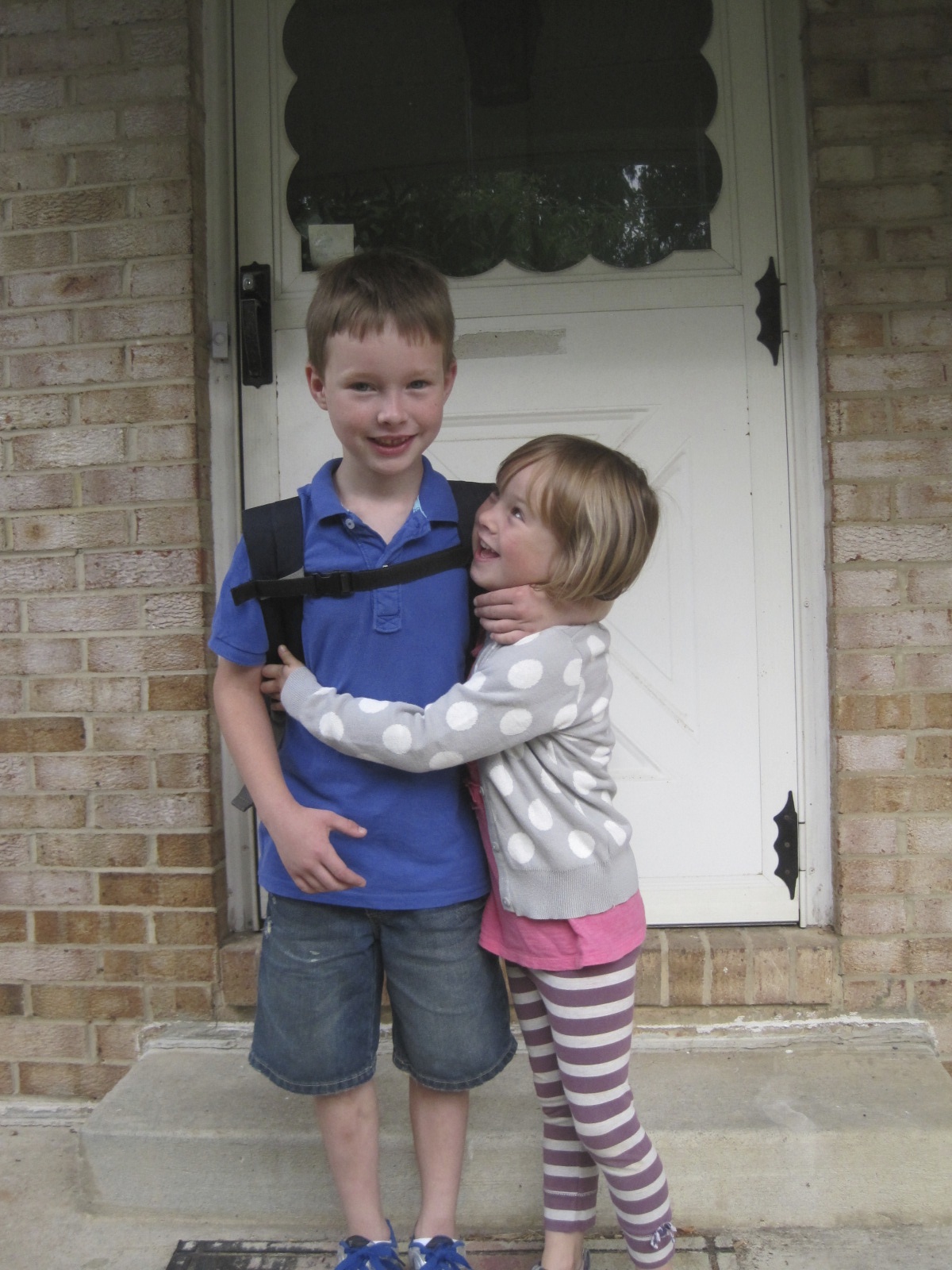
Things here on the blog have been pretty Dash-centric lately, but I have to note the end of an era for Mabel. And for me. For all of us, really.

Mabel’s school year has finished. She’s done with nursery school for ever. She’s a rising kindergartener now, as they say in these parts.

Mabel aged almost 3

First day ever, three years ago

The nursery school is a co-op, which means all the parents help to run it. Or at least, we have a board and we all pitch in, but really it’s run by the very effective director and the administrator, without whom the whole place would be nothing. But when we decided seven years ago to send Dash there, it turned out to be a decision that would long resonate as a good one.

Mabel at a table

Last day I was in the classroom

I don’t doubt the children would both have got perfectly adequate preschool educations in many other places. But joining our co-op gave us a community, a place to belong right in the centre of the town (the school is located in the Community Center), physically and metaphorically. It also gave them a lovely play-based preschool education that I probably didn’t even understand about back when I chose it with no research further than asking my local friends and visiting on open day.

IMG_8245

Showing me the fish

So the week before last I helped in the classroom for the last time, last week I attended my last board meeting, Mabel had her little performance and graduation ceremony, she had her last “water day”, and this weekend I did my last ever cleaning shift for the school, as we cleaned it out preparatory for the summer.

IMG_8248

I asked her to pose and this is what I got (she’s dressed for water day, when they all get very wet)

When their teacher described them as “The class of 2027″ on Tuesday, it did give me pause for a moment, and on Sunday I won’t say I left the place for the last time without a backward glance; but it’s time to move on.

IMG_8249

Onward and upward, Little Miss Contrary

The cool kids

On the way back from the food specialist appointment , I had the most enlightening conversation with Dash. Not about food. More about a peek into his world as a second-grader.

He said, out of nowhere, “It seems I’ve been elected as the president of our club.”

“What club is that?” I asked, thinking it was something with the other kids who live on our road.

“In school. Not exactly a club… ”

Let me synopsize, because Dash’s thought processes tend to be roundabout and I had to worm it out of him and we were navigating the traffic and I can’t remember exactly how it went anyway. But the gist is that he and the other “not cool” kids in his class are a club, of some unofficial sort. I asked if the cool kids were also a club, and he said he thinks so, but he’s not sure.

He thinks he’s not entirely one of the uncool kids, but maybe somewhere in the middle. It seems to be settled in terms of who sits where in the cafeteria, and the cool kids never sit with Dash (or vice versa, I suppose). But once, one of them talked to him. He thinks. And he “mumbled” something back. (I don’t know why he didn’t say it. Maybe it’s not cool to say things when you could mumble them. Or maybe he didn’t know what to say, so he hedged his bets.)

I don’t remember being aware of cool vs. not cool when I was eight. Then again, we didn’t have a cafeteria in my primary school. Maybe it would have played out earlier if we had. I remember knowing who was cool (and that I wasn’t) by the time I was 10 or 11, when the cool girls were listening to Duran Duran and wearing stonewashed drainpipe jeans with zips on the bottom. But that seems like it was an oncoming-adolescence thing. Tweens hadn’t been invented in the 80s. I didn’t have to be a tween, so I didn’t have to decide if I was cool when I was eight.

He has to navigate his own way, and I’m confident he’ll find it. I can’t do it for him and I wouldn’t know where to start. We talked about how it’s okay to be not cool, but he was way ahead of me on that front; and about how even the cool kids mightn’t feel like they’re the cool kids all the time, and about how it’s good to talk to everyone whoever they are.

But I’m glad he’s got his little band of buddies, of the not-cool-kids. Proto- Freaks and Geeks , even. They’re really the coolest ones, everyone knows that.

Part two of this saga that might have lots more parts yet

About half an hour after I wrote that last post, I wrote more, because I still had lots to say about how I was feeling.

(Hello, have you met me? I process my thoughts by writing them down.)

If you want to know what happened at my meeting with the school, skip to the end. If for some reason following the inner workings of my psyche is not fascinating to you. I don’t know why it wouldn’t be. It’s an endless source of entertainment for me.

————–

If you met him, you’d say Dash was a great kid. He’s not a bundle of neuroses or a group of symptoms. He’s a fun, polite, active, well-behaved, loud, annoying, thoughtful, responsible, curious, hilarious, infuriating eight-year-old boy, just as pretty much all eight-year-old boys are, probably. I don’t know, I only have this one. I like this one that I have.

He just happens to be quirky, and two of the quirkiest things about him are the way he eats very few foods and isn’t great at reading.

My next thoughts swirl, maelstromy.

1. If I had left Ireland more recently I would be concerned about not taking steps that wouldn’t be taken in Ireland, because those would be American-type steps, probably over-hyping, over-diagnosing, finding problems where there are none, trying to fix things that were not broken.

2. I’ve been here in the US, and a parent here, for long enough that that isn’t happening. Also, I got through all that, mentally, for myself, last year when we started on the road to vision therapy. That was like diagnosis lite.

3. Nonetheless, there is an element of feeling USA privilege here. It’s like white privilege, which it is too, except that it affects everyone who can afford health insurance and has access to the US health system. Which while not remotely perfect, gives us a lot more opportunities than we would have in Ireland or in many other parts of the world.

4. I don’t fear labels. Labels are good because they help people come together and get the things they need. In our case, we need Dash to be put in the right class next year so that he’s challenged but not struggling. If we need to find a label, some sort of diagnosis, to help the school do that, then that’s what we want to do. If the school can find the right place for him without a label, then we don’t even need to go down that route.

5. Unless the reading + the eating + things I’m not even noticing because they’re just Dash = Something Together that the school wouldn’t even consider thinking of (because the eating part isn’t relevant to them). And if that Something, whatever, contributed to a label that would help, then we should try to find out about it. Because that might better enable school to do what we need them to.

6. Or is he just a slow reader and a fussy eater?

7. I wouldn’t care, except that he’s starting to notice. He knows he’s in the wrong class this year. He’s getting teased for being the smartest in class, which he wouldn’t be if he was in the right class. But then he’d be the slowest reader and maybe get teased for that. He’s worried about what he’ll eat when we go places.

8. That’s a lie. I want him to love reading the way I love reading. I want him to crack a book and get lost in it. I want him to discover Harry Potter on his own. I want him to read the damn cereal box instead of asking me why there’s a picture of Spider-Man on it.

——-

Cut to the chase, Maud.

The meeting with school went really well. I went in saying, “I don’t know if I need to convince you that he’s really smart or really slow,” and they all said “Well, we know he’s really smart,” so that made it much easier. I talked about the way his reading is slow but he’s smart in all the other respects (sheesh, it would be so much easier to just have him sit down and read a paragraph for them, but I suppose then they’d say he might have been nervous or something; his actual teacher was not in the meeting because it was during class time).

And I gave them the “final report” from the vision therapy people, which I had called and asked for last week. I explained the situation and asked them to be sure not to say “Hooray, he’s totally cured and just like any other kid now!” So the report was a little more restrained in its declaration of his success, and included key phrases such as “may benefit from extra time to complete examinations and schoolwork” and “remaining concerns about reading speed and fluency”.

On foot of that, they said “Well, how about we give you a 504 for next year saying that he gets extra time for assignments and testing, would that work? And you can amend it if it’s not working out or we need to add more.” And I said “Yes please, that sounds ideal.” And then I stayed a bit longer and we got all the paperwork filled in and signed off and photocopied and now it’s in his file and all his teachers will know about it and be required to abide by it.

Easy as that. I was really impressed by the school’s responsiveness and willingness to work with me to find the best solution for Dash. Just like they’re meant to do.

So the urgency for figuring out other testing has waned a bit, at least until we have the food specialist meeting next week and see what they say. I was afraid the school would tell me they couldn’t do anything without some more official sort of diagnosis, but since that wasn’t the case, I’m happy to row back a bit for now.

Banana butterscotch muffins with a healthier twist


One of my favourite recipes is banana butterscotch muffins from  Nigella Express . I don’t make it often because Dash doesn’t like banana, but if I’m bringing a treat along somewhere, it’s a handy one.

I wanted to bake some of these for the nursery school open house on Saturday, but I thought it would be nice to make the recipe a little healthier, considering all those delightful teeny toddley people who would no doubt be cruising by the food table and swiping everything they could grab before a parent stopped admiring the classroom decorations and noticed.

So I used brown sugar instead of white and reduced the quantity, because the butterscotch chips give plenty of sweetness. I added oatmeal too. I didn’t dare tweak the recipe further since I was baking against the clock and for an audience (I mean, the results would be eaten by an audience; I wasn’t actually baking in front of a live studio audience), but I have suggestions for next time…

Mabel dishing out the muffins

Helper

This is the recipe as I made it this time :

3 ripe bananas (if your bananas are not very ripe, 30 seconds in the microwave will soften them up nicely)
1/2 cup (100g) light brown sugar
2 eggs
1/2 cup (125ml) vegetable oil
1.5 cups (150g) AP (white) flour
1/2 teaspoon baking (bread) soda
1 teaspoon baking powder
pinch salt
1/2 cup (50g) oatmeal (old-fashioned, not quick)
1/2 cup (75g) butterscotch chips

1. Mash the bananas with the brown sugar and set aside.

2. Stir together the flour, oatmeal, baking soda, baking powder, and salt in a large bowl.

3. Beat the eggs with the oil in a measuring jug.

4. Add the egg and oil mixture to the dry ingredients and mix to moisten.

5. Add the mashed bananas (and sugar) and mix well. (Not too well. Lumps are fine, so long as the flour is all mixed in.) It’s quite a wet mixture.

6. Mix in the butterscotch chips.

7. Spoon into well-greased muffin tins. I made mini muffins, the better to be grabbed by little hands, and the mixture made 24 minis plus 3 regular-sized ones for taste testing. If you use paper cases, the oatmeal often sticks, so even though greasing is a pain it’s better for the final product.

8. Bake at 400 F (200 C) for 15 minutes for mini muffins or 20 for regular-sized ones.

9. Cool a little and remove carefully from the tin so as not to leave bits behind. If you can take them out of the tin before they’re totally cooled, the bottoms will be as deliciously crunchy as the tops.

Muffins on cooling rack

They’re a little bumpy-looking, but that’s the artisanal touch, y’know.

Other healthy things you could try:

  • Substitute plain yogurt for one (or both) of the eggs.
  • Use part wholemeal flour instead of all AP flour.
  • Substitute applesauce for part or all of the vegetable oil.

They all disappeared in record time, so I think I can safely say this particular version passed the adult-and-toddler taste test.

Assertiveness training

Every year, I go to parent-teacher conferences. Every year, I look forward to being told that the child in question, whichever one, is a genius, startling in their intellect and destined to go far. Increasingly, every year, I have a sneaking suspicion that I might hear something else instead, because my children are children, just like everyone else’s.

This morning I went along hoping to hear that Mabel has a prodigious vocabulary; that her teachers have noticed her propensity for metaphor, her facility with rhyming words, and her endearing imaginative play. I was slightly terrified that they’d tell me she was a horribly spoilt prima donna who couldn’t take no for an answer and that it was all my fault. (Obviously.)

They told me she needs to be more assertive.

I really wasn’t expecting that. I mean, I don’t know if you can tell from the blog, but Mabel isn’t exactly backward in coming forward, as my mother might say, when she’s at home. She tells us how she feels, loud and proud and repeatedly, often with emphatic gestures (let’s say) to drive home her point.

On the days when I help at school, she tends to act up, getting clingy or defiant sometimes, but I disregard that because I know the children often behave differently when a parent is there – it’s hard for them to have their two worlds clash. But I hadn’t realised just how different Mabel’s school persona is from her home one. At school when I’m not there, she is quiet and reserved, shy and compliant – and sometimes she lets other kids boss her around so much that her teachers have noticed it and want her to stand up for herself.

It feels strange to have to coach Mabel in standing up for herself when I see her do it so effectively every day with her brother. But that’s family, at home, and that’s different. I know she’s shy out in the world; she sometimes takes refuge in bad manners to shock away a stranger who makes an unwelcome friendly comment. She’s five, and five is not old, though it’s old enough to be very aware of who you are and how you’re different from everyone else, just because you’re you. I need to remember that my daughter’s confidence needs bolstering even though – maybe exactly because – she makes me think it doesn’t. I need to remember that it’s not enough for me to think she’s awesome: I have to tell her, early and often, just like the little girl in The Help , that she’s important.

Because she is smart and good and delightful and full of amazing potential and nobody should ever make her think that she is anything less than just as important as everyone else in the room. If I have to put up with a few tantrums in the post office and a few offended strangers while she figures out how to be herself in public, I’ll do that.

Mabel happy outdoors

Information overload

There was a tour of the elementary school for parents of prospective new students. Even though I also have an current student at the school, I went on it. Partly because I could, partly because I thought I might learn something new (I did), and mostly, I think, because once I have a little knowledge of a subject, any extra information has somewhere to stick and I assimilate it better. I have somewhere to hang it. You need somewhere to hang your knowledge, which is why learning things when you’re a child and have no experience is in many ways such a terrible idea. I mean, once you’ve travelled a bit, it’s much more interesting to learn more about geography and history, for example.

But I digress.

I went on the tour so that, with my existing knowledge of how things were, I could glean a better understanding. But in so doing I did feel a little guilty about my son’s experience at the same juncture. If they’d been giving the tour three years ago I would have done it, of course, but they didn’t start to offer it till last year. But I went to very little effort to find out the things they were telling us through any other means either. I just accepted that he was going to the school and filled in the forms and dragged him along for the first two weeks until he finally conceded that it wasn’t so bad and very soon thereafter began to love it. But I didn’t really know anything about how long recess was and how often he’d have PE and whether the whole school had lunch at the same time or not, and it didn’t occur to me to find out. We found out as we went along.

I think part of it was the overwhelming nature of becoming part of the American public school system when we had never really planned to do that. It was such a new thing for us not just as parents but as participants, that we had to close our eyes and just jump, really. A trust exercise, if you will. We knew the school was fine (not great, but fine, with an involved PTA), we knew enough sensible, good, educated neighbourhood people who sent their kids there to believe this was not going to be a decision that Ruined His Life, and I spent a lot of time that year saying, “It’s just elementary school,” and nodding vigorously as my friends said the same thing back to me.

But I am concerned that it might look like I put more thought into decisions when I make them for my daughter than when I make them for my son. I think it’s a preservation instinct, actually, that makes me shut down in the face of information overload and purposely make a swift decision based on a few key factors. I don’t want to know everything because I can’t process everything. Later on, when we’ve been softened a bit by exposure and more knowledge of the situation, the environment, the way things work, I can take in more information and make the decision anew, or differently, for the second child.

Does that make any sense to anyone? Do you do this too?

Dash at school

2011: First day of K

Round trip to Melodrama Central

Things Mabel had a meltdown about this morning:

  • 7am: I wouldn’t go downstairs with her. Daddy was already downstairs. I wanted to stay in bed for five more minutes. This was unacceptable.
  • 8am: She was asked not to sing Frozen songs loudly while jumping on the sofa in the room where Dash was trying to read. This was completely unfair. Also, she wasn’t hungry and didn’t want breakfast yet.
  • 8:55am: She doesn’t want to have to walk to school (in clement weather) when she goes to Kindergarten next year. That will be just too hard and she doesn’t like exercise.
  • 8:59am: Her best friend insists that he’s in charge when they play together. He never lets her be in charge and won’t even take turns. He says his mom says he’s in charge.

Things I believed this morning:

  • None of the above.

How happy am I that my county did not call a two-hour-delay on school this morning, even though we had freezing rain and they probably should have?

  • Very.

A student

This is the first year that Dash has brought home letter grades on tests and reports instead of smiley faces and stars and mostly meaningless abbreviations like IP for in progress and PR for proficient. (The checkmarks and smiley faces and stars actually followed a progression that the kids were well aware of, so they may as well have been A’s and B’s and C’s, really. But it seemed friendlier and less pressured.)

Dash never really asked what was in his report, and I never particularly told him. I said it was fine, and that was that. It was usually a mixture of IPs and PRs and an OG for reading. (That means “on grade” level.)

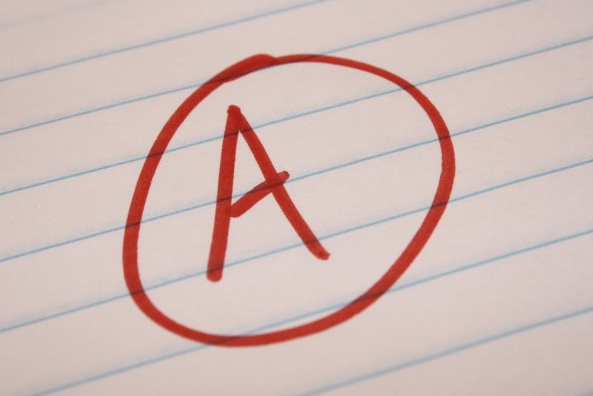
Dash’s first report this autumn had a lovely line of straight A’s. I was happy, and feel this slight improvement can probably be credited to his vision therapy . In general, though, he’s a smart enough kid who’s well-behaved in class, listens to the teacher most of the time, and is liked by the staff. I’m pretty sure that these are the traits that lead to A’s from your teacher when you’re in elementary school just as much as your test results and your homework does. (Especially in fuzzy subjects like PE, for instance. Then it’s all down to how much the teacher likes you.)

I told him he had straight A’s, and he was pleased, because he knows that’s a thing that people aspire to.

I would like to leave it there, but in American schools there’s this little thing called Honor Roll.

Twice a year (three times? I don’t know yet) in our school, all the children who have all A’s and B’s or higher on their reports are deemed to be honorworthy, and they have an assembly to which their parents can come to watch them be presented with a certificate saying that they’re on the Honor Roll. There are bumper stickers, even, saying that this car is driven by the proud parent of an Honor Roll student at your particular school. It’s all made a bit of a big deal of.

For tedious reasons, Dash didn’t actually get a second report this term, and therefore was not eligible for Honor Roll this time, but his teacher assured me that he would have been on it, and apologized for the oversight. (Okay, tedious explanation: what happened was that we had to un-enroll him from school when we went to Ireland, so that his absences wouldn’t count against the school and bring down their average, and so his records were all inaccessible when the reports were generated. We’ve done this before and it’s a simple matter to re-enroll him when we get back and he slots straight back in as if he’d never left. It’s fine.)

Not only did I not care about the second report; I was actually a little relieved that he wouldn’t be in the Honor Roll thing. And that seemed weird, so I put some thought into figuring out why I felt that way.

As a child who enjoyed reading and tended to “lick up to” the teacher, (pretty much the same as brown-nosing), I usually got good marks at school. But somewhere along the way I took in the fact that it was bad manners to ask what someone else got in a test, because that was tantamount to bragging about my own grade. Test marks were like salaries – you don’t ask, but if someone else offers information you can reciprocate with yours.

So having a ceremony where you proclaim to the whole school that we’re the smart kids doesn’t seem fair.

Maybe I’m wrong. Maybe they’re showing the value of hard work and application. Maybe that’s the only way you get A’s and B’s; but somehow, when you’re seven years old, I don’t think that’s really it. Maybe they’re proclaiming that they’re the kids with the involved parents, the families where a parent is around to help with homework, where books are read as a matter of course, and, often, where English is a first language. I’m pretty sure all those factors also contribute to high grades, and those have very little to do with how hard the kids work at their studies.

Maybe I’m wrong, and all the other kids watch the Honor Roll-ees troop off for their assembly with nothing but goodwill and ambition in their hearts, happy for their friends and newly committed to learning all their spelling words this week so that maybe next time they’ll be one of the hallowed few. Maybe, in fact,  half of the kids at school are on Honor Roll, and the others couldn’t care less about it. Maybe some kids would actively hate to be on it. Maybe it would destroy their street cred, and is just one more reason not to bother doing their homework.

I’m not sure I see the value of grades for elementary school students at all, for one thing. In general, bragging about grades (albeit in a fully school-endorsed way) sits badly with me. If Dash ends up on Honor Roll next time, I’m sure I’ll go along to the ceremony and be delighted for him, but I’m not going to be the sort of parent who pays for grades, or rewards an excellent report card with an extravagant present. Not at this stage. Maybe never.

When I googled to find that news story I linked to above, it turned out that I’m not the only person who maybe thinks Honor Roll – or even grades in general – aren’t the greatest idea ever. But apparently lots of other people think that the people who complain about Honor Roll are like the ones who don’t want winners and losers in kids’ soccer games because they want to protect their little darlings from ever feeling “less than.” My point is exactly the opposite: I don’t want a group of kids to feel that they’re “more than,” when – in elementary school at least – I think that hard graft and dogged perseverance are not major contributors to good grades. There are way too many other factors at play in the early years.

Tell me what you think. Do you think Honor Roll helps kids do their best, or would you rather it didn’t exist?

The homework debate

My second-grader is doing his homework. It’s quick and easy and it doesn’t take long. But I started reminding (/asking/exhorting) him to do it when he got home from school at 3.45. He finally began at 7.20pm, after some outside playtime, some TV time, dinner, dessert, some more outside time, and a glass of milk. I’ve come to accept that this is how it is with him, and for now it’s working. He knows that ultimately he is responsible for his homework being done. I worry about how things will go next year, when they say the homework load really ramps up, and when if he starts at 7.30 he won’t finish till long past bedtime. I suppose he’ll live and learn. He’s not one to stress over his homework; I’m lucky that he’s a relaxed kid who loves school for its social aspects and has not yet been turned off learning for its own sake.

People used to think that we should show children it’s a tough world from the outset. Some people still feel that way, on one matter or another. You shouldn’t pick up your crying baby. You shouldn’t tolerate tantrums. You shouldn’t let that five-year-old sleep with the light on. They need to learn that life’s hard, and people are mean, and they need to buckle down and do their work; and the sooner they figure that out the better.

I think we should be kind to our babies and love them while we can, because life is short – and childhood shorter – even more than it’s hard; and because they will find out the rest soon enough.

And so I’m thinking about homework again . I’m not saying that people who expect children to do homework are cruel, Dickensian types, or that making a kindergardener come home from six hours of school and asking them to sit down and do homework is like forcing a three-month-old baby to cry it out – but then again, maybe one day in the future it will be seen that way.

I’m not big on research. I like to read the headlines and let other people do the heavy lifting. But I can tell you a few things I’ve seen recently that have stuck in my mind:

Homeschooling is a wonderful option for many people, but I am not one of those people. I like our local public school and I want to be part of it. My son loves school. I enjoy sending him to school every day and picking him up at the end of it. I don’t enjoy bugging him to do his homework for an hour or more every day while he strings me along with promises of “Yes, yes, after this,” and finally sits down to do it right when it’s dinnertime, or maybe bedtime.

I really don’t like the conversations I’ve had with other parents who have more intense children who burst into tears crying “I just want to play” when it’s time for homework, or whose studious third- or fourth-graders won’t hear of stopping after 45 minutes even when their mom says they’ll write a note because that’s long enough.

And on the whole, I know that my household has it easy right now. So far, the amount of homework he has had has been very reasonable, his teachers have been undemanding, and he’s not the type to stress over schoolwork. Once he finally sits down to do it, it goes pretty quickly these nights. Additionally, our school has said that roughly ten minutes per grade is as much work as they should be doing – 25 minutes for my second-grader, then; under an hour for a fifth-grader. (Does that mean zero minutes for a kindergardener?)

Children are not miniature adults. They are not just university students in training. Their minds and bodies are still developing and they have more learning to do than can be taught in school. Childhood is not the time for them to learn how to buckle down and work for a further two hours (or even 45 minutes) when every fibre of their being tells them they should be running and jumping and climbing trees and playing soccer and organizing skipping games with the other kids on the street and finding out what it is they love to do. They’ve spent six hours clamping down on their wild sides – or having them clamped down for them – when they get home it’s time to do the other thing.

I want there to be no homework. Not just less, but none, for the sake of our quality of life four nights a week, and my children’s childhoods. And I’m almost fired up enough to do something about it.

Moments in independence

On Thursday, Dash rode his bike the half-mile to school. When Mabel and I showed up in the car at 3:20 to pick him up, I’d forgotten that, but it was no biggie – we can put his bike in the back. Except he didn’t like that idea, and Mabel had already enraged him by telling him about the lollipop she got from the lady in the bank.

( Me: You don’t  have  to tell Dash about that lollipop.
Mabel: Yes I do. )

So I told him that he could ride his bike home and we’d take the car and meet him there. At first he was wary. He thought it was illegal.

“I can’t do that. You’re not allowed let me.”
“Yes, you can. I am.”
“But the rule. I’m not eight.”
“The rule says you can’t stay at home alone until you’re eight. It doesn’t say you can’t go home on your own. I say you can. I trust you to be a responsible cyclist.”

He was pretty stoked. Off he went. There are only two places where he has to cross the road, one of which has a crossing with signs and stripes on the road, and I think I was the only car he encountered on the way.

The same thing happened the next day. I’d let him come home on his own every day, but I like seeing the other moms at pickup time.

——————–

On Friday, Mabel and I went to the mall. Oh wait, first I have to tell you how that works.

Step 1: Order a couple of next-summer things for the kids on clearance from Land’s End. Include a pair of trousers that probably won’t fit for yourself, just because you can. 

Step 2: When trousers arrive, ascertain that they are indeed mom jeans, look horrible on you, and you don’t like the colour anyway. No biggie, because you can easily return them to Sears and thus not pay any postage. 

Step 3: Go to Sears at the mall. Return the jeans. 

Step 4: Pass unavoidably through the kids’ section of Land’s End in Sears. Find two pairs of summer leggings on sale and an adorable dress at 25% off that you and Mabel both just love. 

Step 5: End up spending more than you got back.

This right here is why the economy is doing just fine. Anyway. After that whole debacle/triumph, we had some lunch at the food court. Mabel got pizza and then we moved over to the next food outlet so I could have a tasty hummus/chicken/chickpea wrap thingy. This left me with two trays and only two hands. So I put both drinks on my tray and asked Mabel to carry hers (with just a paper plate holding the pizza slice). She demurred.

“I can’t.”
“You can. It’s just like carrying a plate, only bigger.”

She gingerly reached up to the tray and put her hands on either side. She lifted it down and carried it to the nearest table, as I carried the other tray beside her. The pizza slid a little on the plate, but nothing disastrous happened.

After we’d eaten, I asked her to clear away her tray. She picked it up again and I showed her how you have to let all the paper on top slide into the trashcan while keeping hold of the tray, and then put it on top. She could just about reach the pile of trays on the top, on her tippy toes.

As we walked towards the toystore she said quietly, with a smirk, “I’m a  little  bit proud of myself.”