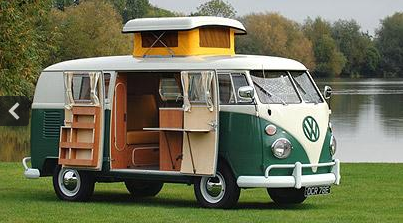
Before I go any further I realise that there are some terms that need clarification when discussing one’s holidays (
that is, vacation
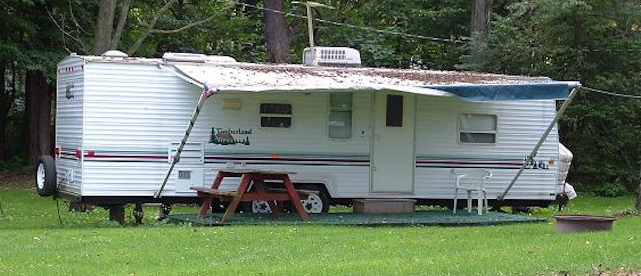
) with a transatlantic audience. This is (almost exactly) what we stayed in last week.
The campsite calls it an RV, but it’s not. I wanted to call it a caravan, but it’s not. It might be a mobile home if you were in Ireland, but here a mobile home would probably be bigger. So here are some parameters for your terms if you should be called upon to explain your temporary dwellings to someone from across the pond.
Tent
: Fine, a tent’s a tent. I’m not a camper, so that’s all I have to say about that.
Caravan
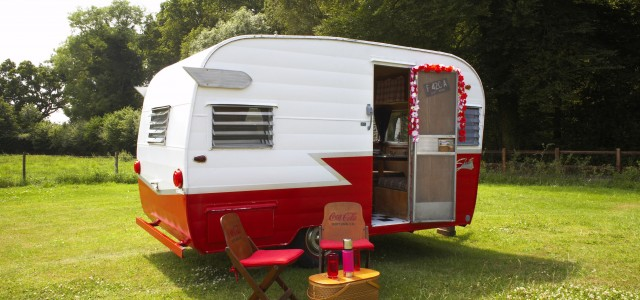
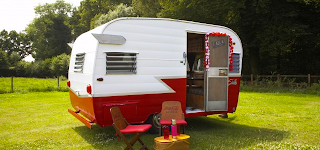
: I believe that if you say “caravan” to an American, they will envisage an old-timey Romany (gypsy) caravan. Or maybe a bunch of camels following each other over the dessert. To an Irish person, a caravan is a tin can with bunks in it that you can pull behind your car. This, obviously, is a lovely vintage one. Newer ones aren’t quite so petite or bijou.
|
| Adorable; but I wouldn’t want to live in it |
Trailer
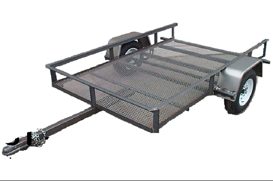
: To an American, a trailer is something large and inhabitable that you can pull behind your car – an Irish caravan, in fact. To an Irish person, it’s a base with a tow-hitch and wheels that you would put something like a boat on to transport it.
|
| An Irish sort of trailer |
Mobile home
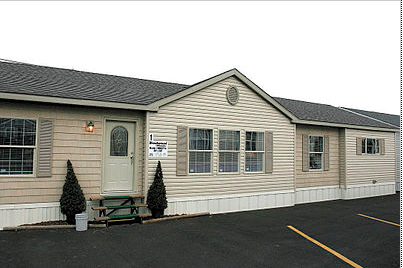
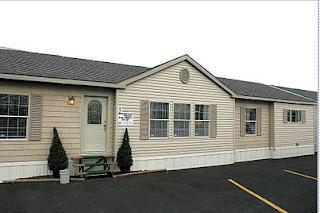
: To an Irish person, a mobile home is a large caravan, possibly with the wheels taken off. What we stayed in last week was an Irish-style mobile home. To an American, a mobile home is can have actual rooms and a deck built on it and be mobile only in the vaguest of meanings. That it can be easily moved by a tornado, for instance.
|
| This home is “mobile”, if you’re American |
RV
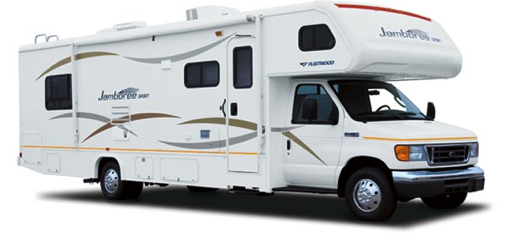
: This stands for a Recreational Vehicle. It’s one of those huge caravans with a built-in driver’s seat so you don’t trail it behind your car but might trail your car behind it. Some Americans sell up the family house when they retire, buy an RV, and travel the length and breadth of the continent for some or all of their remaining days. Others just have one to go on vacation with. I cannot imagine trying to drive one on European roads, but I think they’re called motorhomes there.
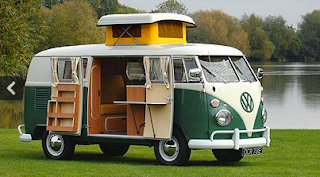
I have no idea where a
camper van
fits in all this, or what you’d consider one to be. Is it the orange VW Beetle “bus” my cousins had in 1976?
|
| Just add (Little Miss) Sunshine |
One other thing occurs to me. If you get rained out of your campsite, you might want to check in to a more permanent establishment. Hotels and motels and guesthouses are fine, but B&Bs might cause a hiccup of misunderstanding.
In the US a
Bed & Breakfast
is a particularly nice guesthouse. It’s usually quite fancy and some of them don’t take children. We will probably never stay in one
en famille
. An Irish B&B, on the other hand, is usually a private house that rents out a bedroom or two to tourists. Generally speaking, Irish B&B’s are a good budget option and very family-friendly. The one thing both types of B&B have in common is that with any luck the breakfast will be good.
Transatlantic subtleties is an occassional series of posts, to which I add whenever the mood moves me. You can find the others by clicking on the link in my tag cloud on the right.