Category Archives: waxing lyrical

Butterfly days

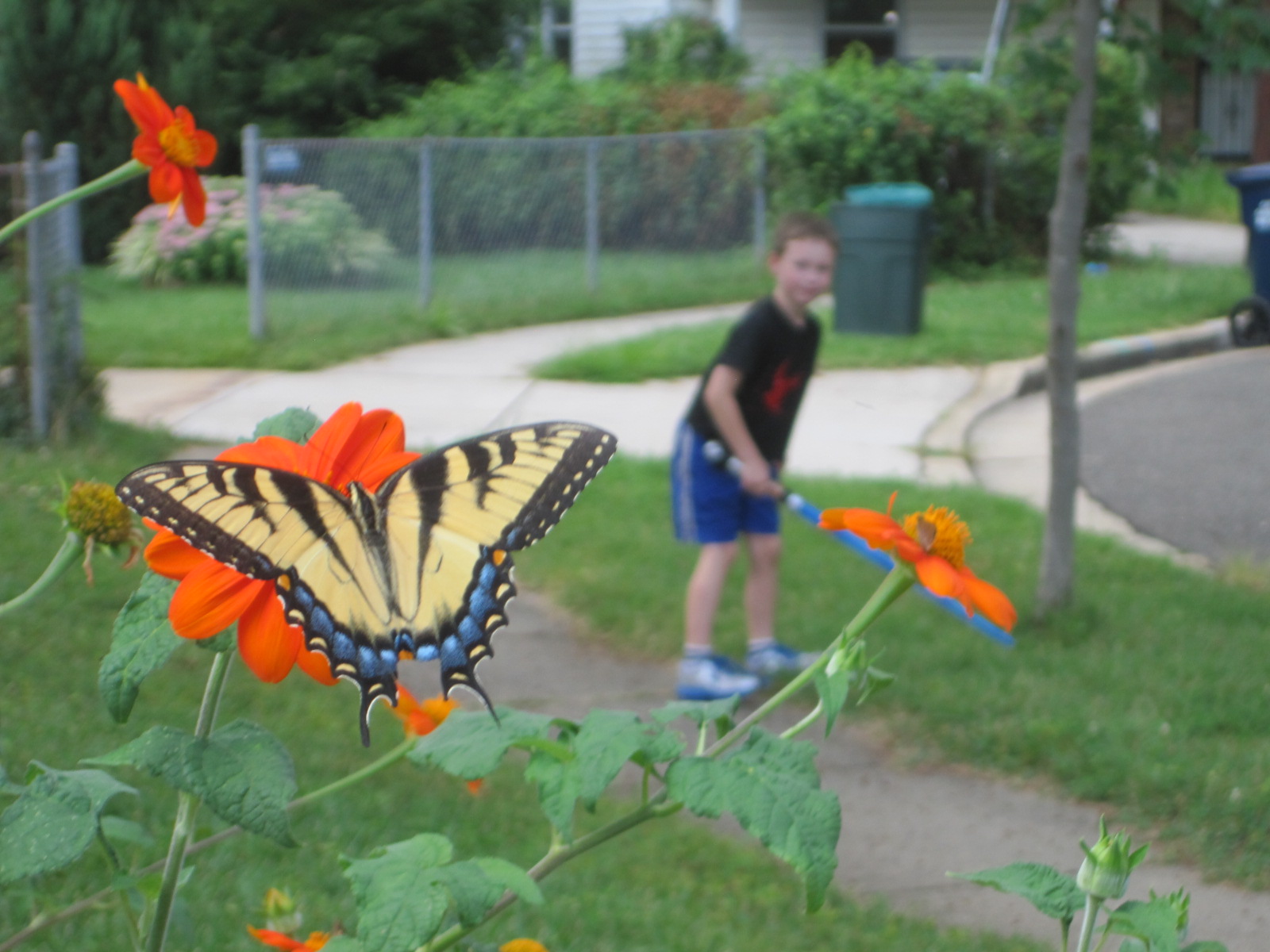
Bare shoulders, freckled (mine). Sunkissed legs, growing longer (hers). A constant anthem of “I’m hungry.” (Two growth spurts, ongoing.) Huge butterflies on the orange flowers, they flip and flutter past in yellow, blue, and black; no longer a cause for excitement, taken for granted in these late days of summer.

Butterfly on orange flower

We’re sick of sunscreen and mosquito bites. We yearn for structure. We need a more pressing reason to get dressed than the fact that we’ve run out of frozen waffles again. The summer is done for. It’s dead and dusted and we’re apathetic and dusty and ready to move on.

What will I keep in my heart from the summer my children were seven and four? Turning 40, going to BlogHer; baseball games and campsites and cold-pressed coffee. I feel like the summer didn’t have a theme, a particular game played or toy loved or achievement unlocked. It was the summer Dash started baseball and vision therapy, the summer Mabel got Rapunzel and learned to swim, the year we all went to Ithaca and that I went to Chicago alone with several thousand other bloggers. The summer I had a purple bag, the year Dash had silver trainers and Mabel wouldn’t wear shorts. 

I sometimes feel we’re not doing America right, especially in the summer. We don’t grill enough, we rarely dine on the deck (because of the mosquitoes and because bug spray worries me as much as the bites do). My children do not gorge themselves on berries and watermelon and corn on the cob and as a result I spend a lot more time denying access to ice-cream than enabling it. We haven’t been to the beach once this summer, and the single attempt at seeing a family movie was aborted before the trailers were over. We went camping but never lit a campfire, the kids didn’t love summer camp, and once again we did not grow any vegetables of our own.

Maybe next year we’ll do it better. In the meantime, the butterflies are beautiful.

Promise

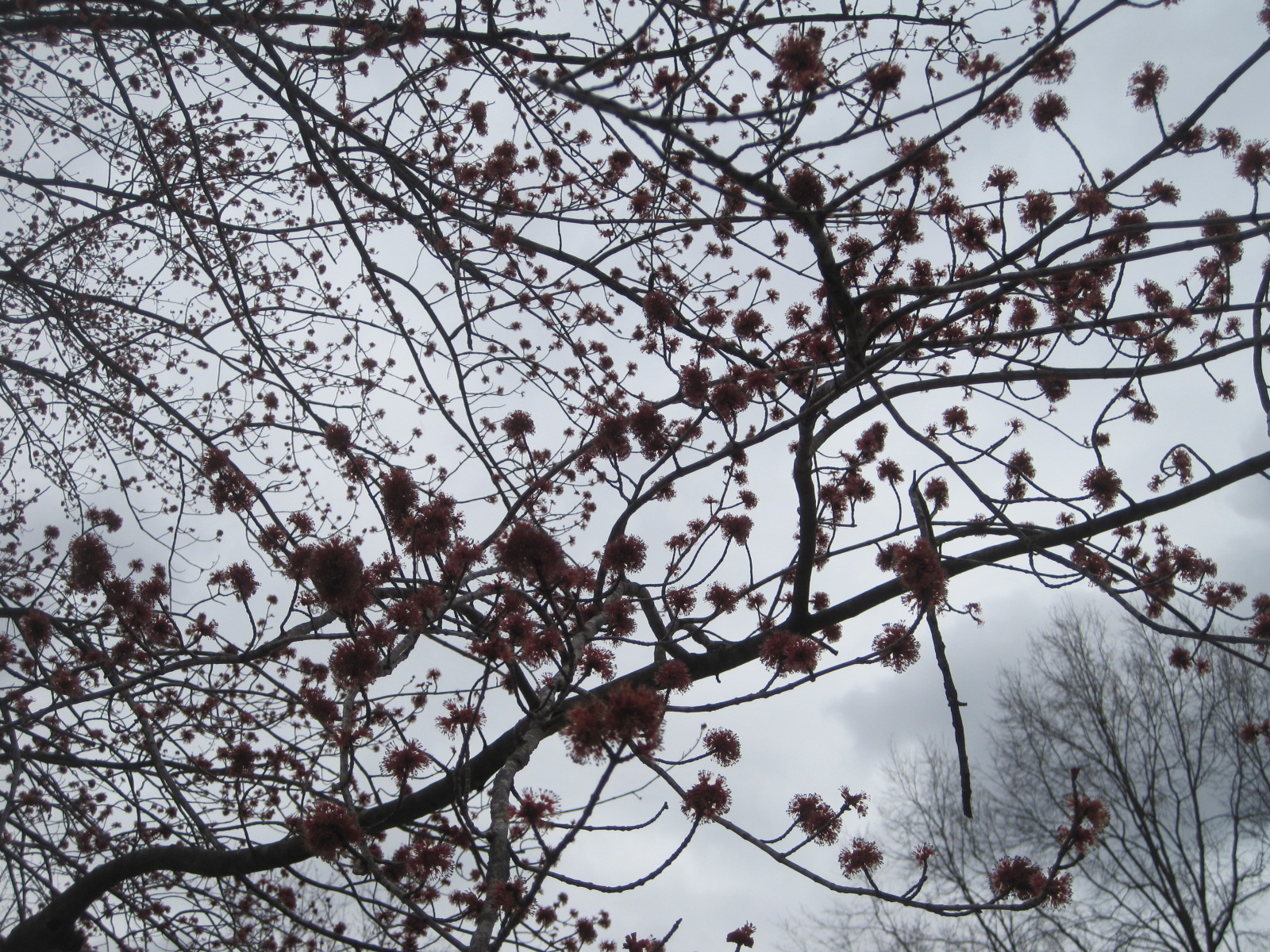
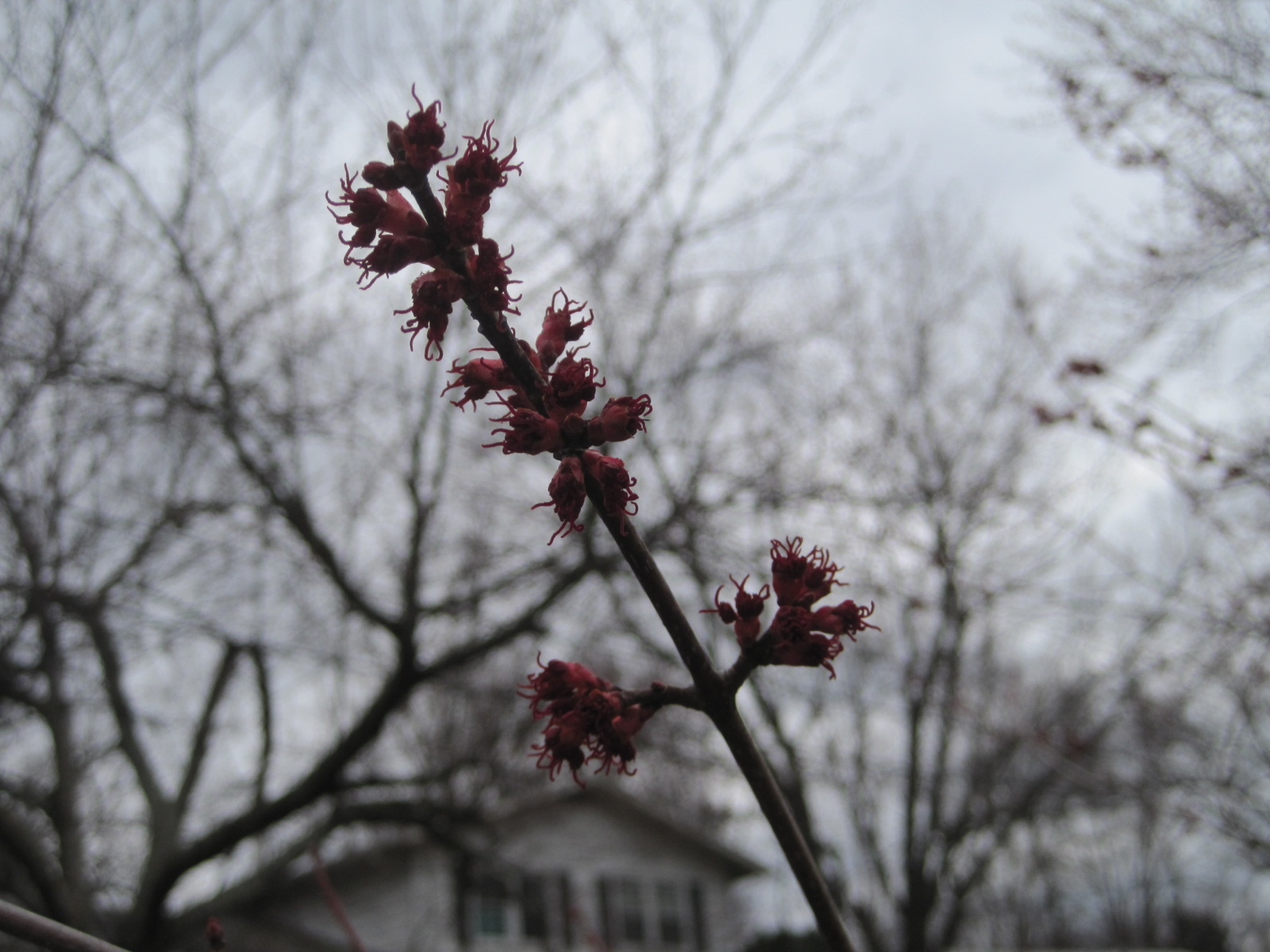
The trees are holding next week’s blossoms tightly furled and fuzzy in the palms of their many hands, each one ready to burst forth given just a little more sunshine, a little more warmth, a little more time. They are a beautiful dark red, waiting to explode into pink.

The sky is grey, briefly blue, streaked with white, then grey again. A flurry of snowflakes, a handful of gravelly graupel, some rain that starts and stops and starts again. It’s a particularly hard March, and that’s just on this side of the Atlantic. At least here I can be pretty sure that eventually spring warmth will come – and after that (with luck, not too soon after) the hot and humid days of summer. In Ireland, though the flowers will bloom and the trees will sway green and lush in the breeze, warmth is what you yearn for and heat will probably only be found somewhere further afield. It will come, the warmth, but not as much or for as long as everyone might like.

 
It’s the grey first day of spring break and already the children have dropped their bikes and invaded the neighbour’s house, where the toys are better and the snacks more plentiful. I just had a phone call from across the road to ask if they could eat a piece of leftover birthday cake. I was a little surprised that I was being asked such a no-brainer.

Purveyor of Cake: “Dash suggested I call and make sure it was okay to give you some.”
Me: “Ah, isn’t that sweet of him? What a good child.”
P of C: “Mabel suggested she’d have some even if you said no.”

That there pretty much sums up the children’s personalities at the moment. Up and down; a little give, a lot of take; potential everywhere: just like spring.

Compare and contrast

It’s a very Irish-looking day here in America, with the rain, no rain, torrential rain, less rain, no rain until you go out in it, and some rain going on all morning. Looking out the window I’m hard pressed to say what makes it America at all.

I see tall trees, taller than my house in suburban Dublin would have around it, but no taller than some in other parts of Ireland might be. They’re still winter-spindly with no sign of spring, but some of the others I noticed this morning have a tiny amount of pink fuzz, just enough to make you gasp in relief, finally heralding a change. The air is softer today too; mild, we’d call it, which is an oft-used word in Ireland for any day when it’s not bitter. Those are pretty much our extremes, I think.

The grass is wrong, I know. The grass in my back yard is dead yellow, with tufts of new-growth green in between. That doesn’t happen to Irish grass: it stays lush and dark all year. You never understand why the tourists all exclaim over the greenth of the country until you’ve had a winter somewhere else, or a summer somewhere else for that matter.

There are still dead leaves wet at the bottom of the garden, in the corners and crevices. We’re probably supposed to scoop them up, but more likely they’ll stay there and turn to mush, to loam eventually, perhaps. We can keep hoping they’ll blow away instead. Ivy climbs up the treetrunks, looking just like Irish ivy, dark green on craggy wood against a grey sky. My garden shed does not look like a garden shed. It seems here you can have two types of shed: the sort that looks like a miniature house, or the sort that looks like a barn. Mine looks like a barn, because it’s an Amish shed, I’m told. Irish sheds are not Amish. They look like sheds. (If you need further explanation, you’re not Irish. I’m not going to try.)

We have a deck, which is unIrish, and a rotary clothesline exactly like the one that still adorns my parents’ back garden. I have wooden clothes pegs and plastic ones, but my parents only have wooden ones that are blackened  and thin with exposure and use – becuase in Ireland if you miss the start of the rain, you may as well just leave the clothes out there until the wind starts blowing them again. Here, I am lazy and use the clothes dryer in the winter. I blame it on my Reynaud’s, which makes my hands painfully numb doing things like that in cold weather, but the truth is that we have the luxury of large American appliances, and I bask in that luxury and exploit it.

It’s lashing again. Torrential. Floods, cats and dogs, Datsun cogs as the old joke goes; pissing, we’d uncouthly say in Dublin. Good for spring, I suppose. A couple more weeks and we’ll be surrounded by the beautiful blossoms of the pear trees that line our streets here in the neighbourhood, and the days will be sunny and more than mild and the sky will be blue, and America will look nothing like Ireland once again. Except for my clothesline, the constant.

Room in my head

I love trying to bring up a memory that’s hidden deep in my mind. I sometimes set out to find one, or to expand one further than I think I know. There’s a knack to it, and it doesn’t always work, but you have to hook onto a thread of something – from your childhood, probably, when your memory was an open plain to be filled – and tease it out, pulling, pulling, gently, looking around and delving inwards, until you produce a gem that you didn’t know was there.

Today I noticed that a particular room I remember has become a location in more than one book I’ve read. My brain is a theatre filled with dusty sets and props – every now and then a new production pulls out the old stuff again and it’s been so long that everyone’s forgotten they were used before.

This room was in the home of a friend of my parents. Only children tend to be taken where plural children are not; they are unlikely to create mischief alone in a room full of adults, and given a book or some paper and crayons, can probably entertain themselves for a while; failing that, they can be precocious and entertain the adults while their parents attend a grownup gathering, drink wine in the afternoon, gently flirt with people who are not their spouse while observing their spouse doing the same thing across the room, and pretend that their life hasn’t changed all that much.

So while I also visited this room on quiet afternoons with just my mother, what I remember most is tucking myself away in a corner while the adults mingled and jested and nodded and guffawed and tried out this newfangled wine-in-a-box. I remember the Russian dolls that lived in this house, dolls that I was always allowed to play with most carefully, and how the biggest one squeaked painfully every time her belly was wrenched open along its slice to disgorge her daughters and granddaughters and greatgreatgreats. I remember getting to the point where I would seek out my mother and pull her sleeve and ask, “Pleeeease can we go now?”

I think I remember, too, curling up on the spare bed in the front bedroom, with its soft black woollen coverlet of some sort of holey 70s knitting, and going to sleep there during an occasional evening party; at the end of which my parents would just hoist me up, toss me in the back seat of the car, and drive home. I do remember how the streetlights looked from my horizontal position, cosy in my sleeping bag, watching them flick past against the black; restful orange or bright white, hurting my eyes and sending out spears of light when I squinted.

And then we’d turn into the second-last road and then there’d be a sharp corner and I could always tell our hill by the gradient, as gravity pushed me against the join where the bottom of the seat met the back. Then a quick swing around (my father was quite the rally driver) and the same again as he backed down the steep driveway to the hidden carport at the back of the house.

And then I’d be picked up and I’d pretend to be asleep, and I’d be fireman-carried into the house and up the bumpy stairs and plopped into my own bed under the eaves, under the wooden ceiling, where I belonged.

Pretty cool

Dash is still pushing the envelope with his sister, and she’s still yanking his chain:

- I love you a million. But I love mummy and daddy and friend-across-the-road giant .
- So do you love me giant?
- No.
- Tell me the truth.
- I love you seven. That’s the truth.
- But do you love me infinity? I love you infinity.

**********

Somehow, a dichotomy has been established in our house between cool and pretty. Cool things are boy things and pretty things are girl things. Every time I hear some variation on this being trotted out, I tell them “cool can be pretty” and “pretty can be cool” and “nothing is just for boys or just for girls” and I hope some day it makes it through and out the other side by osmosis because at the moment they are rigid in their definitions.

**********

And I want to tell my daughter something:

Pretty is fine, but you don’t need to be pretty*.

I want you to be strong, I want you to be heard. I want you to stand up for yourself and for others. Polite is good, consideration is vital; but I want you to above all keep yourself safe and sane, which means demanding the respect that is due to you and no less, as a member of the human race and as a woman.

  • First, use common sense. You’re smart. Act smart.
  • Second, listen to your gut. Follow your spidey sense, never discredit a “feeling”.
  • Third, it’s never too late to make a change for the better.

Pretty is fine, and good is nice, but strong is beautiful. Be strong, my beautiful daughter, and you will rule the world.

*Inspired by this blog post I happened upon recently, which quotes (but doesn’t really attribute) a Diana Vreeland once said. And I have no idea who she was, but she seems cool.

In dreams

There’s a road I walk along often in my dreams. The sea is on one side, a high wall on the other. The waves tend to be choppy and white-crested, the weather harsh. I am trying to get to an exam, or walking an impossible route to catch a train, or late for a performance of something unlikely. I may or may not be missing some clothes, or have lost my glasses. Maybe I’ve only visited this place once or twice in some very vivid dreams, but it feels as familiar to me as a path I tread every week.

I’ve always known exactly where it is, because this place exists in real life – though the wall might be a little craggier and the sea a little wilder in my dreams. It’s near my old school, by a tiny local harbour with a marine-supply store my dad often went to. I don’t know that I’ve ever walked that particular part of the path in reality, as it’s beyond where we’d turn off to go down to see the boats, and I’d never need to go further by that route – but in unreality, it plays a frequent role.

I have no idea why my subconscious chose this place as the site of so many incongruous and frustrating adventures, and it had been a long time since I went there in person. I was driving to my parents’ house a few days before Christmas, and I took the sea road, as we often do when we’re home – I like to see the sea. The road turns up inland after a little and we usually follow it straight up the hill, but this time I turned back down a smaller road to go past the harbour.

There it all was: the stone of the tiny pier; the narrow concrete path, single-file wide; the sheer, slightly mossy granite wall – I probably hadn’t been there for more than a decade, but I’d seen them all so recently and so regularly that if I stopped to concentrate, my feet and my fingers could trace every inch of it.

We didn’t stop, though, because while in my dreams I’m usually alone, singular, in the daytime world I had two cantankerous and jetlagged children in the back seat, who were getting tired of being told to admire the sea.

“Why do we have to look at the sea again ?” they whine.
“Because it’s a rule,” I say.
“It’s not a rule.” They are too canny.

But it is a rule. The sea is always there, and even when I’m an ocean and a landmass away, I have to stop and look at it in my dreams.

Official

The people in the waiting room had taken the American government’s vague requirement to be “properly attired” in a fascinating variety of ways. There was a diminutive, aged Indian woman in a pale blue sari with silver embroidery. There were men in suits. There was a Rastafarian in his best dreadlock-covering hat, his best leisure wear and silver chain. There were women clearly dressed in their “good” dark-denim jeans with a plain sweater and clogs. There was Sunday-best and dressed-for-work. Some people kept their important documents in a plastic bag, some held manila envelopes. Mine were in a green cardstock file folder.

Mostly people came and went through the heavy door at the back of the room without expression, without incident. I read my book and tried to ignore the 24-hour news channel exploring an unimportant incident in far too much depth, from all the wrong angles. A young black woman bounced out of the room, smiling and making jubilant motions in the direction of her husband, who was minding the baby. She had obviously dressed with care: her tiny frame sported a shiny, teal, drainpipe-legged pantsuit, finished off with bright white bouncy sneakers. Her long cornrow braids shook with triumph as she kissed her little boy.

I had gone through at least three outfits the night before, rejecting the trousers that don’t really fit any more because it was eight years and two babies ago when I used to wear them to work, and ended up in the exact outfit I wore for my mother-in-law’s funeral last February: purple dress, teal slim cardigan, black boots. I was comfortable and felt like myself, not some other version of me that’s not around any more or never was. And I looked as if I’d made an effort, which is all that “proper attire” turned out to mean.

My name was called. I followed the lady back to her room, where she shuffled and hole-punched and checkmarked pieces of paper as she asked me rote questions in a routine voice. First I had to stand up and promise to tell the truth, as if that would make any difference to an unscrupulous person. She wrote with her left hand at right angles to the pages, initialing and circling and numbering in red ink as she went, checking a whole row of boxes at once to catch up to what I’d already answered. I remained calm and collected and was a model student, getting all my civics questions right first time, even that elusively random number of Representatives in the House: 435. I wanted to say “Guam. Ask me the one about Guam. And that Benjamin Franklin was the first Postmaster General of the United States. Those are my favourites,” but I didn’t, and she didn’t.

Then she asked me about my family, and whether I’d ever been in prison, and whether I’d ever conspired against the goverment, or been a Communist, and some other questions. And then told me that she’d be recommending that I be granted what I had come for. I could take the Oath at two this afternoon if I liked.

I didn’t like. My town has a Naturalization ceremony once a month and I’d assumed I’d do it at that; I hadn’t planned to be away all day. Beyond that, I wasn’t ready to seal the deal just yet. One step at a time, without thinking too hard, is the way I’m doing this.

Midway through the questions, I had almost started thinking about what I was doing, as she leafed through my Irish passport looking for stamps and dates. I don’t have to give my passport to them, I’m allowed to keep it. I’ll never not be Irish. I just don’t like that one line that goes “I absolutely and entirely renounce and abjure all allegiance and fidelity to any foreign prince, potentate, state, or sovereignty of whom or which I have heretofore been a subject or citizen…” That’s a lot to take on. That’s a lot to ask.

I’m just going to say it and not think about it, which I’m sure is exactly not what the people intended, but there you go. It makes sense to do this, it’s the practical thing to do for our family, to make sure we can stay here, where we’ve made our home, as long as we want to rather than finding ourselves chucked out at some sudden date if things go wrong and funding goes away and the letter of the law must be adhered to. I’m a sensible person. In the end, it makes no difference to my day-to-day life. America needs me, I tell myself, to be a sensible liberal-leaning democrat-voting, atheist, lactivist supporter for life, liberty, and the pursuit of happiness. 

I’ll say it, and I’ll do it.

But always and forever, if you cut me, I’ll bleed green.

Bare brick and polished wood

Mabel was wide awake for THREE AND A HALF HOURS last night, alternately wailing “I caaaan’t get to sleeeeeeeeep withouuuuuut boooooobboooooo” and “Reeeeeead meeeee a boooooooook”, and I had the theme tune to Go, Diego, Go stuck in my head; and I was all set to rant about it at length but then it ocurred to me that just maybe it was something to do with the booster vaccinations she got yesterday, and lo, apparently a possible side effect of the Varicella vaccine is insomnia, so I’m going with that because otherwise she’s been sleeping unprecedentedly well and I didn’t even want to talk about that for fear of breaking the streak, so we’ll just move on now…

I just made Dash an appointment for an eye exam, because I noticed that he’s holding the book very close to his face when he reads, and on questioning he said that he finds it hard to make out what’s on the visualizer in school (I think this is the projector thingy that saves the teacher actually writing on the board). Genetically, glasses are highly likely if not inevitable, though I hoped the kids would manage not to need them for a few more years yet. However, it would be lovely if something as simple and fixable as that suddenly turned reading and writing from a chore to a pleasure for him, and I am now fantasizing that being able to see clearly would also make him so happy that The Rage would be a thing of the past and homework would be a breeze.

Just let me dream, okay? If he needs glasses, he’ll get glasses, that’s all. (Not like the last time .)

****************

Meanwhile, what I was going to say…

Yesterday we had ocassion to go to the local high school, because they were offering free flu-mist vaccinations (the sort they squirt up your nose instead of an injection), and both the children needed them. I’d never been on the premises before, though I drove past it multiple times a day before we moved up the road to this house. In fact, I’ve never been in any American high school before.

I know high schools tend to be big, and this is a particularly big one, but I was still surprised by the memories that were kindled when we walked through the doors: not thoughts of my secondary school (grades 7 to 12), but instead a strong sense of the Arts Building in my alma mater, UCD. (That’s University College Dublin, not the University of California at Davis or the University of Colorado, Denver.) Partly it was the size, but mostly it was the architecture: the late-1960s style and exposed brick made me feel that if I opened a door I’d be faced with not a classroom but a vertiginously terraced lecture theatre.

I loved the UCD Arts Block. (That’s Liberal Arts, if you’re American.) It was my place in the world from October 1991 till May 1995, when I left partly because I feared if I didn’t go then I never would. I might have stayed, and done a master’s in Spanish Linguistics, or English Lit, and ended up… well, an unemployed MA instead of an unemployed BA, I suppose. In the Arts Block, I could roam the halls with impunity and claim a sun-drenched low, wide windowsill to read in, or snooze in, or, if lucky and with boyfriend, canoodle in. From the overpriced Finnegan’s Break (oh, har har) cafe to the orange lockers in the LGs, past Dramsoc at the bottom of the stairs and sashaying to the strains of the jukebox from The Trap, where those majoring in pool hung out, to giant Theatre L for my English lectures or an L&H debate on a Friday night, and upstairs again to the Modern Languages corridor where the secretary of the Spanish Department was never around if you needed her, I was on home ground.

There was a wooden set of sculptures in the middle of the building that people could sit on, or around, or arrange to meet up at. The first time I saw them they struck a particular chord, somewhere deep in my memory, and the informative plaque confirmed it: the piece is called Pangur Bán , by Imogen Stuart, and it was first displayed in Dun Laoghaire Shopping Centre in 1976.

When I was three and four years old, I had regularly climbed that very sculpture, peered through its low-down spaces, found the tiny mouse hiding in a corner, delighted in stroking its smooth, cool, dark wood and laying my cheek against it – and here it was in a new location, stirring my sense memories a decade and a half later. It felt like a special, personal discovery, linking me to this new place before I’d even arrived. (Me and every other student from South County Dublin, maybe. But I don’t know if they all remembered it the way I did.)

I felt like a very obvious interloper if I ever ventured into the Engineering Building, I’d only been in Ag once, and Science – despite the fact that my father had helped design it, the ugliest building on campus (it was the 60s; they couldn’t help it) – was just about somewhere I was allowed be once I was dating one of its number, but the Arts (and Commerce, I suppose, grudgingly) Block was mine.

I didn’t realise how right I felt there until I was about to leave. Just standing between the double set of doors at the main entrance by the “Information” desk (I use the term lightly), I knew that I couldn’t hold on to it – I had to move on and make room for the students coming after me. I had no grand plans for the future; I didn’t really know yet what I’d be doing in September, but it was time to go. Closing a chapter, wondering where the next one would open.

Sinking

Sometimes I feel like I’m functioning just a knife-edge away from mutiny, and that all I can do is to keep the crew (inmates, whatever) happy, whatever the cost, because if they lose it, then we’re all down the tubes.

This is not a good long-term parenting strategy.

As captain/first-mate of the ship, I should wield some authority. But that assumes my crew is formed of rational adults who chose the job. In fact, the inmates almost in charge of the asylum are immature, irrational, and incapable of the simplest actions of self-preservation (eating food so that you don’t go ballistic, for instance; sleeping during the night so that you can function reasonably during the day; using the bathroom when your bladder’s full, for pete’s sake). Not to mention the fact that they didn’t ask to be born, not that anyone has thrown that one up at me yet, but it’s only a matter of time.

So empathetic parenting is only part of the battle. There’s also the part about teaching them to be reasonable human beings, doing things that are judged to be civilized and acceptable to the rest of society.

Sometimes I’m hanging on by my fingertips, wondering how I’m going to get myself out of this one, wondering who would win if it came down to just sitting it out, wondering why, with all my years of education and experience more than they have, it’s not easier.

Maybe tomorrow will be better.

Rituals

There was a white bowl that was perfectly round, with no flat bottom to stand it on, with blue edges. I imagine it was enamel, though maybe that only sounds as if it might be right. It clearly hailed from the days before plastic bowls, when if something unbreakable was needed, this clanky item was the thing. When I fell off my bike and came into the house with a face red and ugly with tears and wails, it was filled with warm water mixed from the hot and cold taps in the bathroom. Then the bottle of Dettol – squat, with rounded shoulders – or the taller bottle of TCP with the ridged cap, came down from the high shelf above the loo, and a dash of it – no, that sounds too casual: maybe a capful carefully measured – was added, the golden liquid clouding briefly in the water before it dispersed.

A chunk of rough cotton wool was torn from the big roll, kept for no other purpose, it seemed, though it was singularly unsuited to this one, with all the little fibres to stick and be left behind; dunked, and used to wash the grit of tarmac out of the grazed knees, the skinned elbow. The warm water was soothing, but the Dettol stung like mad. “It’ll hurt a little,” she’d say, and I’d grit my teeth and wait for it. Or maybe I’d scrunch up my eyes in defence, but I always let her do it, because it was part of the ritual. This is what would make it heal, make it dry up nicely under the dusky-pink fabric plaster that was never the tone of anyone’s flesh, least of all my pale white freckle-dusted red-head hue.

Then came a gentle dab of the violently pink antiseptic ointment, applied with the tip of the ring finger, the selection of the right size bandage from what remained of the assortment in the box, the pulling of the tiny red thread to remove the outer wrapper. Next, the careful lining up of the pad over the affected area, and the neat pulling off of the thin paper tabs, to make the sticky arms embrace my skin in perfect symmetry.

My father would advise, always, that the plaster should come off at night to let the wound dry out, even though the ads on telly proved, with one half of the little boy’s neat cut covered and the other half exposed, that scrapes healed faster with Band-Aid. I still believed my Dad, though, because he knew everything.

————————————

Much of this is the same, even here, even now. The canny symmetry of the band-aid and the magical way the sticky parts are uncovered and covering almost at the same moment never fails to provide solace. The fiddly red thread has gone, the pink ointment is still in my parents’ house in Dublin, probably never to be used up, and I don’t even know what Americans use in place of Dettol or TCP. I’ve heard tell of putting hydrogen peroxide on cuts, but that sounds unsafe to my still-Irish ears.

The plasters have to be called band-aids here or nobody understands you, and nowadays they’re more often than not adorned with Dora or Buzz Lightyear or Spider-Man. My children are not so willing to let me wash their cuts as I was, and then they grab the band-aid and demand to do it themselves. It stays in place until it falls off in the pool or the bath, and I tell them, “There, that means it’s better.”

But the kiss, the final seal, the kiss-it-better: that never changes.