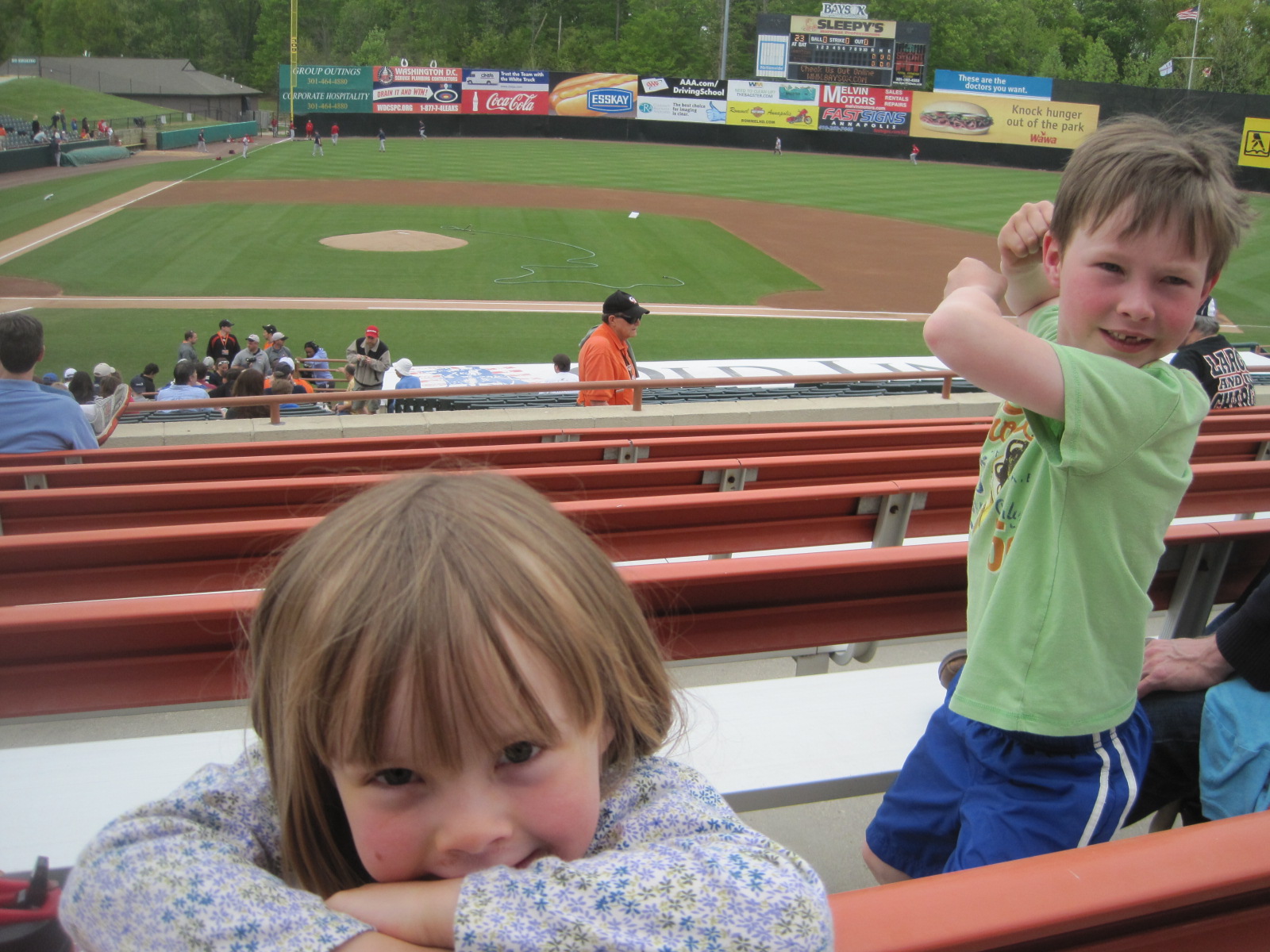
I didn’t get selected for the
Listen To Your Mother
cast. That’s fine, really. It gets us out of a babysitting hole because one of the unmissable rehearsal days was when B would be on a very rare work trip. It would have been fun; I might audition again next year.
Anyway, it means I have a ready-made blog post for today. This is the piece I wrote for it.
———-
I never meant to have American children.
Years ago – far too many years ago to count in public – I was in Boston with my boyfriend. (He was from Ireland too.) One day on a dusty baseball diamond near where we were staying, we saw some kids playing T-ball. I heard their little shouts and watched their little legs run and realised that their American accents were already in place. You know how when you’re in a foreign country it’s amazing that even the three-year-olds can speak the language? It was like that. “They’re tiny Americans,” I thought. “They’re going to grow up to be American all the way down. How bizarre.”
If you’d told me then that I’d have American children, I’d have been positively insulted. That was one thing – the one thing – that I would definitely not do. My children would be Irish, like me and my mother before me. They would grow up with the wind and the rain, rosy-cheeked and soft-skinned, they would paddle in the chilly Irish Sea and complain about their Irish-language homework and criticize Bono (because that is the birthright of natives) and sound like suburban Dubliners, just like their parents.
What’s that saying about fate laughing at your plans?
It began with thinking we could have a baby in America so long as we moved home to Ireland before he knew what was what. Things progressed, so that I felt if we moved before he started school, that would be fine. Oh look, now I have a second-grader and a rising kindergartener and hey guess what, they’re American.
Becoming a mother so far from my mother – and everyone else – gave me a certain freedom. If I’d been surrounded by all those people whose opinions count, whose merest incline of the head I might interpret as a judgement of my parenting choices – well, I might have made different choices. As it was, I was free to read the books I wanted to, to find my tribe on the Internet, to follow my instincts and trust myself with my babies. If people looked askance at me in America for whatever I might have been doing – breastfeeding in the supermarket, for instance – well, I’m a foreigner. A European. And we all know what those Europeans are like.
Similarly, if in Ireland my mother wondered when I was going to stop breastfeeding in the supermarket, for instance (or wherever), she could put it down to the hippie dippie influence of America, where they have no inhibitions at all.
Probably, nobody
was
judging me, but that’s not the point. The point is that I was free to play the crazy foreigner card on both sides of the Atlantic.
So my kids have American accents. Of course they do: they were born here. They have American passports and American birth certificates and American social security numbers. My kids learned to swim in a lovely warm outdoor pool in a swelteringly humid DC summer. My son rattles off the Pledge of Allegiance every morning with his classmates. Despite their parents’ best efforts, they say mailman and sidewalk and zee and twenny and sometimes they even talk about to-may-toes.
And that’s okay. Maybe time has softened me. Maybe I’m coming to terms with being almost-American myself. Maybe it doesn’t matter, because when they meet their Irish cousins – once the first amazed comments from their aunts and uncles about how American they sound have been registered, for the record – they all start talking about Disney movies and My Little Ponies and superheroes and the Irish cousins are saying “awesome” and quoting Star Wars just as much everyone else.
Life does funny things. You can tell it where you want to go, but it’s not a taxi driver. Sometimes it just picks you up and swirls you around and points you back the way you came, or to exactly the wrong spot; and you can rail against it, and you can decide to get off the bus and walk, or you can recalibrate your expectations and work with what you’ve got. Mostly, you have to do a bit of everything and muddle about and see what happens.
If I had been so dead-set against having American children, maybe I shouldn’t have taken up with a boy whose ambition was to go study in the States after he finished his undergrad degree. But I have no regrets.
Last summer, my seven-year-old signed up for baseball. He ran his little American heart out on our local dusty diamond, and I sat on the bleachers and cheered for him.